
U.S. Air Force Tests Innovative Program to Boost B-1B Bomber Pilot Readiness Using Light Business Jets
DYESS AIR FORCE BASE, Texas– The U.S. Air Force Global Strike Command (AFGSC) has initiated a new program designed to significantly increase flight time and proficiency for pilots operating the B-1B Lancer supersonic heavy bomber. Dubbed the Bomber Supplemental Trainer for Aircrew Readiness, or BSTAR, this innovative initiative utilizes contractor-owned light business jets to provide additional flight hours, thereby optimizing training efficiency and reducing operational costs associated with the B-1B fleet.
The BSTAR program, currently in a prototype phase, aims to augment traditional B-1B flight training by placing pilots into smaller, more economical aircraft for fundamental skill development. This strategic shift allows the high-value B-1B bombers to be reserved for mission-specific training requirements that cannot be replicated in lighter airframes, while still ensuring pilots maintain a high level of airmanship.
Colonel Robert Sturgill, commander of Dyess Air Force Base and the 7th Bomb Wing, emphasized the program’s core objective: “I want our pilots flying as much as possible. Every additional hour they spend in the air builds experience they bring back to the B-1. BSTAR gives us that opportunity without taking away from the training they need in the bomber.”
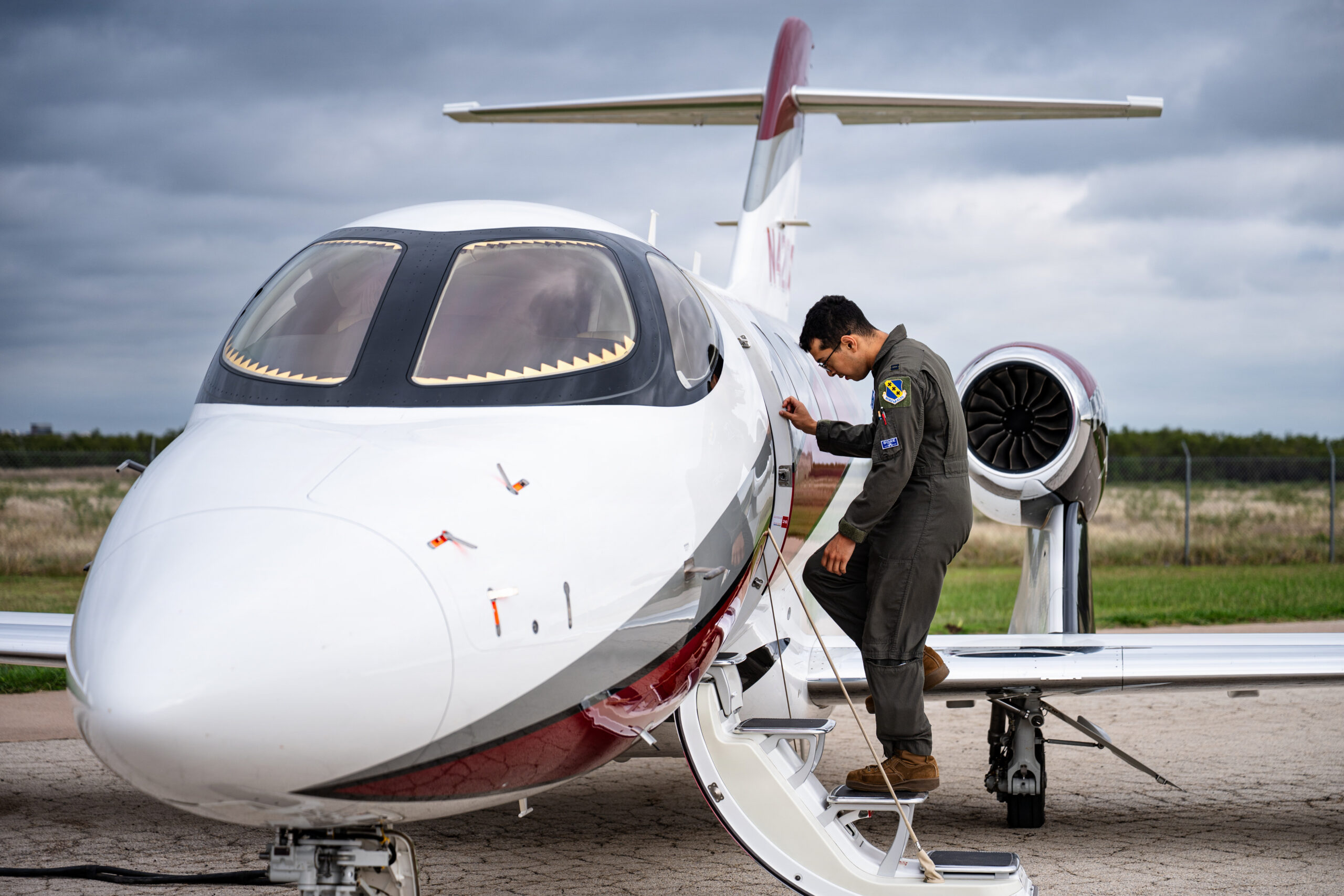
Under the BSTAR framework, B-1B pilots from Dyess Air Force Base will receive supplemental flight instruction using HondaJet HA-420 aircraft. These light business jets are owned and operated by XSTAR Aviation, a contractor that also provides experienced instructor pilots, maintenance support, and scheduling services for the program. All BSTAR training flights originate from and return to Abilene Regional Airport, located in close proximity to Dyess AFB.
While the HondaJet HA-420, with its modest 40-foot wingspan and sub-8,000-pound weight, stands in stark contrast to the colossal B-1B Lancer, the Air Force asserts that it offers an effective platform for pilots to refine essential aviation skills. These include crucial instrument procedures, meticulous mission planning, precise aircraft handling, and robust crew resource management (CRM). The program is projected to provide each participating B-1B pilot with approximately 100 additional flying hours annually, significantly boosting their overall flight experience.
It is important to note that the BSTAR program is designed to complement, not replace, flight time in the B-1B Lancer. The Air Force statement clarified, “B-1 sorties remain essential for developing proficiency in mission-specific tasks, including aerial refueling, tactical employment and weapons delivery.” These complex operations, vital for the B-1B’s role as a long-range strategic bomber, will continue to be conducted exclusively in the actual bomber aircraft.
The BSTAR program officially commenced on November 2 with its inaugural military training flight by a Dyess B-1 pilot. Demonstrating the significance and high-level support for the initiative, Gen. S.L. Davis, Commander of Air Force Global Strike Command, and Maj. Gen. Ty Neuman, Commander of the 8th Air Force and Joint-Global Strike Operations Center, subsequently participated in observer flights on November 4.
General Davis underscored the strategic value of the program, stating, “Combat-ready aircrews are built on foundational airmanship, sound decision making, and time in the air. We expect BSTAR’s innovative approach will allow us to better develop and experience our pilots by providing additional flying opportunities that complement the specialized training they receive at a much lower cost.” This highlights the dual benefit of enhanced readiness and increased fiscal efficiency.
During its prototype period, the Air Force plans to meticulously track all BSTAR sorties and gather extensive feedback from aircrews. This data will be crucial for refining flight profiles, evaluating the overall effectiveness of the training methodology, and assessing how well fundamental skills transfer back to the B-1B cockpit. The findings from this evaluation phase will ultimately guide Global Strike Command’s decision on whether to widely adopt and potentially expand this supplemental flight training model for B-1B aircrews.
Major General Neuman further articulated the program’s direct impact on operational capability: “Our B-1 aircrews must be prepared to execute complex missions that demand precision, discipline and sound judgment. BSTAR increases airmanship, which translates to safer, more effective and lethal B-1 operators, while preserving B-1 flight hours for our specialized, mission-specific training.”
Why This Matters
The Bomber Supplemental Trainer for Aircrew Readiness (BSTAR) program is more than just a new training method; it represents a significant strategic adaptation for the U.S. Air Force, with broad implications for military readiness, resource management, and the future of pilot training. The B-1B Lancer is a cornerstone of American long-range strike capabilities, a critical asset for projecting power globally and maintaining strategic deterrence. Ensuring the pilots of such advanced and complex aircraft are at the absolute peak of their proficiency is paramount in an increasingly volatile global security environment.
One of the most immediate and tangible benefits of BSTAR is its potential for substantial cost savings and optimized resource allocation. Operating and maintaining a fleet of B-1B bombers incurs immense expenses related to fuel, maintenance, and the overall lifespan of the aircraft. By enabling pilots to hone foundational skills in more economical business jets, the Air Force can significantly reduce these operational costs, freeing up valuable B-1B flight hours for the most critical, mission-specific training that cannot be replicated elsewhere. This pragmatic approach addresses ongoing budgetary pressures while simultaneously maximizing the utility and longevity of high-value military assets.
Furthermore, BSTAR exemplifies an innovative approach to military training. It signals a willingness by the U.S. Air Force to leverage commercial aviation assets and contractor support to enhance core capabilities. If proven successful, this prototype program could serve as a blueprint for other airframes within the Air Force and potentially other branches of the military. Such a model could offer a more efficient and flexible way to maintain high levels of pilot proficiency across various platforms, adapting to the evolving demands of modern aerial warfare.
Crucially, increased flight hours directly translate to enhanced pilot experience, confidence, and overall airmanship. In an era where retaining highly skilled aviators is a persistent challenge for air forces worldwide, providing more opportunities to fly, even in different aircraft, can boost job satisfaction and foster continuous professional development. More experienced and better-trained pilots are inherently safer, more effective, and ultimately more lethal, directly contributing to the U.S. Air Force’s combat superiority and strategic advantage.
Finally, the readiness of the U.S. long-range bomber force carries significant global implications. The ability of the United States to rapidly deploy and effectively employ assets like the B-1B Lancer sends a clear signal of its military capabilities and commitment to its allies, while also serving as a powerful deterrent to potential adversaries. Programs like BSTAR, which silently bolster the proficiency and readiness of these strategic assets, contribute directly to the overall credibility of the U.S.’s defense posture, influencing international power dynamics and playing a role in maintaining global stability through deterrence.