
The hallowed grounds of Old Trafford echo with a familiar disquiet, a cacophony of frustrated groans and desperate hopes. Manchester United, a club synonymous with glory, finds itself adrift, mired in the ignominy of the Premier League’s relegation zone. Amidst this tempest, a new beacon of hope, Mauricio Pochettino, has been hoisted, his arrival last week sparking fervent debate. And few voices cut through the noise with as much blunt honesty as former United stalwart, Ashley Young.
Young, a man who tasted Premier League, EFL Cup, and Europa League glory during his glittering eight-and-a-half-year tenure at the Theatre of Dreams, isn’t one to shy away from uncomfortable truths. In a recent explosive episode of the Overlap Daily, in conjunction with Sky Vegas, Young laid bare his vision for United’s midfield future – a future that starkly diverges from the present. His audacious proposition? To usher out the talismanic Bruno Fernandes and usher in Nottingham Forest’s electrifying Morgan Gibbs-White as his long-term successor.
“Fernandes has been unbelievable for the club. The standout performer,” Young conceded, acknowledging the Portuguese magnifico’s undeniable impact since his arrival. “But there’s been so much that’s come about…has he turned down another contract? You want to build around a player. He’s 33 next year.” Young’s analysis cuts deep. It’s not merely a question of current form, but of futureproofing. The relentless demands of modern football, coupled with Fernandes’s age and rumoured contractual uncertainties, paint a picture of diminishing returns for a player whose game relies heavily on intensity and creative spark. The eye-of-the-needle passes and audacious long-range efforts, once a weekly spectacle, have become rarer gems amidst a backdrop of increasing inconsistency and perceived fatigue.
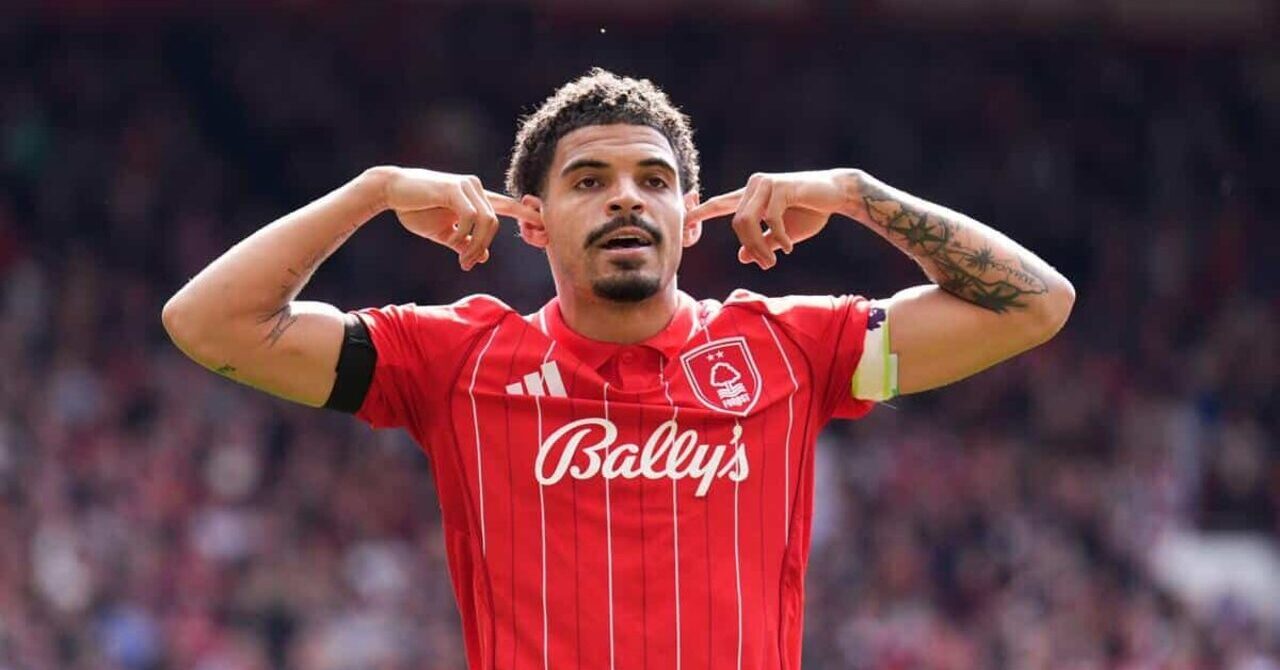
“Now, for me, and I’m going to throw a name out now…I would go and sign Morgan Gibbs-White. A number 10, you want to build a team around a player.” This isn’t just a suggestion; it’s a strategic blueprint. Gibbs-White, still only 26, represents the youthful exuberance, relentless pressing, and creative dynamism that Pochettino’s system demands. His ability to link play, drive forward with the ball, and contribute defensively makes him a far more rounded and future-proof option than an aging, albeit brilliant, Fernandes.

Eyebrows were undoubtedly raised when Nottingham Forest shelled out a hefty £42million for Gibbs-White from Wolves in 2022. But in the cut-throat crucible of the Premier League, he has not just proved a shrewd acquisition; he has blossomed into a creative linchpin, a genuine difference-maker. His consistent performances even caught the eye of rivals, with Tottenham Hotspur reportedly sniffing around in 2025 before Forest smartly tied him down to a new, three-year deal at the City Ground. This resilience and commitment to his current club speaks volumes about his character, a trait Pochettino deeply values.
Now, with 10 England caps under his belt, Gibbs-White isn’t just ‘one to watch’; he’s widely considered one of the Premier League’s premier attacking midfielders. His vision, work rate, and ability to unlock stubborn defences have become a hallmark of Forest’s improved attacking impetus. Young believes this burgeoning talent is ripe for the biggest stages. “I think that he’s young, he’s hungry, he’s just got into an England squad. I think he’s got the capabilities to go and play for – no disrespect to Nottingham Forest – a bigger club.”
The weight of a Manchester United shirt is immense, but Young sees a player forged in the fires of competition, ready for the challenge. “I think he’s shown more than enough at Nottingham Forest to be able to go and say, do you know what, I could play for a bigger club like Manchester United and take the weight of that. For Morgan Gibbs-White, he’s now around the England squad. Players talk. Players will talk, and you’re looking at other players around the England squad and you like [the idea of] playing for the title.” This is the subtle seduction of ambition, the whisper among peers that only intensifies the desire to compete at the very pinnacle. Gibbs-White’s inclusion in the England setup puts him in direct contact with United’s current stars, potentially sowing seeds of future collaboration.
Young says Pochettino needs time to succeed at United – And Liverpool Await
United’s immediate future is fraught with peril. Their current position in the relegation zone, a stark reminder of their recent malaise, casts a long shadow over Pochettino’s debut. His baptism of fire? A daunting trip to Anfield on Sunday afternoon to face arch-rivals Liverpool. Young, ever the pragmatist, knows that instant miracles are a fantasy. “They’re going to need to raise money, aren’t they? They’ve got to get rid of players. And I’m sure that’s what Pochettino is going to be saying.” This isn’t a simple tweak; it’s an overhaul, a systemic cleansing required to embed Pochettino’s high-intensity, vertical brand of football.
He draws parallels to Pochettino’s transformative spell at Tottenham Hotspur. “If you look at his Tottenham sides, he rebuilt them. They were, I think, 16th at the time [when he arrived]. They finished fifth in his first season, [and reached the] League Cup final. After that, they were top four, Champions League football. It takes time.” Young’s analysis is a rallying cry for patience. Pochettino didn’t just improve Spurs; he redefined them, instilling a ruthless pressing game, developing young talent, and forging a cohesive unit that punched above its weight. “I’m sure he would have said to the board, ‘I’m going to need time, because you can’t just give me a January window and a summer transfer window and expect results to change’. Because it won’t happen.” The Argentine’s track record demands trust, but United’s notoriously impatient fanbase and board will be the ultimate test.
Game Highlights: Manchester United vs. Liverpool (Pochettino’s Debut)
**Anfield, Sunday Afternoon:** The air crackled with anticipation, a cauldron of noise as Pochettino strode onto the Anfield touchline for his inaugural Manchester United game. Liverpool, sensing blood, started like a freight train. Within minutes, Alisson was barely troubled as United sat deep, absorbing waves of red pressure. Trent Alexander-Arnold’s raking cross found Darwin Núñez, whose header forced a smart save from André Onana in the 12th minute. Liverpool’s dominance was clear, but United’s defensive shape, though stretched, held firm, a nascent sign of Pochettino’s tactical discipline.
The half wore on with United struggling to gain a foothold. Rashford, isolated up front, chased shadows. It wasn’t until the 38th minute that United registered their first meaningful attack, a scything run from Garnacho down the left, culminating in a low shot that flashed just wide of the far post. A glimmer of hope. Onana was called into action again just before the break, diving full stretch to tip away a curling effort from Mohamed Salah, ensuring the teams went into halftime level, a testament to United’s grit.
The second half saw a more spirited United emerge. Pochettino’s half-time talk seemed to ignite a fire. Casemiro, surprisingly energetic, broke up play and attempted to dictate tempo. The midfield battle intensified, with Bruno Fernandes trying to unlock the Liverpool defence with varying degrees of success. In the 65th minute, United had their moment. A swift counter-attack saw Eriksen feed Antony on the right flank. The winger, cutting inside, unleashed a venomous left-footed strike that cannoned off the crossbar, leaving Anfield momentarily stunned. The roar of the travelling support was deafening.
Liverpool, shaken but not broken, pushed for a winner in the final quarter. Van Dijk’s late header from a corner flew agonisingly over, and Onana made another crucial save from substitute Luis Díaz in stoppage time. The final whistle blew, signalling a hard-fought **0-0 draw**. United, against all odds, had left Anfield with a point, a performance built on resilience, defensive organisation, and flashes of counter-attacking menace. It wasn’t pretty, but it was a foundation.
The Road Ahead: Patience, Purpose, and a Prediction
Pochettino’s debut, a gritty draw at Anfield, offers a tantalising glimpse of what could be. It showcased a nascent defensive solidity and fighting spirit that has been conspicuously absent. Yet, the chasm between United’s current state and their aspirations remains vast. Ashley Young’s call for Morgan Gibbs-White isn’t just about replacing a player; it’s about shifting the club’s entire midfield philosophy – injecting youth, hunger, and a relentless, all-action style that aligns perfectly with Pochettino’s tactical demands.
The coming transfer windows will be crucial. United must heed Young’s advice: ruthless player clear-outs and shrewd, targeted acquisitions are non-negotiable. The narrative of building around a player like Gibbs-White, rather than clinging to past glories, is the forward-thinking approach this club desperately needs. It won’t be easy, and the journey will be fraught with setbacks, but the potential rewards are immense.
**Prediction:** While Pochettino’s first game shows promise, the deep-seated issues at United will prevent an immediate surge up the table. They will escape the relegation zone quickly, but the inconsistencies will persist as the squad adapts to his demanding system. Expect United to show flashes of brilliance, particularly at home, but struggle for consistency away from Old Trafford against top-six opposition. They will finish the season between **7th and 9th place**, a significant improvement on their current standing but still short of Champions League qualification. The true impact of Pochettino and any potential new signings like Gibbs-White will only be felt in the subsequent seasons, provided the board and fans grant him the one thing Ashley Young insists he needs most: **time.**