
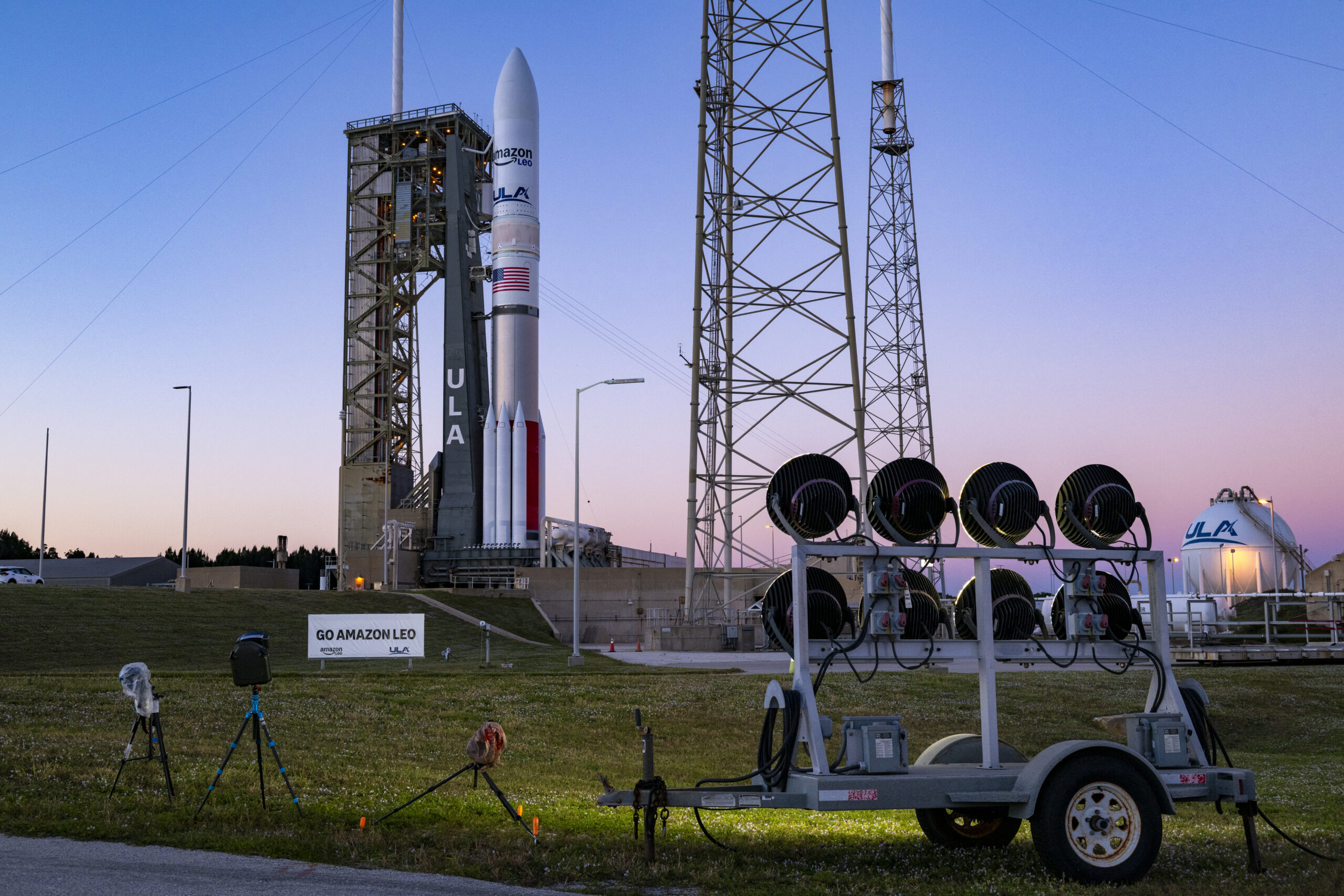
U.S. Space Launch Capacity Faces Strain After Vulcan Centaur Failure, Highlighting Industry Bottlenecks
A recent launch failure involving a United Launch Alliance (ULA) Vulcan Centaur rocket on November 15 has intensified concerns about the United States’ national security space launch capabilities. The incident, which resulted in the destruction of the rocket and its payload of 40 Amazon low-Earth orbit (LEO) satellites, not only represents a significant setback for ULA but also tightens an already constrained launch capacity for the U.S. Space Force.
The November launch marked the first flight for the Vulcan Centaur in nine months, following a protracted investigation into an anomaly experienced during a previous launch attempt in February. That earlier incident involved issues with the nozzles on Northrop Grumman-manufactured solid rocket boosters, leading to a grounding of the vehicle. While the November launch initially appeared successful, ULA investigators concluded that approximately 10 minutes into the flight, the rocket failed to achieve sufficient altitude and velocity to reach orbit.
Concurrently, SpaceX, already the dominant launch provider for the Space Force and holding a near-monopoly on heavy-lift missions, successfully conducted a test flight of its new Starship launch vehicle. This development further solidifies SpaceX’s position as a premier and increasingly influential player in the nation’s space launch sector, even as it presents new challenges for national security missions.
The recent ULA failure has triggered another investigation. According to ULA statements, the problem appears to have originated with the fuel supply to the first stage’s BE-4 rocket engines, which are built by Blue Origin. This finding, if confirmed, could have broader implications beyond ULA, as these same BE-4 engines are also intended to power Blue Origin’s forthcoming New Glenn heavy-lift vehicle.
ULA explicitly attributed the failure to “inadequate fuel supply from the vehicle to the BE-4 engines, not from the performance of the engines themselves.” While this assessment could be seen as positive for Blue Origin, alleviating concerns about the BE-4 engine’s fundamental design, it nevertheless points to a critical system failure. Blue Origin’s New Glenn rocket, meanwhile, has faced its own development delays, having not launched since May when a test article exploded on the pad at Cape Canaveral Space Force Station, Florida. Despite this, Blue Origin has maintained its target of a January 2027 launch for New Glenn, with no announced changes to that schedule.
The incident underscores the inherent fragility and interconnectedness of the U.S. space launch ecosystem, where multiple vendors often share critical components. A systemic issue with the BE-4 engines, regardless of whether it’s an engine performance or fuel delivery problem, could potentially impact two of the Space Force’s three primary launch options for its most vital National Security Space Launch (NSSL) missions, creating a single point of failure risk.
Todd Harrison, a defense space and budget expert with the American Enterprise Institute, characterizes the situation for ULA as one of “existential pressure.” Harrison noted that, on a positive note, ULA appears to have resolved the earlier issues with Vulcan Centaur’s solid rocket motors, manufactured by Northrop Grumman. A Northrop Grumman spokesperson confirmed that their boosters “performed as expected and successfully separated from the Vulcan launch vehicle before [the] anomaly” in November.
The fact that Vulcan Centaur’s first stage has demonstrated successful performance in previous tests offers some reassurance, suggesting that the recent failure may not stem from a fundamental design flaw. “It’s comforting that it can work—that whatever failed is not something that was going to fail every single time,” Harrison stated. “It was a lower probability event, and it just happened to occur.”
However, ULA has staked its future on the success of the Vulcan Centaur. “This is their only launch vehicle going forward, and every day they’re grounded, they are falling further and further behind on the orders they already have, which is preventing them from taking on any new orders,” Harrison emphasized, highlighting the critical nature of returning to flight for the company.
The Space Force has publicly reaffirmed its commitment to ULA. Brig. Gen. Eric Zarybnisky, the service’s portfolio acquisition executive for space access, stated, “Space access is inherently challenging, particularly when fielding new heavy-lift capabilities designed to support our nation’s most demanding security missions. While the outcome is not what the team worked toward, our focus remains on supporting ULA in a rigorous, data-driven analysis to identify the cause, implement corrective actions, and return to flight safely.”
Nevertheless, the U.S. Space Force has an urgent schedule of missions. Anticipating potential delays with ULA, the service has already reallocated approximately half a dozen missions from Vulcan to SpaceX’s Falcon 9 or Falcon Heavy rockets. However, this strategy is nearing its limits. Harrison warned, “They’re already running up against that limit. There are more missions they don’t want to delay, and not much left they can swap. And there’s not much capacity left on the Falcon 9. It’s really operating at almost its max flight rate.”
This escalating pressure raises the prospect that the Space Force and other U.S. government customers may “have to start looking at alternative vendors,” Harrison suggested. Currently, however, only SpaceX possesses launch vehicles fully certified to carry out critical NSSL missions. Even if Blue Origin successfully returns to flight with a commercial mission, it would still need to complete the Space Force’s stringent certification process for no-fail national security launches, though it could provide options for less critical missions in the interim.
To mitigate these risks and foster greater competition, the Pentagon is investing in new launch capabilities by offering $150 million in loans to support the development of new rockets from two smaller launch providers: Rocket Lab and Stoke Space. Both companies are targeting their inaugural flights for 2027, aiming to diversify the U.S. launch landscape.
The space launch industry remains inherently challenging, and the maturation of new launch vehicles rarely occurs without technical setbacks and delays, underscoring the complexities faced by both established and emerging players.
SpaceX’s Evolving Strategy and Starship Development
SpaceX’s November 14 Starship launch represented its 15th attempt over three years for the colossal 400-foot rocket. This approach reflects the company’s philosophy of frequent testing and rapid iteration in development. The mission successfully reached low-Earth orbit and deployed its payload of new Starlink satellites. While officials aborted an attempt to catch the lower booster stage, the upper stage successfully returned to the launch site in Texas to be caught by mechanical arms on the launch tower. Overall, the mission was largely hailed as a significant step forward.
As SpaceX dedicates increasing resources to bringing Starship to full operational capability, it is concurrently scaling back work on its highly successful Falcon 9 and Falcon Heavy rockets, which are currently the primary vehicles relied upon by the Space Force and the commercial space industry. Media reports indicate that SpaceX has already ceased accepting new commercial orders for Falcon 9 launches beyond 2028. The Space Force, through its NSSL program, has slightly more leeway, with the ability to order Falcon 9 launches from SpaceX through 2029, with missions potentially taking place several years thereafter.
Regardless, the Falcon 9 is slated for retirement in the foreseeable future. Starship, however, is not a direct, guaranteed replacement for all mission types due to its unique design. When queried by Air & Space Forces Magazine about certifying Starship for national security launches, a Space Force spokesperson deferred to the company, noting that “the certification process is initiated by the launch-service provider.” SpaceX has not yet responded to queries regarding its certification plans for Starship with the Space Force.
Harrison pointed out that because SpaceX’s primary focus for Starship is the continued expansion of its Starlink constellation, the vehicle incorporates a unique “PEZ dispenser” design optimized for deploying numerous relatively small Starlink satellites into low-Earth orbit. This design is not inherently suited for launching the large, conventional spacecraft typically required for many national security missions, which often demand a traditional payload bay or fairing.
To alleviate current anxieties, Harrison suggested that “SpaceX could help ease a lot of the fears by showing a timeline for development of a different Starship version, one that has a payload bay or fairing of some kind that can launch traditional satellites.” However, developing such a variant while simultaneously meeting its own Starlink deployment needs, as well as those of NASA and the Space Force, presents a considerable challenge.
In the interim, the Space Force’s options for ensuring consistent access to space remain limited. “The government’s got to be looking at what are their options to force SpaceX to keep the Falcon 9 flying for longer,” Harrison stated. One potential, albeit unprecedented, measure could involve invoking the Defense Production Act. This act empowers the President to “require acceptance and performance of … contracts or orders” deemed necessary for national security. While the full scope of this authority in the context of space systems is largely untested, it could, in theory, compel a company to accept new work.
Other proposals have included SpaceX licensing its Falcon 9 technology to other companies, such as ULA. However, Harrison cautioned that this approach could be complex given SpaceX’s substantial proprietary knowledge and expertise concerning the vehicle. Alternatively, the government could mandate that SpaceX spin off its Falcon 9 operations into a separate business entity. Harrison warned that such a move would likely trigger a lengthy bureaucratic process and may not garner the necessary political support to be successfully implemented.
Why This Matters
The recent ULA Vulcan Centaur failure and the broader challenges facing U.S. space launch capabilities carry significant implications for national security, economic competitiveness, and the future of global space endeavors.
National Security:The U.S. military, intelligence agencies, and critical infrastructure rely heavily on satellites for communication, navigation, weather forecasting, missile warning, and intelligence gathering. Assured access to space – the ability to launch satellites reliably and on demand – is paramount for maintaining these capabilities, especially in an era of increasing geopolitical competition in space. A bottleneck in launch capacity or an over-reliance on a single provider creates vulnerabilities that could be exploited by adversaries, potentially hindering military operations or intelligence collection. The ability to replace damaged or aging satellites quickly is a cornerstone of strategic defense.
Economic Impact and Innovation:A robust and competitive space launch industry is a significant driver of economic growth, high-tech job creation, and scientific advancement. Delays and failures impact not only government missions but also commercial ventures, such as satellite constellations for global internet access, Earth observation, and space tourism. A vibrant ecosystem of multiple, reliable launch providers fosters innovation, drives down costs through competition, and ensures the U.S. remains a leader in the global space economy. The Pentagon’s investment in emerging providers like Rocket Lab and Stoke Space reflects a strategic effort to cultivate this competitive environment.
Technological Leadership and Global Competition:The U.S. has historically been at the forefront of space exploration and technology. Challenges in launch reliability and capacity threaten this leadership position, particularly as nations like China and Russia accelerate their own space programs. Maintaining a diverse and resilient launch industrial base is crucial for projecting technological prowess and safeguarding strategic interests in the increasingly militarized domain of space. The evolution of rockets like Starship, while promising, also highlights a divergence in design philosophy that may not immediately serve all established national security needs, requiring strategic adaptation.
Resilience and Diversification:The reliance on shared components (like the BE-4 engines) across different launch providers, while potentially cost-effective, also introduces systemic risk. A problem with one component can ripple through multiple programs, creating a single point of failure that can ground entire fleets of rockets. The ongoing discussions about potential government intervention to ensure the longevity of key launch vehicles, such as the Falcon 9, underscore the critical need for resilience and diversification in the U.S. space industrial base to prevent future capacity crises.