
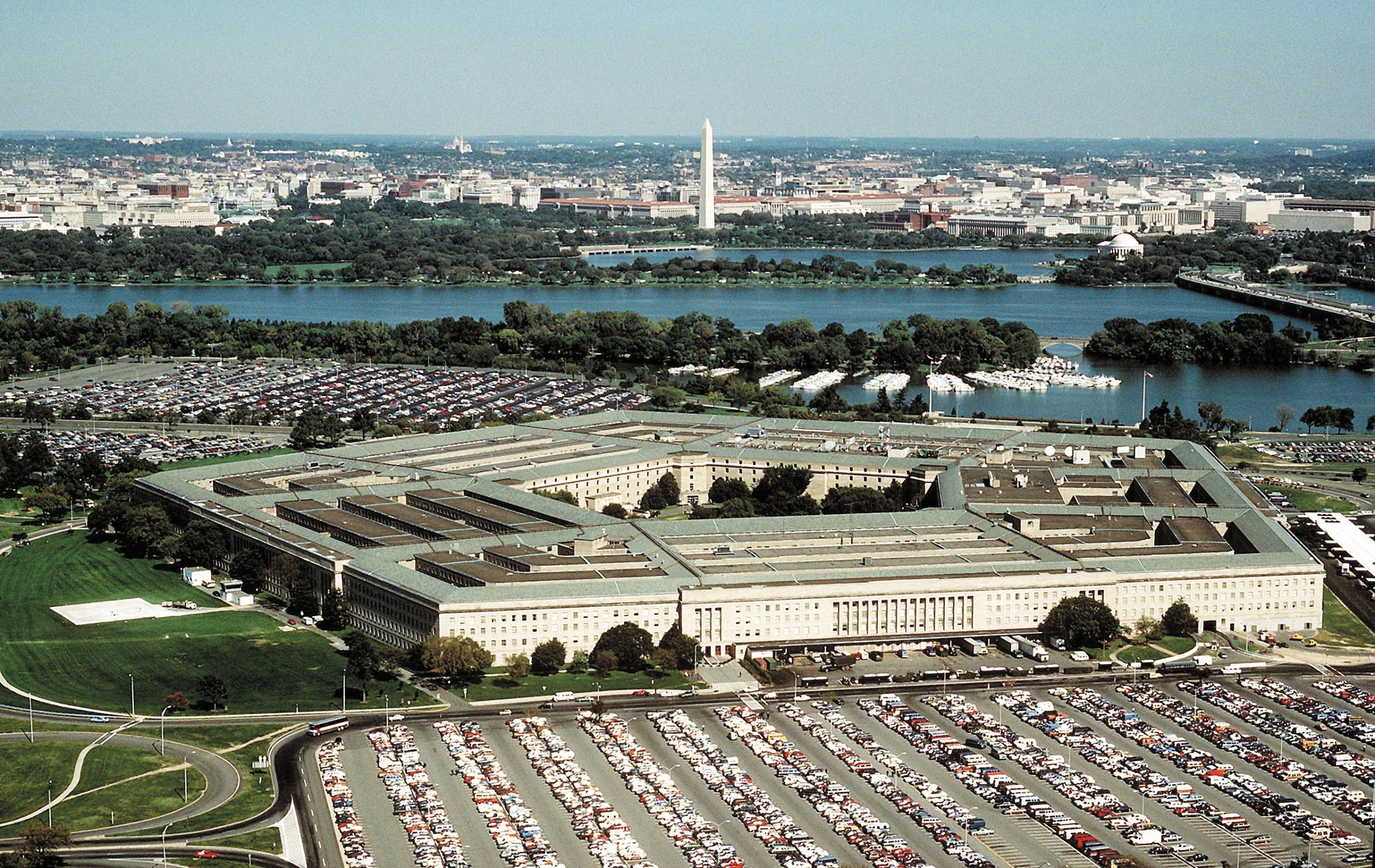
Washington D.C.– For the ninth consecutive year, the U.S. Department of Defense (DOD) has failed its annual financial audit, receiving a “disclaimer of opinion” from independent auditors for fiscal year 2026. This assessment indicates that auditors could not gather sufficient reliable information to form an opinion on the department’s financial statements, highlighting significant challenges in financial record-keeping and accountability across the vast federal agency.
Concurrently, the Department of the Air Force (DAF), a major component of the Pentagon, also failed its individual financial audit. Notably, for the first time in at least two decades, the DAF did not publish its own separate financial report for FY2026. This decision marks a significant deviation from standard practice, where the department typically releases a comprehensive document detailing the state of its various financial funds.
A spokesperson for the Air Force confirmed this change in approach, stating that the department plans to resume publishing its standalone report in fiscal year 2027. The decision to integrate its financial statements into the broader Department of Defense consolidated report for FY2026 was framed as a strategic effort. “For the purpose of efficiently focusing resources on achieving clean opinions for both Working Capital Funds and General Fund in fiscal year 2027, the Department of the Air Force completed its FY 2026 financials for inclusion in the Department of War consolidated financial report,” the spokesperson explained, using an alternate approved title for the Department of Defense.
These detailed financial reports, typically hundreds of pages long, are crucial for transparency and oversight. They provide an in-depth look at the DAF’s financial health, specifically its General Fund, which underpins core Air Force missions and daily operations, and its Working Capital Fund, responsible for maintaining weapon systems, supplying parts, and managing base and medical supplies vital for operational readiness.
The Pentagon released its department-wide financial report on November 16. The “disclaimer of opinion” issued by independent auditors means they were unable to verify the accuracy and completeness of the financial records, pointing to systemic issues in data management and internal controls. This recurring failure poses ongoing concerns for congressional oversight and public accountability.
Congress has mandated that the Defense Department achieve a clean audit by the end of fiscal year 2028. This deadline places significant pressure on the DOD to reform its financial practices. Despite the overall audit failure, DOD Comptroller Jay “Jules” Hurst III offered a cautiously optimistic outlook. In a statement on November 18, Hurst highlighted that for the first time, more than half of the Pentagon’s vast assets and over 90 percent of its liabilities have either already achieved or are projected to achieve clean audit opinions by February 2027. This suggests progress in specific areas, even as the overall financial picture remains uncertifiable.
Focusing on the Air Force’s progress, Comptroller Hurst indicated in a November 12 call with reporters that the DAF aims to secure clean audits for both its Working Capital Fund and General Fund in fiscal year 2027. While this target would be a year ahead of schedule for the Working Capital Fund, it would represent a year’s delay for the General Fund, as Air Force leadership had initially aimed for a clean audit in 2026. Historically, the Air Force has not achieved a clean audit for either fund since 2008, underscoring the persistent nature of these financial challenges.
Hurst acknowledged the ambitious nature of the 2027 goal for the Air Force, stating, “They may not get it in ’27, but they’re likely going to learn a lot of lessons that will set them up for ’28.” However, he also conveyed optimism from Ernst & Young, the independent public accounting firm responsible for auditing the Department of the Air Force, following a recent meeting. Hurst detailed that a significant part of the effort on the Working Capital side involves “going out and doing inventory counts across the country of Air Force assets held in the Working Capital Fund, to making sure those inventories are right, and then of course, valuing those inventories. That’s really the secret sauce for the Working Capital Funds, that’s the bulk of the assets.” While the General Fund presents a more complex auditing challenge, auditors remain “optimistic about that,” according to Hurst.
The Pentagon’s report acknowledged the Air Force’s progress in asset accountability and transaction accounting and valuation. However, it also highlighted persistent obstacles, particularly the continued reliance on antiquated financial systems that hinder accurate and efficient record-keeping. In previous years, such as the fiscal year 2025 financial report (the most recent standalone document published by the DAF), auditors identified numerous “material weaknesses”—significant deficiencies in internal control that could lead to a misstatement of the financial statements. The FY2025 report listed 13 such weaknesses.
The Pentagon is now shifting its focus away from this specific metric during the current push for a clean audit. Hurst clarified, “That’s not a key part of our strategy now, and so it’s no longer an important metric for the department, at least during this two-year surge to get a clean opinion.” He added that once a clean audit opinion is achieved, the department will pivot back to addressing specific material weaknesses through enhanced controls and system modernization. “But for now, it’s not something we’re going to assess ourselves over the next two years,” he stated.
In terms of its financial footprint, the Department of the Air Force reported $261.2 billion in gross operations costs for FY2026. After factoring in $17.7 billion in earned revenue, the net cost of operations stood at $243.5 billion. This figure represents more than 24 percent of the military’s overall approximate $1 trillion net cost of operations, underscoring the Air Force’s substantial financial scale within the DOD.
The audit report specifically pinpointed critical issues within the Air Force’s financial management. It found that the Air Force’s Working Capital Fund “lacked effective design and control activities to prevent and detect material misstatements” and “did not have a plan or policy to value its inventory.” Consequently, the net inventory balances for the Air Force’s Working Capital Fund “may be inaccurate, unsupported, and incomplete.” Similar deficiencies were identified within the Army and the Defense Logistics Agency. To address these systemic problems, the report recommended that the Pentagon comptroller office leverage Joint Task Force-Audit—a newly established initiative designed to coordinate and streamline the audit process—to ensure that Working Capital Funds accurately record inventory transactions and track data.
Challenges were also noted in the Air Force’s General Fund, where management failed to adequately support its opening balances and lacked sufficient controls to ensure that operating material and supply records were complete, accurate, and properly reconciled. These issues mirrored those identified in the Army and Navy’s General Funds, indicating broader financial management concerns across military branches.
Beyond financial statements, the report delved into operational readiness, noting that the Air Force has “under-executed programmed flying hours” and has not consistently met its minimum aircrew readiness requirements. Recovering readiness is identified as a top priority. The report stated the Air Force’s commitment to fund 93 percent of its weapon system sustainment requirements across 110 fielded weapon systems, totaling $22.6 billion, and is on track to fully fund its executable flying hour program.
The report suggested that the Air Force has an opportunity to rebalance its readiness by strategically aligning weapon system sustainment, training capacity, and executable flying hours. By more effectively matching sustainment, training, and operational demand, the department could enhance aircraft availability and make significant strides toward meeting readiness standards. However, several factors pose risks to this goal, including an aging fleet, escalating sustainment costs, and constraints within the industrial base, which could impede the Air Force’s ability to increase flying hours and training capacity.
To mitigate these risks, the report recommended protecting stable, multiyear weapon system sustainment funding, establishing operational demands based on realistic aircraft and maintainer capacities, and expanding the industrial base’s capacity for parts, depot availability, and maintenance support.
Looking to future capabilities, the report discussed the potential of creating a fleet of modular, semi-autonomous Collaborative Combat Aircraft (CCA) fighter drones to accelerate the Air Force’s objective of achieving affordable combat mass. Nevertheless, it cautioned that rapidly accelerating the CCA program without simultaneously balancing the sustainment of existing F-15, F-16, F-22, and F-35 legacy fighters—which currently form the backbone of the Air Force’s airpower—could lead to critical near-term capability gaps. The comptroller’s office advised a deliberate, incremental approach to fielding CCAs to mitigate these risks. It also recommended maintaining modernization and sustainment funding for current fighter fleets and enforcing modular integration standards to reduce schedule and interoperability challenges.
Why This Matters
The consistent failure of the Department of Defense and the Department of the Air Force to pass their financial audits carries profound implications for national security, public trust, and the effective allocation of taxpayer dollars. Financial audits are fundamental tools for accountability and transparency, ensuring that government agencies manage public funds responsibly and efficiently.
Accountability and Trust:When audits fail, it signals a lack of transparency and robust internal controls. For an organization managing over a trillion dollars annually, this undermines public and congressional trust in how defense funds are spent. Taxpayers deserve assurance that their money is being used wisely, without waste, fraud, or mismanagement. A “disclaimer of opinion” means auditors cannot even verify if the financial statements are reliable, raising significant questions about financial integrity.
Operational Readiness and National Security:The audit findings directly connect to the military’s ability to perform its core mission. Issues such as inaccurate inventory balances for the Working Capital Fund mean that the Air Force might not know precisely what parts it has, where they are, or their true value. This directly impacts the maintenance of weapon systems, potentially leading to delays in repairs, grounded aircraft, and reduced readiness for critical missions. Similarly, unsupported General Fund balances can obscure the true cost of operations, making it harder to prioritize funding for training, personnel, and critical initiatives. The report explicitly links these financial challenges to “under-executed programmed flying hours” and failure to meet aircrew readiness requirements, which directly impacts the Air Force’s combat effectiveness and ability to respond to global threats.
Strategic Planning and Resource Allocation:Without accurate financial data, strategic decision-making becomes inherently flawed. How can the Air Force effectively plan for the future, invest in new technologies like Collaborative Combat Aircraft (CCAs), or ensure the sustainment of its aging legacy fleets if it lacks a clear and verifiable picture of its current financial state? Misinformed decisions about funding sustainment, training, and modernization could lead to capability gaps, inefficiencies, and ultimately, a less effective fighting force. The recommendation to phase in CCAs deliberately, while maintaining legacy fighter support, is a direct acknowledgement of these resource allocation challenges when financial clarity is lacking.
Economic Impact:The Department of the Air Force alone operates with a net cost of operations exceeding $243 billion, making it a colossal economic entity. Inaccurate financial reporting can lead to misallocated contracts, inefficient procurement, and a ripple effect throughout the defense industrial base. Businesses relying on clear, stable funding and accurate inventory data for their contracts are also affected by the instability indicated by audit failures. This can impact jobs, innovation, and the overall health of the defense sector.
The 2028 deadline set by Congress is not merely an administrative formality; it is a critical mandate to instill fundamental financial discipline within the nation’s defense apparatus. Achieving a clean audit is essential not just for compliance, but for ensuring the U.S. military is fiscally sound, operationally ready, and capable of meeting its global responsibilities effectively and transparently.