
Key Takeaways: Anthropic’s Trillion-Dollar AI Bet
- Record-Shattering Capital Raise:Anthropic’s public debut saw it raise a colossal $104.8 billion (with potential for $117 billion), dwarfing previous tech IPOs like Facebook’s and underscoring the unprecedented capital influx into frontier AI.
- Founders’ Fortunes & Fickle Philanthropy:Each of Anthropic’s seven founders pocketed approximately $280 million from share sales, exceeding their initial targets. While they’ve pledged 80% of their equity to charity, these commitments are explicitly “voluntary, revocable,” raising questions about genuine altruism versus strategic public relations.
- Unprecedented Compute Commitments:Despite the massive capital injection, Anthropic has disclosed staggering infrastructure commitments, totaling over $1 trillion for compute and resources in its foreseeable future, highlighting the insatiable, capital-intensive nature of advanced AI development.
Anthropic’s Grand Entrance: A Trillion-Dollar AI Vision Unfolds
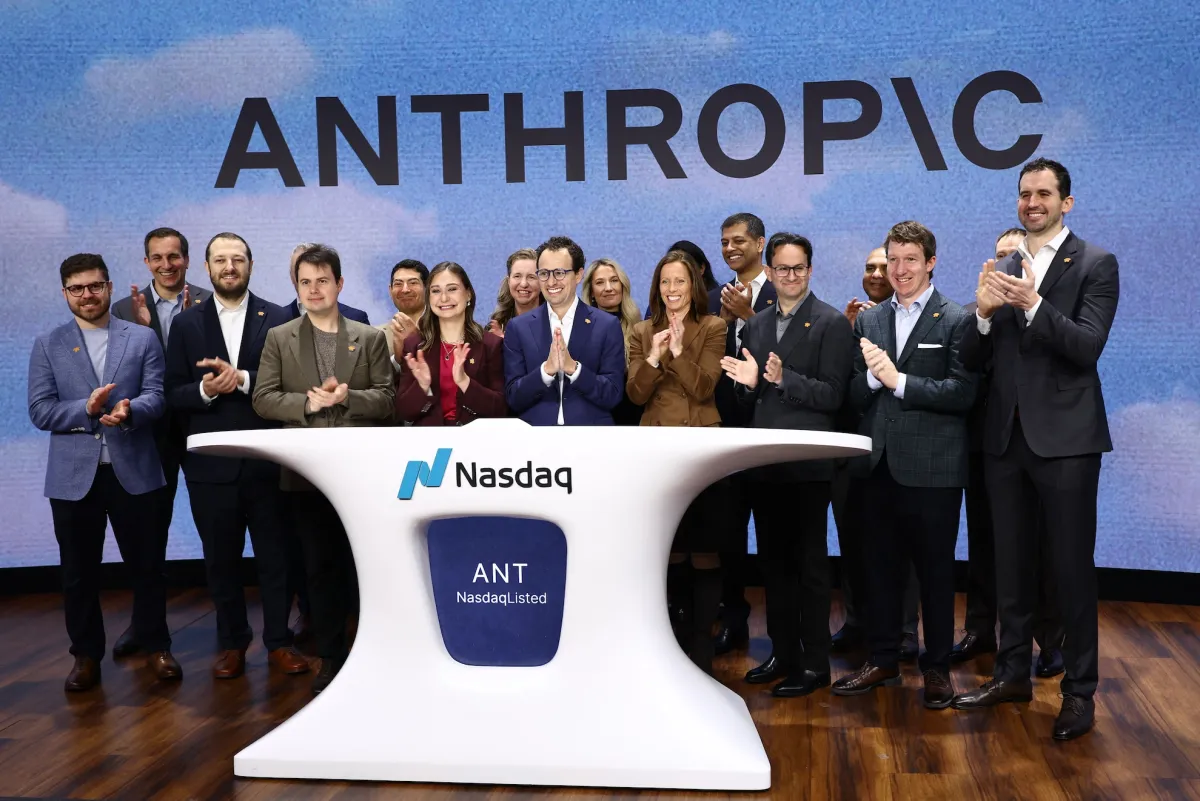
In a tech landscape often characterized by hyperbole, Anthropic’s recent public offering isn’t just another IPO; it’s a seismic event that reshapes our understanding of capital requirements and strategic alliances in the burgeoning AI frontier. The AI research lab, known for its Claude models and commitment to AI safety, officially became a public entity on Thursday, orchestrating a capital raise that has few precedents in modern financial history. The numbers are staggering, hinting at a future where the pursuit of advanced artificial intelligence demands resources on a scale previously unimaginable.
An IPO of Unmatched Scale: Beyond Billions
Let’s put Anthropic’s financial maneuvers into perspective. The company secured an initial $81.3 billion in its public offering, a figure that alone would turn heads. However, the true scale of its capital infusion is far greater. Including a previously announced $26 billion sale of special non-voting Class N stock, Anthropic has effectively raised a monumental $104.8 billion for its coffers, with a potential to reach $117 billion if bankers exercise their full allotment of shares.
To truly grasp this magnitude, consider Facebook’s landmark IPO in 2012, which, at the time, set records by raising $16 billion. Anthropic’s haul isn’t just bigger; it’s an order of magnitude larger, signaling a new era of investment in foundational technologies. This wasn’t merely about selling common stock; a significant portion came from strategic investors like Nvidia ($10 billion), Google ($10 billion), and a consortium including AMD, Broadcom, Micron, Microsoft, and TSMC, who collectively snapped up the non-voting Class N shares. These investments aren’t just financial; they represent deeply entrenched strategic bets by the very companies that fuel the AI ecosystem, ensuring access to Anthropic’s cutting-edge models and cementing partnerships in the intense AI arms race.
Founders’ Windfall: Millions and Murky Philanthropic Pledges
While the institutional numbers grab headlines, the personal stakes for Anthropic’s founders are equally compelling. The company’s seven co-founders collectively sold approximately 3.4 million shares apiece in the IPO. At the upgraded IPO price of $83 per share, this translates to a hefty $280 million for each founder, before underwriting fees and taxes. This windfall even exceeded their apparent initial targets; calculations suggest they aimed for around $250 million per founder based on an original midpoint price of $74 per share. That’s an extra $30 million per person, a testament to the market’s robust appetite for Anthropic’s promise.
Intriguingly, the company’s IPO filings also touched upon the founders’ purported philanthropic intentions. Anthropic stated that each founder has pledged to dedicate 80% of their personal equity in the company to charitable causes. On the surface, this paints a picture of altruistic pioneers. However, a crucial caveat accompanies these pledges: they are described as “voluntary, revocable expressions of each co-founder’s philanthropic intent and do not constitute legally binding obligations.” This wording introduces a degree of ambiguity, allowing for flexibility that could range from genuine philanthropic evolution to a carefully constructed public relations strategy. It leaves onlookers to ponder the true depth of these commitments should personal circumstances or market dynamics shift.
The Cloud Titans’ Strategic Foothold: Amazon & Google’s Combined 28%
Beyond direct investments, the IPO crystallized the significant strategic stakes held by two of the biggest cloud providers: Amazon and Google. At the higher IPO share price, Google now owns a substantial 13.4% of Anthropic. Amazon, a previous investor, converted a portion of its promissory notes into equity as part of the IPO, securing a 14.6% stake. Had Amazon converted all its notes, its ownership could have soared to nearly 24%. Combined, these two cloud behemoths now control a formidable 28% of Anthropic.
This shared ownership by Google and Amazon is not coincidental. It represents a critical strategic maneuver in the intensely competitive cloud and AI infrastructure space. For these giants, holding a significant stake in a leading AI model developer like Anthropic ensures deep integration, preferred access to cutting-edge models, and a vital counterweight to Microsoft’s aggressive partnership with OpenAI. It’s a win-win: Anthropic gains immense compute resources and distribution channels, while Amazon and Google solidify their positions as indispensable partners in the AI revolution.
The Trillion-Dollar Horizon: An Insatiable Demand for Compute
Perhaps the most mind-bending revelation from Anthropic’s filings isn’t how much capital it has raised, but how much more it projects to spend. Despite having nearly $230 billion in available working capital (including existing funds), the company’s future infrastructure commitments dwarf even this staggering sum.
Anthropic needs approximately $70.7 billion to cover its compute and infrastructure spending commitments in the next 12 months alone, as of the quarter ended September 30, 2026. This figure escalates dramatically to $451.6 billion to cover these commitments before the end of 2030. And these are just the priced, relatively firm commitments. The company has also disclosed hundreds of billions of other commitments that are either conditional or haven’t been fully priced yet.
All told, Anthropic’s foreseeable infrastructure commitments range from an astounding $1.05 trillion to $1.08 trillion. This colossal figure underscores the brutal economics of foundational AI development. Training ever-larger, more sophisticated models demands an ever-increasing supply of specialized hardware like GPUs, massive data centers, and an uninterrupted power supply. This isn’t just a pricey business; it’s a capital sinkhole, where even record-breaking IPOs are mere initial deposits in a race that demands sustained, multi-trillion-dollar investments. It vividly illustrates the “AI arms race” is not just about algorithms, but about raw, unbridled compute power.
Bottom Line
Anthropic’s public debut is a landmark moment, not just for the company, but for the entire AI industry. It unequivocally demonstrates the extraordinary market confidence in frontier AI, evidenced by the unprecedented capital raised and the strategic entrenchment of tech giants. However, beneath the celebratory headlines lies a stark reality: the pursuit of truly advanced AI is a game of staggering financial commitment. The more than $1 trillion in future compute obligations reveals that even an IPO of this magnitude is merely a down payment on a generational undertaking. Anthropic, and indeed the entire AI ecosystem, will need to continually innovate, demonstrate tangible returns, and secure access to ever-increasing pools of capital to navigate this ultra-high-stakes, high-expenditure future. Success in the AI era demands not just brilliant minds, but bottomless pockets.
When you purchase through links in our articles, we may earn a small commission. This doesn’t affect our editorial independence.
{content}
Source:{feed_title}