
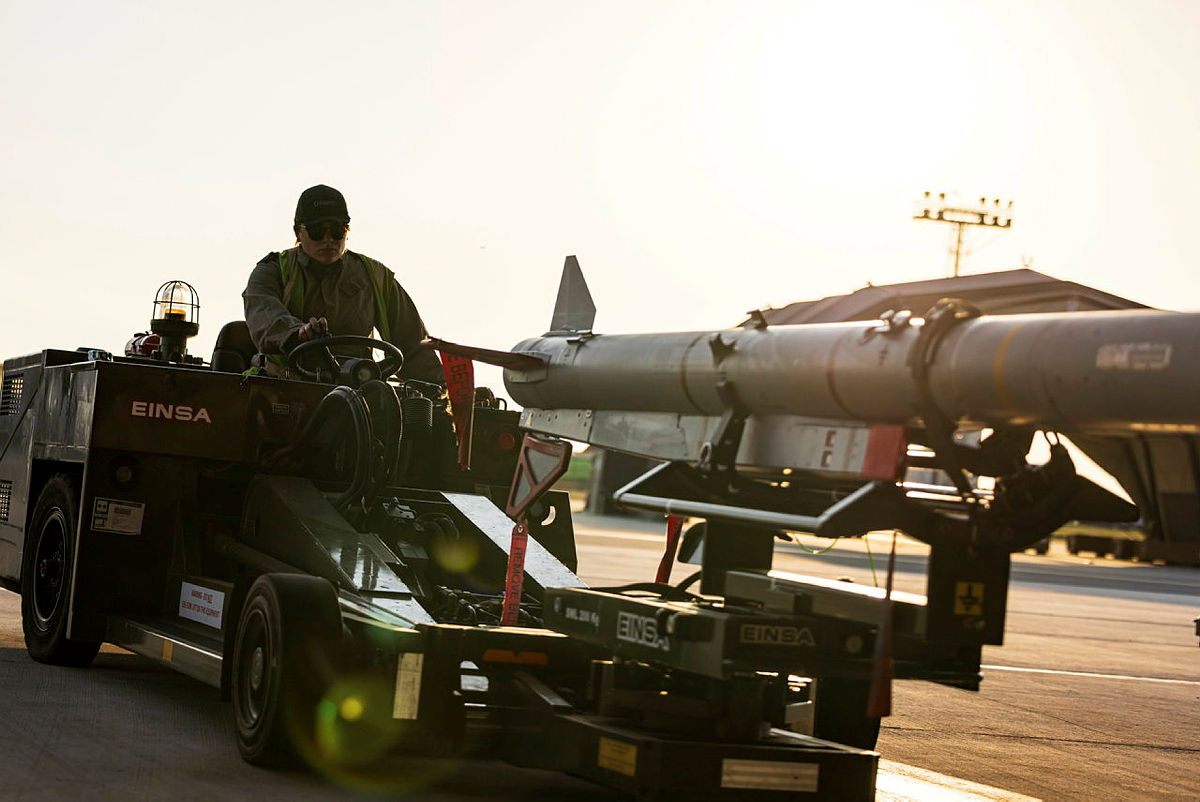
UK and France Collaborate on Next-Generation Air-to-Air Missile Roadmap
The United Kingdom and France have formally commenced a joint study aimed at defining the strategic roadmap for a successor to the advanced Meteor air-to-air missile. This collaborative effort, a cornerstone of Anglo-French defence cooperation, is a critical step in ensuring the future aerial combat capabilities of both nations and their allies. Official confirmation of the study’s timeline and scope was provided in the UK Parliament by Luke Pollard, the Minister for Defence Readiness and Industry.
The announcement followed an inquiry from Ben Obese-Jecty, the Conservative Member of Parliament for Huntingdon, who sought an update on the progress of a “12-month study” initially announced on April 1st. In his parliamentary response, Minister Pollard clarified the scope and duration: “The 12-month study is underway, having been initiated in the summer. Roadmap considerations will form part of the final output from the study; this is due to be completed in summer 2027.” This statement indicates that an initial phase of work, potentially the “12-month study” mentioned, has begun, with the comprehensive strategic roadmap for the Meteor’s successor anticipated by mid-2027. The longer timeframe underscores the complexity and long-term vision required for such a significant defence programme.
The Meteor, manufactured by the European missile consortium MBDA, stands as a pivotal component of modern air superiority for several European air forces. It is a Beyond Visual Range Air-to-Air Missile (BVRAAM) known for its advanced active radar homing and ramjet propulsion system, which provides a significant “no-escape zone” for targeted aircraft. The missile entered service in 2016 and currently equips a range of frontline fighter jets, including the UK Royal Air Force’s Eurofighter Typhoons and the French Air and Space Force’s Dassault Rafales. Its operational deployment extends to six European nations, including Germany, Italy, Spain, and Sweden, highlighting its status as a key interoperable asset within NATO and allied forces.
The decision to pursue a successor missile is driven by the imperative to maintain a technological edge in an increasingly complex and contested global security environment. Future air combat scenarios are expected to feature advanced stealth aircraft, sophisticated electronic warfare systems, and potentially hypersonic threats, necessitating a new generation of air-to-air weaponry with enhanced range, speed, stealth characteristics, and counter-countermeasure capabilities. A successor to the Meteor would be designed to arm the next generation of combat aircraft, notably the Global Combat Air Programme (GCAP) – a trilateral endeavour between the UK, Italy, and Japan to develop a future fighter jet. France also has ambitious plans for future Rafale variants, such as the F5, which would similarly benefit from cutting-edge weaponry.
This initiative builds upon the foundations laid by the renewed Lancaster House 2.0 treaty, signed in March 2023, which reinforced the long-standing defence and security cooperation between the UK and France. Under this framework, a joint Complex Weapons Portfolio Office has been established to coordinate and streamline collaborative missile programmes, aiming to leverage shared expertise and resources while avoiding duplication of effort. This strategic alignment reflects a broader commitment to strengthening the European defence industrial base and fostering greater interoperability between key allies.
The urgency for this development was further underscored by a statement from Minister Pollard in July, indicating that the UK was not proceeding with a midlife upgrade for the existing Meteor missile. Instead, the focus has shifted entirely to its replacement, which will be selected under the Future Air Superiority Effectors (FASE) programme. FASE is currently in its pre-concept phase, dedicated to exploring the foundational requirements and technological pathways for next-generation aerial effectors. This strategic pivot signals a clear long-term vision, prioritizing investment in future capabilities over incremental enhancements to existing systems.
Developing a new air-to-air missile is an undertaking of immense technical complexity and significant financial investment. It requires cutting-edge research and development in areas such as propulsion, guidance systems, sensor technology, and electronic warfare resilience. The joint nature of the study aims to share these burdens, pool intellectual capital, and foster a common industrial base capable of delivering advanced capabilities. The 2027 timeline for the roadmap’s completion allows for thorough analysis of emerging threats and technological possibilities, setting a robust foundation for subsequent development phases.
This Anglo-French collaboration is not only about missile technology but also about strategic partnership and industrial resilience. By working together, the UK and France aim to maintain their sovereign capabilities in advanced weaponry, reduce reliance on external suppliers, and strengthen their position as leading defence innovators on the global stage. The outcome of this study will inform critical defence procurement decisions for decades to come, shaping the future of air superiority for two of Europe’s most significant military powers.
Why This Matters
The joint UK-French study for a successor to the Meteor air-to-air missile carries significant implications across geopolitical, military, technological, and economic spheres:
- Strengthening European Defence and Alliances:This collaboration reinforces the vital defence relationship between the United Kingdom and France, two of Europe’s most significant military powers. In a volatile global security landscape, such alliances are crucial for collective defence and deterrence. It also sets a precedent for broader European defence cooperation, potentially leading to more integrated and efficient military capabilities across the continent.
- Maintaining Air Superiority:Air superiority is fundamental to modern military operations. As potential adversaries develop increasingly sophisticated air defence systems, stealth aircraft, and electronic warfare capabilities, a next-generation air-to-air missile is essential to ensure that allied air forces can operate effectively, protect their assets, and achieve mission objectives. This program directly addresses the need to counter evolving threats and maintain a technological edge.
- Future-Proofing Combat Aviation:The successor missile is explicitly designed to integrate with future combat aircraft, such as the UK-Italy-Japan Global Combat Air Programme (GCAP) and advanced variants of France’s Rafale. This forward-looking approach ensures that these cutting-edge platforms will be equipped with equally advanced weaponry, maximizing their effectiveness and operational lifespan. It is critical for the long-term viability and deterrence capability of these multi-billion-dollar fighter programs.
- Technological Innovation and Industrial Resilience:Developing a complex weapon system like a long-range air-to-air missile drives significant research and development. This investment fosters innovation in critical areas such as propulsion, guidance, sensor technology, and stealth. It also strengthens the European defence industrial base, creating high-skilled jobs, supporting technological sovereignty, and reducing reliance on non-European suppliers for essential defence capabilities. This contributes to national security and economic prosperity.
- Global Deterrence:A credible and technologically advanced air-to-air missile capability enhances the overall deterrent posture of the UK, France, and their allies. Possessing the means to effectively counter sophisticated aerial threats sends a clear message to potential adversaries, contributing to regional and global stability by making aggression less appealing.
- Economic Impact:Large-scale defence programs like this represent substantial economic investment. They generate contracts for defence companies, create employment opportunities in engineering, manufacturing, and research, and can lead to significant export revenues if the resulting missile is adopted by other allied nations.
In essence, this joint study is not merely about a new weapon; it is about securing the future of air power for key European nations, enhancing strategic alliances, and ensuring the continued ability to project power and defend national interests in an unpredictable world.