
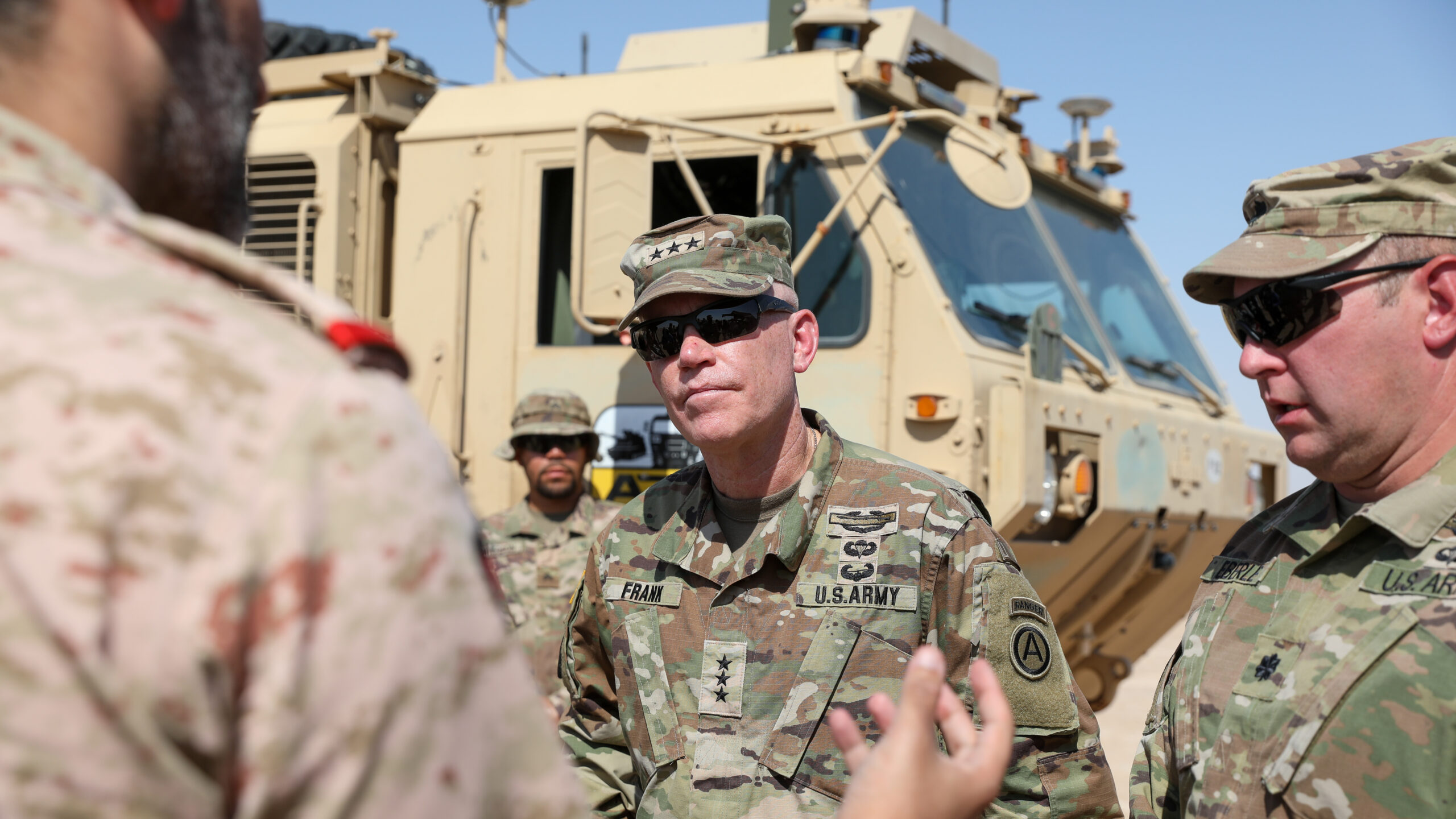
The White House has announced key nominations for senior military leadership positions, signaling potential shifts in U.S. homeland defense strategy and the modernization of its nuclear arsenal. Among the proposed appointments are an Army lieutenant general for a traditionally Air Force-led command and an Air Force lieutenant general tasked with centralizing the management of critical nuclear weapons systems.
Army General Tapped for NORTHCOM and NORAD
In a notable departure from tradition, Army Lt. Gen. Patrick D. Frank has been nominated by the White House to become the next commander of U.S. Northern Command (NORTHCOM) and the North American Aerospace Defense Command (NORAD). This joint role, which is critical for defending the U.S. homeland and its airspace, has historically been held by Air Force officers.
If confirmed by the Senate, Frank would succeed Air Force Gen. Gregory M. Guillot, who assumed leadership of NORTHCOM and NORAD in February 2024. Frank’s appointment would mark him as only the second Army officer to lead NORAD in its nearly 70-year history. Out of 26 commanders since NORAD’s establishment, all but four have been Air Force generals; the other exceptions include three Navy admirals and one previous Army general, Gen. Charles H. Jacoby Jr., who held the post from 2011 to 2014. The last time a non-Air Force officer commanded the unified commands was in 2016, under Adm. William E. Gortney.
Lt. Gen. Frank currently serves as the deputy commander of U.S. Central Command (CENTCOM), a position previously held by Gen. Guillot before his move to NORTHCOM and NORAD. Frank’s experience at CENTCOM involved overseeing military operations and security cooperation across a vast and often volatile region, providing him with direct and recent exposure to a wide array of modern threats.
This selection is particularly significant given the evolving nature of U.S. homeland defense. Traditionally, NORAD’s primary focus has been on detecting and deterring threats such as strategic bombers and intercontinental ballistic missiles transiting the Arctic. However, recent global conflicts, particularly the wars in Ukraine and ongoing tensions in the Middle East, have demonstrated a broader spectrum of threats, including the proliferation of drones, advanced cruise missiles, and ballistic missile technologies. These developments introduce more complex challenges to continental defense, requiring a multi-domain approach.
Frank’s tenure at CENTCOM provided him with practical experience in countering these emerging threats. He played a role in defending military bases in the Middle East against various missile and drone attacks, including involvement with initiatives like the Golden Dome missile defense program. This program is designed to protect against a range of threats, from strategic and hypersonic missiles to advanced counter-drone defenses. This background is seen as directly relevant to the evolving threat landscape faced by NORTHCOM and NORAD, emphasizing the need for leaders with diverse operational experience in an increasingly complex security environment.
Air Force General to Lead Nuclear Weapons Center
Concurrently, Air Force Lt. Gen. Mark B. Pye has been nominated to lead the Air Force Nuclear Weapons Center (AFNWC). This critical command is responsible for the life cycle management of the U.S. Air Force’s nuclear arsenal, from development and acquisition to sustainment and modernization.
Pye currently serves as the deputy chief of major Air Force programs at the Pentagon. If confirmed, he would assume leadership of the AFNWC, becoming the highest-ranking commander of the center since its establishment in 2006. This appointment is expected to provide him with a unique and centralized platform to synchronize the Air Force’s extensive nuclear efforts across various commands and agencies. His new role is anticipated to integrate and expand upon his existing responsibilities within the Air Force’s nuclear enterprise, rather than holding two separate, full-time command positions simultaneously, allowing for a more unified approach to nuclear program management.
In his current capacity, Lt. Gen. Pye already helps manage a significant portfolio as military deputy to Gen. Dale R. White, the Direct Reporting Portfolio Manager for Critical Major Weapon Systems Programs. This portfolio includes foundational components of the U.S. nuclear triad, such as the LGM-35A Sentinel Intercontinental Ballistic Missile (ICBM) – the replacement for the aging Minuteman III ICBM – and the B-21 Raider bomber, which is designed to carry both nuclear and conventional weapons. His expanded role would bring the Long-Range Stand-Off (LRSO) missile, currently under development, and the existing Air-Launched Cruise Missile (ALCM) nuclear weapon, along with the Air Force’s vital nuclear command, control, and communications (NC3) systems, under his direct oversight. This consolidation ensures a comprehensive approach to the modernization and sustainment of the Air Force’s nuclear capabilities.
Lt. Gen. Pye is a highly experienced command pilot with more than 3,600 flight hours, having trained as a KC-10 Extender and B-2 Spirit bomber pilot. His extensive career includes serving as director of programs under the Air Force Deputy Chief of Staff for Plans and Programs, director of concepts and strategy at Air Force Futures, and director of global power programs in the office of the Air Force acquisition executive. These roles have provided him with deep expertise in strategic planning, future capabilities development, and the acquisition process essential for managing complex defense programs.
Both nominations are subject to Senate confirmation. Given the current legislative calendar, with the Senate’s term extending until January 3, 2027, before a new Congress is seated and nominations typically require resubmission, lawmakers often prioritize approving batches of military nominees. It is anticipated that these nominations, crucial for national security leadership, will proceed efficiently through the confirmation process.
Why This Matters
These senior military nominations underscore significant shifts in the United States’ national security posture and strategic priorities. The appointment of an Army general, Lt. Gen. Patrick D. Frank, to lead NORTHCOM and NORAD represents a notable departure from traditional service-specific leadership roles for this critical joint command. This move signals a recognition that homeland defense in North America can no longer be viewed solely through an air-centric lens. The proliferation of diverse threats—from drones and cruise missiles to ballistic and potentially hypersonic weapons—necessitates a multi-domain defense strategy that integrates capabilities across the Army, Navy, and Air Force. Frank’s recent experience defending against such threats in the Middle East provides him with directly relevant expertise, indicating a strategic decision to prioritize adaptability and real-world operational experience over traditional service affiliations for this vital command.
Simultaneously, the nomination of Air Force Lt. Gen. Mark B. Pye to head the Air Force Nuclear Weapons Center is crucial for the ongoing modernization of the U.S. nuclear deterrent. In an era of renewed great power competition, maintaining a credible, reliable, and modern nuclear triad is paramount for strategic stability and deterrence. Pye’s expanded role, consolidating oversight of the Sentinel ICBM, B-21 bomber, Long-Range Stand-Off missile, and nuclear command, control, and communications systems, is designed to streamline and accelerate the development and deployment of these vital assets. His appointment ensures a centralized, comprehensive approach to managing the complex programs that underpin the nation’s ultimate security guarantee.
Collectively, these nominations reflect a proactive adaptation by the U.S. military to a rapidly evolving global threat landscape. They highlight a commitment to enhancing homeland defense capabilities against sophisticated, multi-faceted attacks and reaffirm the dedication to modernizing the strategic nuclear deterrent. Furthermore, Frank’s nomination, in particular, emphasizes the increasing importance of inter-service collaboration and leveraging diverse expertise to address complex security challenges effectively. These leadership appointments are not merely personnel changes; they are strategic decisions that will shape how the U.S. safeguards its territory and maintains its global strategic influence for years to come.