
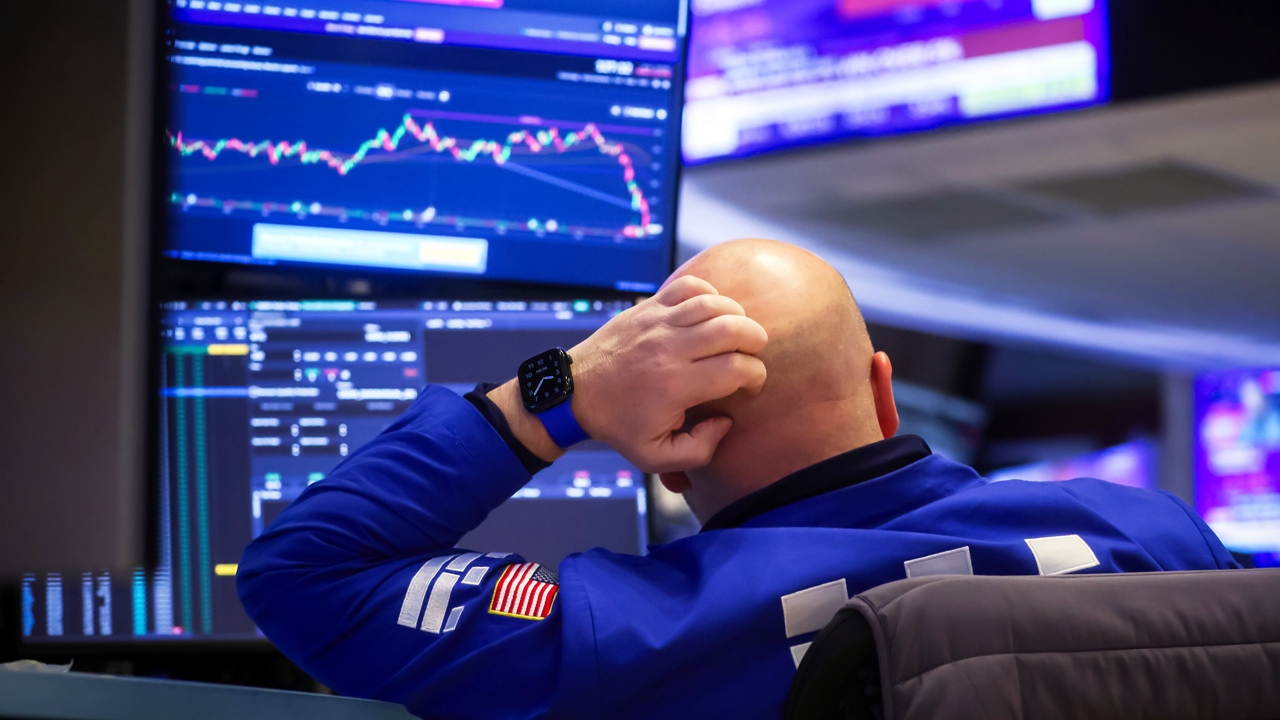
Pacer ETFS President Sean O’Hara and Infrastructure Capital Advisors CEO and CIO Jay Hatfield join ‘Claman’s Power Players’ to discuss market impact after Nvidia CEO Jensen Huang’s return.
**Key Takeaways:**
1. **Sharp Rebound Post-Correction:** U.S. equities staged a significant rebound, with all major indexes gaining over 5% in a Thanksgiving-shortened week, signaling a strong technical bounce after the previous week’s severe sell-off pushed the Dow and S&P 500 into correction territory.
2. **AI Sector Volatility Remains Central:** The rally was largely driven by investors rotating back into battered artificial intelligence (AI) and technology stocks, highlighting both the sector’s immense growth potential and the ongoing debate around its valuations and susceptibility to rapid sentiment shifts.
3. **Oversold Conditions & Macro Undercurrents:** The market’s “oversold” state, combined with hopes for stabilizing interest rates and a potential year-end rally, provided the impetus for the strong gains, though underlying concerns about economic growth and corporate earnings persist.
Wall Street staged a strong comeback this week, with all three major U.S. stock indexes posting gains of more than 5% during the Thanksgiving-shortened trading week and the S&P 500 recording its largest weekly gain in more than a year. This impressive performance marked a significant reversal from the previous period, signaling a potent technical bounce and renewed, albeit cautious, investor confidence in risk assets.
The rebound came on the heels of last week’s historic sell-off, when mounting concerns surrounding the artificial intelligence (AI) boom sent stocks tumbling. The prior week’s market retreat was characterized by fears of unsustainable valuations within the high-flying tech sector, particularly among AI-related companies, alongside broader macroeconomic anxieties about persistently high interest rates and their potential impact on corporate earnings and economic growth. Many analysts pointed to a classic “risk-off” sentiment dominating the markets, triggering profit-taking after a substantial run-up in tech names.
The S&P 500 gained 5.6% for the week, marking its strongest weekly performance since April 2023, while the Dow Jones Industrial Average climbed 5.46% and the tech-heavy Nasdaq Composite surged 6.68%. These robust figures underscore a broad-based rally that saw buying interest return across various market segments, but with a clear emphasis on growth-oriented sectors.
All three major U.S. indexes finished higher Friday as investors returned from the Thanksgiving holiday, extending the week’s positive momentum into the final session, albeit with potentially thinner trading volumes typical of post-holiday markets.
MAMDANI TARGETS AMAZON ON BLACK FRIDAY AS 150K CUSTOMERS PUSH BACK AGAINST DELIVERY CRACKDOWN
Wall Street staged a strong comeback during the Thanksgiving-shortened trading week, with all three major U.S. stock indexes gaining more than 5%.(Michael Nagle/Bloomberg via Getty Images)
The Dow rose nearly 592 points, or 1.18%, while the S&P 500 gained 1.6% and the Nasdaq jumped 2.31% on Friday. This Friday surge further solidified the week’s gains, indicating that the initial rebound was not merely a fleeting dead cat bounce but had some conviction behind it, at least in the short term. The strong performance was a welcome relief for investors who had witnessed significant portfolio erosion just days prior.
Much of the rebound was driven by investors returning to battered AI stocks, many of which suffered steep losses during the previous week’s sell-off. This suggests that while valuation concerns sparked the initial correction, the long-term growth narrative for AI remains compelling for many market participants. The “buy the dip” mentality, particularly prevalent in high-growth sectors, appeared to be in full effect.
Chipmakers Micron and Marvell gained 7.6% and 7.3%, respectively, reflecting renewed optimism in the semiconductor industry, which is a critical enabler of AI innovation. Nvidia shares, a bellwether for the AI sector, finished Friday’s session 0.8% higher, demonstrating a stabilization after a period of intense volatility. The company’s underlying fundamentals and market leadership in AI chips continue to attract investor attention, often overriding short-term sentiment swings.
Other major technology companies, including e-commerce giant Amazon, software leader Microsoft, social media behemoth Meta, and enterprise software provider Oracle, also posted gains, while electric vehicle innovator Tesla shares surged 5%. This broad participation from tech titans signals that the rally extended beyond pure-play AI firms to encompass the wider growth technology ecosystem, often viewed as beneficiaries of AI advancements and broader digital transformation trends.
BLACK FRIDAY SHOPPERS BRAVE EARLY LINES, PACKED AISLES TO SCORE IN-STORE DEALS
U.S. stocks rallied this week following a historic sell-off that pushed the Dow and S&P 500 into correction territory.(Yuki Iwamura/AFP via Getty Images)
“The market is so oversold that a bounce was inevitable,” Jamie Cox, managing partner at Harris Financial Group, told Reuters. This sentiment highlights the technical nature of the rebound, as market indicators signaled extreme bearishness following the sharp decline. Such conditions often precede short-term rallies as bargain hunters and quantitative trading strategies step in.
Just one week earlier, Wall Street suffered one of its worst trading sessions in years, when a massive sell-off in AI companies wiped out the Nasdaq’s gains for the year and pushed the Dow and S&P 500 into correction territory (defined as a drop of 10% or more from a recent peak). This abrupt shift demonstrated the market’s fragile state and its sensitivity to any perceived threats to the dominant AI narrative, whether they be valuation concerns, regulatory scrutiny, or a broader economic slowdown.
During that session, the Dow plunged nearly 950 points, the S&P 500 dropped 3.7% and the Nasdaq tumbled 5.28%, marking its second-largest single-day point decline on record. The magnitude of that decline underscored the aggressive unwinding of positions, particularly in speculative growth stocks, as investors de-risked their portfolios. This rapid correction served as a stark reminder of the inherent volatility in high-growth sectors, even those with strong long-term prospects.
| Ticker | Security | Last | Change | Change % |
|---|---|---|---|---|
| NDAQ | NASDAQ INC. | 109.14 | +2.07 | +1.93% |
| I:DJI | DOW JONES AVERAGES | 50774.94 | +591.99 | +1.18% |
| SP500 | S&P 500 | 7297.49 | +114.71 | +1.60% |
Last week’s losses also marked the Nasdaq’s worst weekly percentage decline since March 2020, at the onset of the COVID-19 pandemic. This historical comparison highlights the severity of the AI-driven sell-off and the extent to which investor sentiment had deteriorated in a relatively short period.
Despite this week’s strong gains, markets experienced considerable volatility, in part because of uncertainty surrounding the technology sector. The rapid shifts in sentiment between exuberance and fear indicate an ongoing tug-of-war between strong underlying technological trends and concerns about market froth.
CLICK HERE TO GET FOX BUSINESS ON THE GO
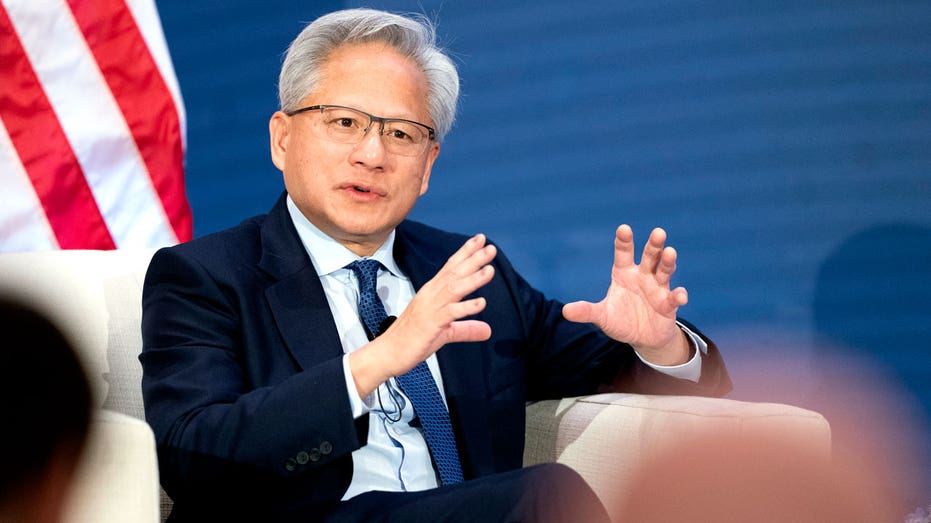
Nvidia CEO Jensen Huang’s reinstatement contributed to volatility in AI-related stocks during the Thanksgiving-shortened trading week, according to Reuters.(Sean Rayford/Getty Images)
The market’s attention on Nvidia CEO Jensen Huang’s activities and any perceived shifts in company outlook contributed to volatility in AI-related stocks during the Thanksgiving-shortened trading week, according to Reuters. This underscores how deeply entwined the fortunes of key AI leaders are with overall sector sentiment. Furthermore, newly public AI developer Anthropic’s brief fall below its initial public offering price added to this volatility, reminding investors that not all AI plays are created equal and that new listings can be particularly sensitive to market shifts.
Overall, this week’s performance suggests that while the market is susceptible to sharp corrections driven by valuation concerns in high-growth areas like AI, there is also substantial underlying demand from investors eager to capitalize on the long-term potential of these technologies, particularly when prices become more attractive after a significant dip. The balance between growth potential and valuation discipline remains a critical theme for investors navigating the current market landscape.
Reuters contributed to this report.
Market Impact:
The sharp rebound following a significant correction signals a market grappling with intense volatility, particularly within the high-growth AI and technology sectors. For investors, this environment underscores the importance of a diversified portfolio and a long-term perspective, as short-term swings can be dramatic. While the “buy the dip” strategy proved profitable this week, it also highlights the inherent risks in chasing momentum without fundamental conviction. Going forward, market participants will be closely watching the Federal Reserve’s stance on interest rates, corporate earnings reports for Q4, and any further developments in the AI space. Continued strong performance from AI leaders could bolster broader market confidence, but any renewed signs of overheating or macroeconomic weakness could quickly reignite selling pressure. The market’s ability to digest high valuations while facing potential economic headwinds will be a defining characteristic as we move towards year-end and into the new year, influencing asset allocation decisions and risk appetite across global markets.