
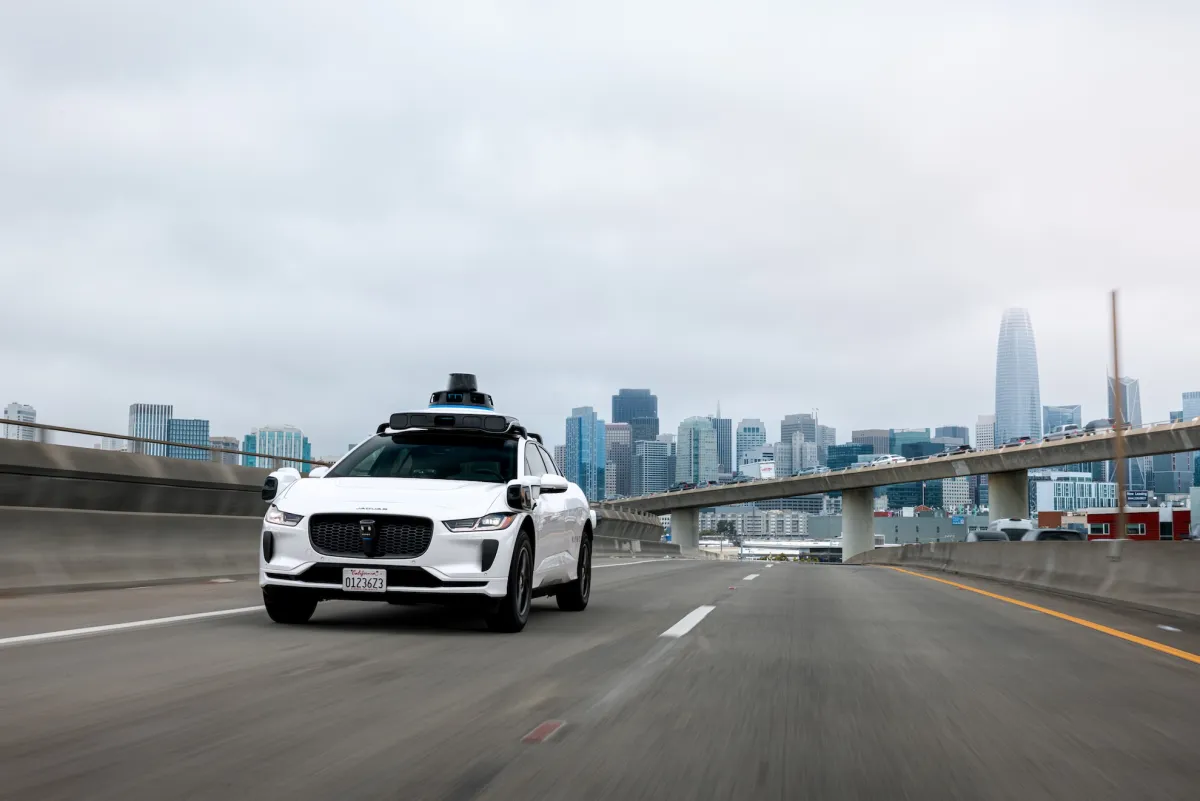
A warm welcome back to TechCrunch Mobility — your prime destination for news and insights concerning the evolution of transportation. To receive this content directly in your inbox, register here without cost — simply click TechCrunch Mobility!
At the start of the current month,Waymo’sprincipal safety executive,Mauricio Peña, delivered testimony to the Senate Commerce Committee during a session convened to discuss self-driving automobiles.
A significant portion of the inquiry fell into the usual category of “let’s inform the public.” However, it wasSenator Ed Markey’squeries regarding international staff, and Peña’s subsequent reply, that captured everyone’s attention.
When questioned about human personnel who provide assistance with Waymo vehicles’ navigation or during emergencies, Peña disclosed that the company employs remote guidance operators situated abroad in the Philippines. This revelation quickly ignited Markey’s displeasure, as he reprimanded Peña concerning the company’s reliance on individuals without U.S. driver’s licenses to support its vehicles on American roadways, among other criticisms.
Waymo subsequently issued a statement in a blog entry authored by Ryan McNamara, Waymo’s global operations head, which was posted on Tuesday. It has also shared the correspondence sent to Markey’s office.
Both the article and the letter offer fresh perspectives on its remote-assistance procedures. For instance, Waymo emphasizes that it does not engage individuals who “remotely pilot” the robotaxis. Instead, the autonomous driving systems themselves maintain control.
Remote assistance (RA) personnel are on hand to address specific information requests initiated by the Waymo self-driving system. The organization also maintains Event Response Teams, or ERTs, comprised of individuals certified for more intricate tasks and based exclusively within the United States. This unit responds to crashes, liaising with law enforcement and the passenger, gathering data for regulatory submission, and arranging for vehicle recovery, as stated by Waymo.
TechCrunch gathering
Boston, MA
|
June 9, 2026
We also now understand that Waymo has approximately “70 Remote Assistance agents actively working across the globe at any given moment.” These individuals are located in Arizona, Michigan, and in two cities within the Philippines—a detail that, once more, has provoked the disapproval of some legislators.
To provide context for this information, consider that Waymo operates a fleet of 3,000 vehicles, and each week its vehicles cover over 4 million miles and complete more than 400,000 journeys. Thus, a small number of personnel oversee a large quantity of robotaxis.
I have contended for many years that AV companies must improve their communication regarding behind-the-scenes operations, particularly concerning remote guidance. Most firms, many of which no longer exist, consistently avoided the subject, perhaps in an attempt to make their technology appear more extraordinary and revolutionary. As it turns out, secrecy fosters distrust.
While the discourse surrounding remote guidance operators unfolds, Waymo continues to expand into new territories, with one notable exception.
New York Governor Kathy Hochul rescinded a proposal that would have modified vehicle and traffic statutes to effectively authorize robotaxis in the state beyond New York City. Sean Butler, Hochul’s spokesperson, informed me: “Based on discussions with interested parties, including those in the legislative body, it was evident that sufficient backing was absent to advance this initiative.”
One additional point before we delve into the remainder of the news. Readers of Mobility certainly doubt the Rivian R2 will be priced at $50,000 or less. Last week, I surveyed all of you and inquired: “What will be the initial cost of the Rivian R2 launch model?” I presented three choices: under $50,000, above $60,000, and above $70,000. More than 54% selected “above $60,000,” with the remaining two options dividing the sentiment.
To participate in our surveys, register for the Mobility newsletter here.
A Small Disclosure
Senior correspondentSean O’Kanereceived exclusive information from informed sources regarding staff reductions atLucid. Here is what we know. Lucid is dismissing 12% of its workforce, according to an internal memorandum reviewed by TechCrunch. We do not possess an exact count of affected employees, but the number is likely in the hundreds.
Lucid has not yet submitted its 2025 annual financial statements, which would reveal its total employee count at the close of the year. The corporation reported having 6,800 full-time personnel globally by the end of 2024.
Since our report was published, O’Kane has gathered further details. Impacted staff members were notified early Friday morning, with some realizing something was amiss when their access to Microsoft Teams was revoked. They are technically being placed on a 60-day “administrative leave” and will not be officially terminated until late April.
Do you have information for us? Contact Kirsten Korosec via email at kirsten.korosec@techcrunch.com or my Signal at kkorosec.07, or email Sean O’Kane at sean.okane@techcrunch.com.
Transactions!

Amari AI, an emerging company that leverages AI capabilities to assist customs brokers in modernizing and navigating President Trump’s trade regulations, secured $4.5 million in financing, co-led by prominent early-stage firms First Round Capital and Pear VC. The startup claims it has already amassed over 30 clients and helped those businesses facilitate more than $15 billion in merchandise movement.
Kavak, the Mexico-based online retailer of pre-owned automobiles, raised $300 million in an equity funding round spearheaded by Andreessen Horowitz, which contributed $200 million. Other contributors included WCM Investment Management, which co-led the round, and Foxhaven Asset Management.
LanzaJet, a pioneer in next-generation fuels technology and a fuel manufacturer, raised $47 million in the initial closing of a targeted $135 million equity round. The enterprise stated its pre-investment valuation stands at $650 million. The round was jointly led by IAG and Shell, with additional participation from Groupe ADP, LanzaTech, and Mitsui.
Metafuels, a burgeoning sustainable aviation fuel company situated in Switzerland, garnered $24 million in a Series A funding round led by UVC Partners. Other investors included Energy Impact Partners, Contrarian Ventures, RockCreek, Verve Ventures, and Fortescue.
Significant Articles and Additional Information

Fordis striving diligently for its investors to overlook the substantial $19.5 billion setback incurred toward the close of the previous year. Rather, its aim is for them to perceive an innovative, agile enterprise developing a forthcoming lucrative offering poised to inaugurate a fresh epoch. The automaker, having pledged to supply an electric vehicle truck commencing at $30,000, capable of rivaling Chinese manufacturers without eroding its profit margins, disclosed its strategy for achieving this objective. Will a blend of 3D-printed, modular components, Formula 1-inspired philosophy, and an incentive scheme prove sufficient?
Enthusiasm for AI data centers has proliferated. ObserveRedwood Materialsas evidence. The nascent firm specializing in battery reclamation and raw materials inaugurated an energy storage division last year, concentrating on AI data centers. This venture, named Redwood Energy, currently represents the swiftest expanding segment within the corporation. Consult my complete report for clarity on its implications.
Rivianis introducing a complementary application empowering proprietors to execute fundamental operations like securing and unsecuring doors, ventilating windows, and activating the automobile’s alarm via their Apple Watch. The corporation also disseminated an extensive software upgrade, incorporating various additional fresh vehicle functionalities.
Teslafailed in its endeavor to invalidate a jury’s $243 million judgment in a trial concerning a deadly Autopilot collision. A recall: Tesla had the option to resolve this matter for $60 million. Nonetheless, the firm achieved a triumph involving theCalifornia Department of Motor Vehicles. The state authority declared it would refrain from suspending Tesla’s sales and production permits for a month, given that the EV manufacturer has ceased employing the moniker “Autopilot” in its vehicle promotions within the state.
One more thing …

I routinely evaluate automobiles to remain current with the newest automotive technology, electric vehicles, and hybrid models — or their associated software enhancements. By chance, aLucid Air Touringsedan was in my possession this week.
More than a year has elapsed since my last time driving an Air. I had been eager to experience the firm’s hands-free driver-aid technology, introduced last July. Prior encounters with the company’s sophisticated driver-assistance platform, known as Dream Drive, had not impressed me. The automobile frequently veered within its lane (indicating difficulty maintaining central alignment) or adhered excessively near the lane’s boundary, bringing me uncomfortably close to the large trucks encountered on the thoroughfare.
I am pleased to convey that Lucid seems to have rectified these problems. Activating the hands-free mechanism proved simple, and it prevented prolonged misuse. As depicted in the image above, positioning a mobile device before my countenance prompted an almost instantaneous alert.
{content}
Source:{feed_title}