
Helsing Soars to $18 Billion Valuation: The AI-First Startup Redefining European Defense Tech
In a resounding testament to the escalating investor appetite for cutting-edge defense technology, European military AI startup Helsing is reportedly on the cusp of finalizing a colossal $1.2 billion funding round, catapulting its valuation to an astonishing $18 billion. This rapid ascent solidifies Helsing’s position as a dominant force in a burgeoning sector, signaling a profound shift in how defense capabilities are developed and funded.
Key Takeaways:
- Helsing’s Meteoric Rise:The impending $1.2 billion funding round, pushing Helsing’s valuation to $18 billion—a $4 billion increase in less than a year—underscores fervent investor confidence in its AI-first approach to military technology and its potential to revolutionize defense.
- Europe’s Defense Tech Boom:Fueled by geopolitical shifts, particularly the ongoing conflict in Ukraine, the European defense technology sector is experiencing unprecedented venture capital interest, transforming autonomous defense startups into major market disruptors and strategic assets.
- AI as the New Frontier:Helsing’s valuation supremacy over competitors like Quantum Systems and Tekever highlights a critical strategic shift towards software-defined and AI-driven defense systems, positioning artificial intelligence as the indispensable differentiator in modern military innovation and future warfare capabilities.
The latest investment, expected to be led by growth equity firm Dragoneer and co-led by existing investor Lightspeed, according to a report by the Financial Times, represents a significant “step-up” from Helsing’s previous funding round. Just under a year ago, in June 2025, the Berlin-based startup secured a €600 million investment led by Spotify founder Daniel Ek, which valued the company at an estimated €12 billion (approximately $14 billion USD). This rapid appreciation of $4 billion in less than twelve months speaks volumes about the perceived strategic importance and disruptive potential of Helsing’s technology.
The AI-First Edge in a Shifting Geopolitical Landscape
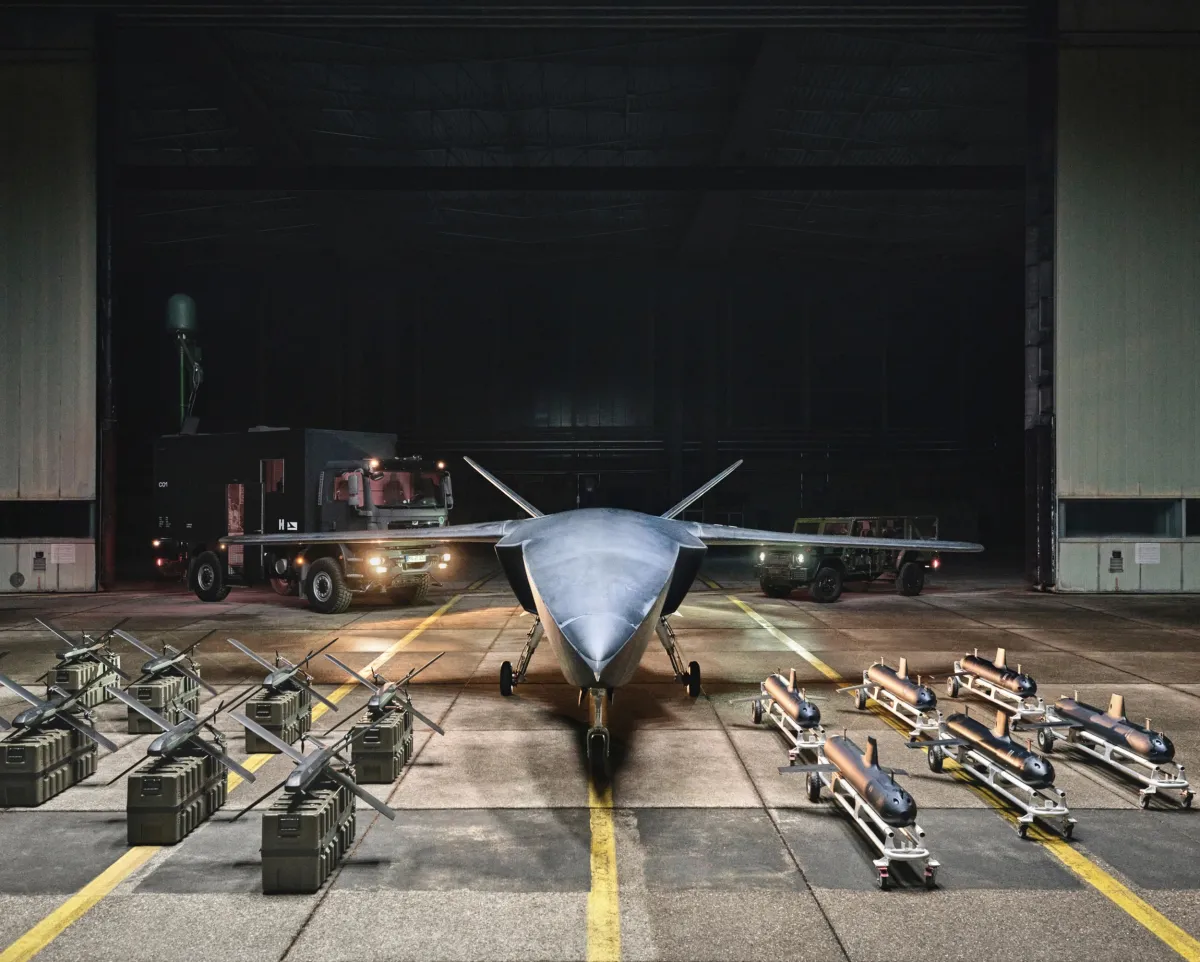
What makes Helsing such a compelling proposition for top-tier investors? Unlike traditional defense contractors that often focus on hardware-centric solutions, Helsing has carved out a niche by prioritizing artificial intelligence and software to enable autonomous capabilities for military systems. While specific details of Helsing’s technology remain proprietary, its focus is understood to be on developing AI platforms that can process vast amounts of sensor data, improve situational awareness, and facilitate faster, more effective decision-making for various defense applications, including drones, manned aircraft, and ground systems. This software-first approach offers agility, scalability, and rapid deployment capabilities that are often lacking in legacy defense systems.
The timing of Helsing’s rapid ascent is no coincidence. The ongoing war in Ukraine has served as a stark reminder of the critical role of advanced technology, particularly autonomous systems and AI, in modern conflict. The battlefield has become a proving ground for new innovations, demonstrating the effectiveness of drones for reconnaissance, targeting, and even offensive operations. This geopolitical reality has spurred European nations to significantly increase their defense spending and actively seek out innovative solutions from agile startups rather than relying solely on established, often slower-moving, defense giants. Venture capitalists, recognizing this fundamental shift, are pouring capital into companies poised to address these urgent strategic needs.
Europe’s Emerging Defense Tech Unicorns
While Helsing stands as the crown jewel, it is not the sole European unicorn making waves in defense technology. The sector is witnessing a broader surge, with several companies attracting substantial investments. For instance, German drone manufacturer Quantum Systems raised €180 million in November, achieving a valuation exceeding €3 billion. Quantum Systems specializes in advanced reconnaissance drones, playing a crucial role in providing intelligence capabilities. Similarly, Lisbon-headquartered Tekever, which focuses on unmanned aerial systems for diverse applications including maritime surveillance and defense, secured £400 million a year ago, pushing its valuation above £1 billion.
However, Helsing’s valuation eclipses these competitors by a considerable margin, making it “by far the one that investors deem the most valuable.” This disparity underscores a key insight: investors are increasingly betting on the foundational AI layer rather than just the hardware it controls. While Quantum Systems and Tekever excel in producing sophisticated drone platforms, Helsing’s core offering appears to be the intelligence and autonomy layer that can be integrated across a multitude of defense assets. This platform-agnostic, software-centric strategy positions Helsing for broader impact and scalability, justifying its premium valuation in the eyes of investors like Dragoneer and Lightspeed.
The Road Ahead: Innovation, Ethics, and Global Impact
With this new capital infusion, Helsing is expected to accelerate its research and development efforts, expand its talent pool, and potentially pursue strategic partnerships to integrate its AI solutions more deeply into European defense frameworks. The company’s focus on “trusted AI” and ethical development will be crucial as autonomous systems become more prevalent on the battlefield, raising complex questions about human oversight and accountability. As a European entity, Helsing also aligns with the continent’s strategic autonomy objectives, aiming to reduce reliance on non-European defense technologies.
The investment in Helsing is more than just a financial transaction; it’s a statement about the future of warfare. It signifies a profound belief that software and AI will be the ultimate differentiators in military superiority, enabling forces to operate with unprecedented speed, precision, and efficiency. The “proving ground” of Ukraine has fast-tracked innovation cycles, pushing defense startups to the forefront of national security strategies.
As is customary with such high-profile, sensitive dealings in the defense sector, Helsing, Dragoneer, and Lightspeed could not be immediately reached for comment on the impending round.
Bottom Line
Helsing’s projected $18 billion valuation marks a pivotal moment, not just for the company, but for the entire defense technology landscape. It unequivocally signals that the confluence of geopolitical urgency, rapid technological advancements in AI, and agile venture capital is creating a new class of defense industrial powerhouses. The future of military capabilities will increasingly be defined by software and artificial intelligence, and companies like Helsing are at the vanguard of this transformation, ready to reshape national security strategies and potentially influence the balance of power for decades to come.
Source:{feed_title}