
Gain access to the Editorial Compendium without cost
Roula Khalaf, Editor of the FT, curates her preferred articles in this weekly bulletin.
Information hubs, power initiatives, conduits, harbors, and lodging establishments throughout the Gulf region are inundating insurance providers with demands for multi-million dollar protection from political upheaval, as proprietors of assets endeavor to curtail their vulnerability to the intensifying area dispute.
Insurance companies and intermediaries reported they have fielded numerous inquiries for policies covering political unrest and acts of terror in the current week, seeking to safeguard assets from perils such as armed conflict, terrorist acts, and fragments from intercepted projectiles, in addition to civil disturbances, industrial actions, demonstrations, and uprisings.
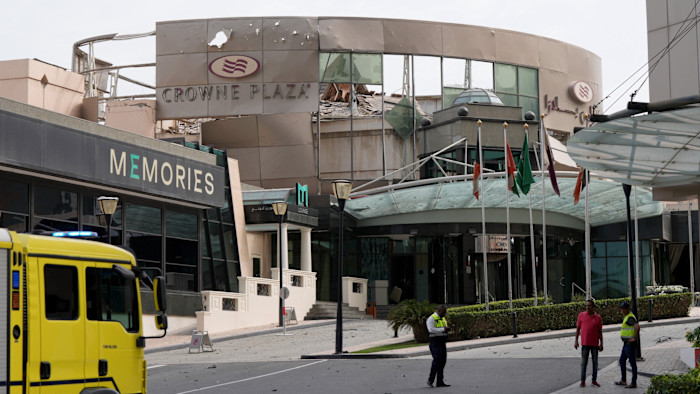
This development highlights the manner in which financiers in Gulf nations like Saudi Arabia and Oman are acting to mitigate prospective financial setbacks as the area’s conflict expands, following Iran and its partners initiating drone and projectile assaults targeting Israel and adjacent nations in retaliation for the US-Israeli aerial bombardment effort.
Fergus Critchley, worldwide director for terrorism and political upheaval coverage at intermediary firm WTW stated that the hostilities would probably provoke financial damages which might prove to be “considerably greater and more devastating” compared to any other over the last ten years.
A significant portion of the demands for political unrest protection originated from occidental enterprises within Gulf states, perceived as being at greater risk of direct assault, according to Raj Rana, who oversees war and terrorism coverage at the brokerage Bowring Marsh, which has fielded over 50 questions concerning these offerings since the previous weekend.
Photovoltaic power initiatives within Saudi Arabia, and lodging establishments in Bahrain and Qatar were likewise among the entities pursuing political disturbance insurance during the current week, a single underwriter indicated, as commercial entities aimed to safeguard their facilities from incidental harm like airborne fragments, in addition to deliberate assaults.
Unmanned aerial vehicles have furthermore aimed at Amazon’s information processing hubs in the UAE and Bahrain during the current week. Specialists suggest Amazon’s installations were probably attacked by Iran. Microsoft reported no service interruptions in the area.
Prior to the conflict, certain enterprises in the Gulf already possessed coverage for acts of terror.
However, intermediaries stated they were currently advising patrons to acquire comprehensive political unrest insurance, encompassing “industrial actions, civil disturbances, and public disorder” along with government-sponsored aggression.
Premiums for this category of protection increased steeply early in the week and currently stand at several times their pre-conflict rates, an underwriter revealed.
Prior to the past weekend, insurance against political unrest for a power initiative in Saudi Arabia or the United Arab Emirates could have been under 1 percent of the asset’s covered worth, it was stated.
By Thursday, the premium had escalated to up to five times that amount. For a twenty-million-dollar project, this implies that ten million dollars of political unrest coverage would entail a cost of five hundred thousand dollars, an increase from under one hundred thousand dollars.