
British Army Utilizes Civilian Ferry for Major European Deployment to NATO Exercise
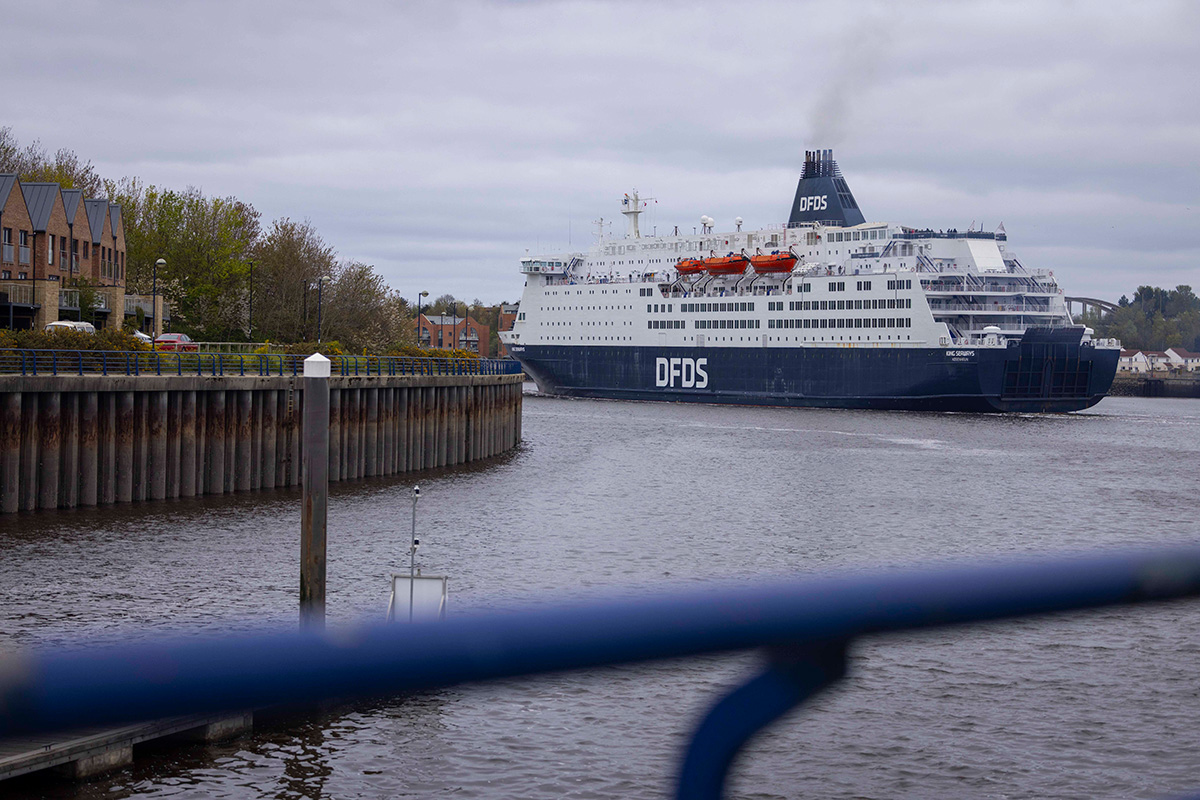
In a significant logistical undertaking, more than 1,400 British soldiers have embarked on a chartered civilian passenger ferry to travel to a major military exercise in Germany. This deployment marks the first time in over two decades that the British Army has utilized civilian sea transport on such a large scale, underscoring a strategic shift towards leveraging diverse logistical capabilities for European operations.
The troops, primarily drawn from the 7th Light Mechanised Brigade, renowned as the “Desert Rats,” commenced their journey from Newcastle aboard the King Seaways, a commercial ferry operated by DFDS. Following their sea voyage, the soldiers and their equipment will continue by rail through the Netherlands, ultimately reaching Germany. There, they are slated to join hundreds of French soldiers from the 13th Demi Brigade of the Foreign Legion for Exercise Rhino Storm, a key component of NATO’s broader readiness initiatives.
Lieutenant Lucas Handyside, a spokesperson from 7 Brigade, highlighted the deployment’s role in demonstrating the brigade’s versatile mobility. “7 Brigade is deploying more than 3,000 soldiers and 900 military vehicles to Exercise Rhino Storm, which has offered us the opportunity to prove a range of deployment methods, both military and civilian,” Lieutenant Handyside stated. He further emphasized the brigade’s comprehensive transport capabilities, adding, “Exercise Rhino Storm demonstrates that the Desert Rats can deploy by road, rail, sea, and air.”
The operational readiness aspect was a central theme of his comments. “As a Light Mechanised Brigade, it is incredibly important that we are able to rapidly and reliably respond to threats anywhere in the world, and testing this capability has been an integral part of the exercise,” Handyside explained. He described the exercise as “designed to challenge the Brigade at all levels and will provide a realistic scenario to bring together the Brigade’s fighting units and supporting elements,” indicating a rigorous test of the brigade’s full operational spectrum.
Beyond the immediate objectives of Exercise Rhino Storm, the extensive use of a chartered civilian ferry for troop movement carries considerable practical significance. This method illustrates how the Army can effectively integrate civilian infrastructure to augment its military transport capacity during substantial deployments to the European continent. For context, moving 1,400 troops by air would necessitate a minimum of seven RAF Voyager aircraft, in addition to further flights for associated equipment. Consequently, civilian sea transport emerges as a substantial “force multiplication” option, offering a highly efficient and scalable alternative for large-scale movements of personnel and materiel.
Brigadier Andrew Watson, Officer Commanding 7th Light Mechanised Brigade, articulated the strategic message conveyed by the exercise. He affirmed that the deployment “proves we are ready to deliver credible combat power at scale as part of NATO’s Advanced Readiness Force.” Brigadier Watson characterized the exercise as being “about moving a brigade quickly and efficiently, just as we would in real operations,” underscoring its relevance to actual operational scenarios. He concluded by asserting that the exercise “sends a clear message that the British Army can project force rapidly and work closely with our NATO allies,” emphasizing the alliance’s cohesion and operational capability.
Exercise Rhino Storm is integrated into the wider NATO Steadfast Defender 27 series, a comprehensive set of exercises designed to test the alliance’s ability to rapidly deploy forces across Europe. The participation of the Desert Rats alongside units from the French Foreign Legion particularly highlights the multinational character of NATO’s collective defence posture in Europe, showcasing interoperability and joint operational planning among member states.
The practice of utilizing civilian vessels for military transport has a long and established history in British military operations, dating back to pivotal moments such as the evacuation at Dunkirk, the D-Day landings during World War II, and more recent conflicts including the Falklands War, deployments to Bosnia and Kosovo, and the Iraq War in 2003. The current exercise represents a deliberate and renewed effort to demonstrate that this vital capability remains viable, well-practiced, and ready for activation in large-scale operations should circumstances demand it, reflecting a comprehensive approach to national and allied defence readiness.
Why This Matters
This large-scale deployment of British troops using civilian transport to participate in a NATO exercise is significant for several reasons, reflecting current geopolitical realities and strategic military planning. Firstly, it underscores NATO’s renewed focus on collective defence and rapid reinforcement capabilities across Europe, a priority intensified by the ongoing conflict in Ukraine and the evolving security landscape. Exercises like Rhino Storm, part of Steadfast Defender 27, are crucial for validating the alliance’s ability to move significant forces quickly and efficiently to deter potential aggression.
Secondly, the extensive use of civilian sea transport highlights a pragmatic and adaptable approach to military logistics. By leveraging commercial assets, the British Army demonstrates its capacity to supplement its own military transport infrastructure, which can be critical for large-scale operations where military airlift or sealift might be overstretched or insufficient. This “force multiplication” strategy offers flexibility, potentially reduces direct military costs, and enhances resilience by diversifying logistical options. It also signals a preparedness to mobilize national resources broadly in times of crisis, drawing on both military and civilian sectors.
Thirdly, the joint participation with French Foreign Legion units emphasizes the importance of interoperability and multinational cooperation within NATO. Such exercises are vital for strengthening the bonds between allied forces, refining joint command structures, and ensuring that diverse national units can operate seamlessly together in complex scenarios. This collective demonstration of readiness sends a powerful message of unity and resolve to potential adversaries, reinforcing NATO’s deterrence posture. In an era of dynamic global challenges, the ability to rapidly project credible combat power, utilizing all available means, is a cornerstone of effective defence and international security.