
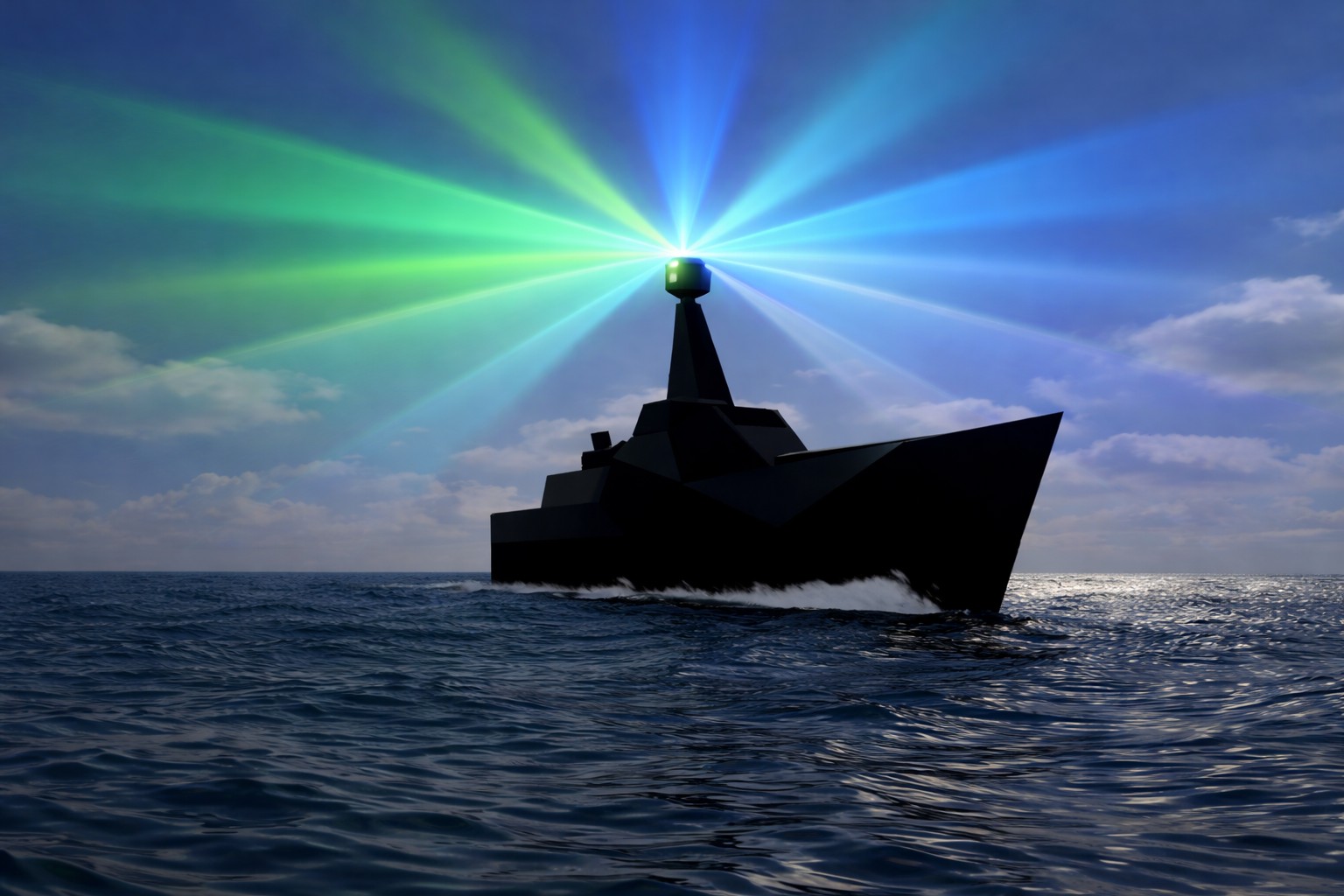
The Royal Navy is investigating the deployment of autonomous sentinel craft, furnished with sensors, to identify and monitor aerial hazards, as part of a swift acquisition drive under Project HORUS.
An industry brief declares that“the Royal Navy necessitates an expeditiously acquired and continuous aerial detection system, appropriate for vessel-based integration, to perceive, monitor, ascertain, and relay information on aerial menaces,”comprising unmanned aerial vehicles, high-speed aircraft, and guided projectiles.
The stipulation underscores the importance of celerity and readiness, with the Defence Ministry looking for remedies that can be provided in a matter of months.“The aim is to perform a swift industry review… choosing trustworthy answers; finalizing agreements and providing the preliminary system between four and six months,”the announcement specifies, further indicating that the initiative concentrates on“developed offerings with suppliers capable of operating swiftly.”
Central to this idea is a transition to decentralized detection. The initiative endeavors to“implement a comprehensive, interconnected methodology; deploy a multitude of economical detectors aboard autonomous platforms capable of enduring in hazardous environments,”thereby enabling the Royal Navy to broaden monitoring scope and direct more sophisticated armament systems.
Such apparatus would be anticipated to function with a significant level of self-governance and endurance. The stipulation details that craft ought to be able to stay in position for“30 days (Minimum) or up to 90 days (Goal) without direct human involvement or upkeep,”signifying a shift to extended operational periods with minimal upkeep.
This facility also aims to diminish dependence on manned vessels. The Defence Ministry points out that the apparatus needs to“alleviate the human workload, minimize danger to personnel, [and] relay information on aerial hazards,”and possess the capacity to adapt concurrently as dangers emerge.
Regarding operational effectiveness, the mandate establishes identification parameters comprising“NATO Category 2 autonomous aerial vehicles… naval and ground assault guided missiles; [and] third to fourth generation combat aircraft from a minimum distance of 15 nautical miles,”with forthcoming integration for maritime hazards like rapid assault boats and unmanned marine vehicles.
The scope for surveillance is likewise considerable, as the announcement indicates that“an area spanning 2500 square kilometers must be continuously monitored and data relayed from,”suggesting the necessity of numerous systems functioning collaboratively within a disputed oceanic region.
Adaptability in provision is also under review. Project HORUS“does not solely pertain to hardware acquisition and welcomes submissions that leverage innovative business frameworks, for example, detection as a utility,”demonstrating receptiveness towards utility-oriented or third-party managed systems.
The information solicitation aims to mold the forthcoming acquisition approach, as the Defence Ministry endeavors to“enhance comprehension of the diverse accessible technologies and capacities,”harmonize stipulations with the sector, and pinpoint choices that provide optimal economic benefit.