
Archer Aviation CEO Adam Goldstein discusses the Serbia Expo 2027 deal and being the LA 2028 Olympics air taxi partner on The Claman Countdown.
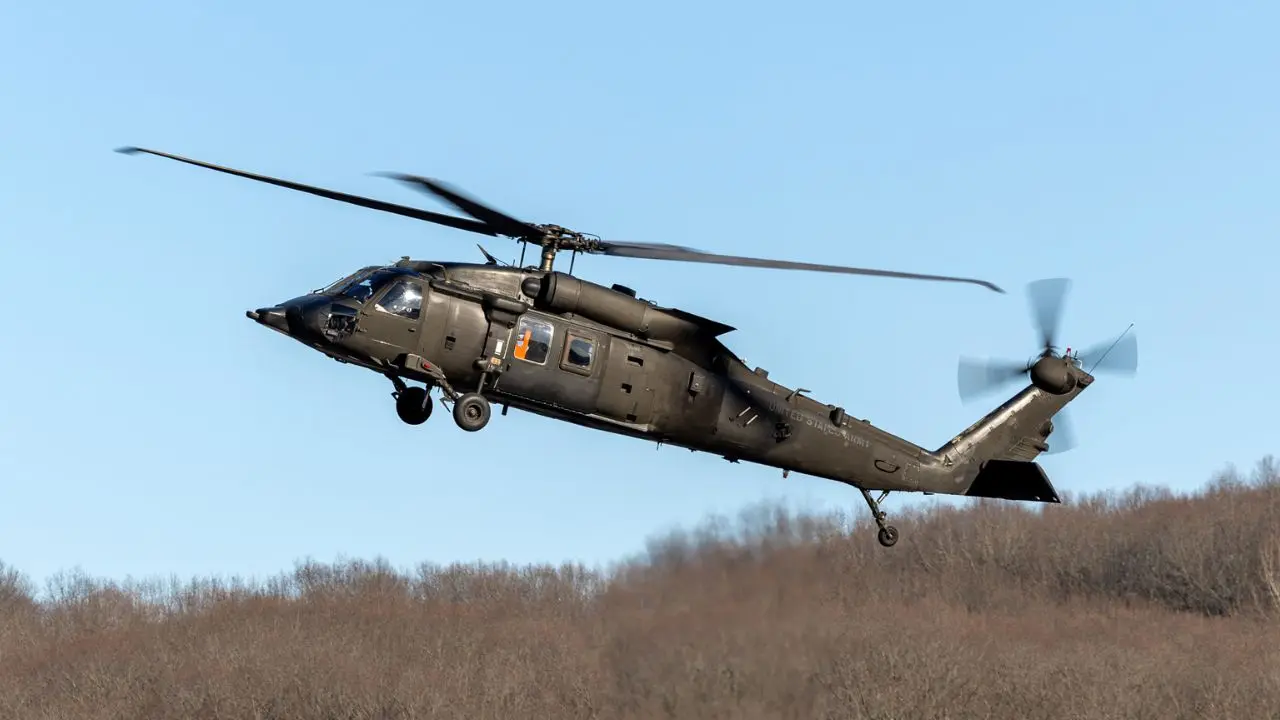
The U.S. Army has achieved a notable milestone for self-governing flight after acquiring its initial Black Hawk helicopter, designed to operate with or without human intervention, as declared by the Defense Ministry.
The advanced UH-60MX Black Hawk, created in collaboration with Lockheed Martin’s Sikorsky unit, is now set to commence an exhaustive evaluation period as the military endeavors to incorporate self-governance into its upcoming aerial contingent.
The aircraft is furnished with sophisticated aerial mechanisms, enabling its function as a conventional rotary-wing craft, an aircraft with optional human control, or a completely self-governing unit managed remotely from terrestrial locations.
TRUMP CONSIDERS PROVIDING UKRAINE WITH TOMAHAWK MISSILES FROM RAYTHEON: KEY DETAILS
A UH-60 Black Hawk helicopter equipped with advanced autonomy systems flies during testing.(Lockheed Martin)
Authorities stated that this handover represents a significant achievement in the Army’s wider initiative to update air operations and diminish hazards for military personnel in perilous settings.
“This functionality is set to improve operational efficacy and the chances of survival for combatants presently, while establishing the foundation for interconnected systems of the future,” Rich Benton, vice president and general manager at Sikorsky, communicated in a declaration.
The fundamental technology within this aircraft originates from the Defense Advanced Research Projects Agency’s Aircrew Labor In-Cockpit Automation System, or ALIAS, an initiative commenced over ten years prior to streamline aerial maneuvers and bolster security, the Department of Defense indicated.
The MATRIX autonomy suite from Sikorsky, incorporated into the craft, functions as an electronic second-in-command, able to manage intricate aerial duties including ascension, directional guidance, and touchdown.
This mechanism enables the rotary-wing craft to discern touchdown areas, circumvent impediments, and function in conditions of poor sight, simultaneously lessening the operator’s burden.
Military authorities noted the aircraft also incorporates an electronic flight control system that substitutes conventional physical linkages with digital counterparts, thereby simplifying its management amidst difficult circumstances.
BEHOLD: AN INNOVATIVE SELF-FLYING BLACK HAWK ROTORCRAFT DUBBED ‘U-HAWK’
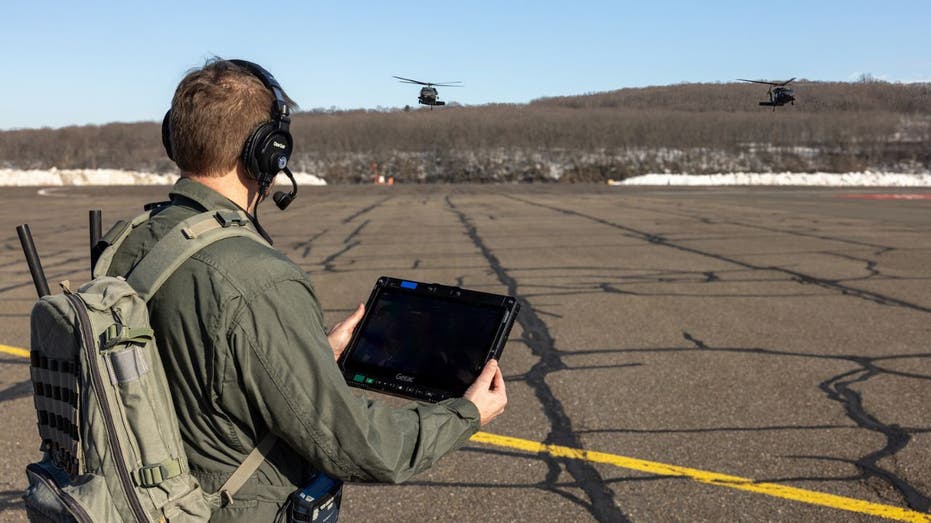
A U.S. Army operator uses a tablet to monitor and control Black Hawk helicopters equipped with autonomy systems during a test flight.(Lockheed Martin)
The UH-60MX is destined to function as a trial base for the Army Combat Capabilities Development Command while engineers and aviators assess the craft’s performance during actual operational assignments, encompassing both distant and self-directed functions.
This aircraft forms a component of a wider endeavor within the Army’s Strategic Autonomy Flight Enabler program, whose objective is to create a modular self-governance package that could be implemented throughout the complete Black Hawk contingent.
Ministry of Defense representatives indicated the ultimate objective is to permit rotorcraft to execute assignments autonomously or with negligible human supervision, thereby potentially redefining the military’s execution of offensive and logistical endeavors.
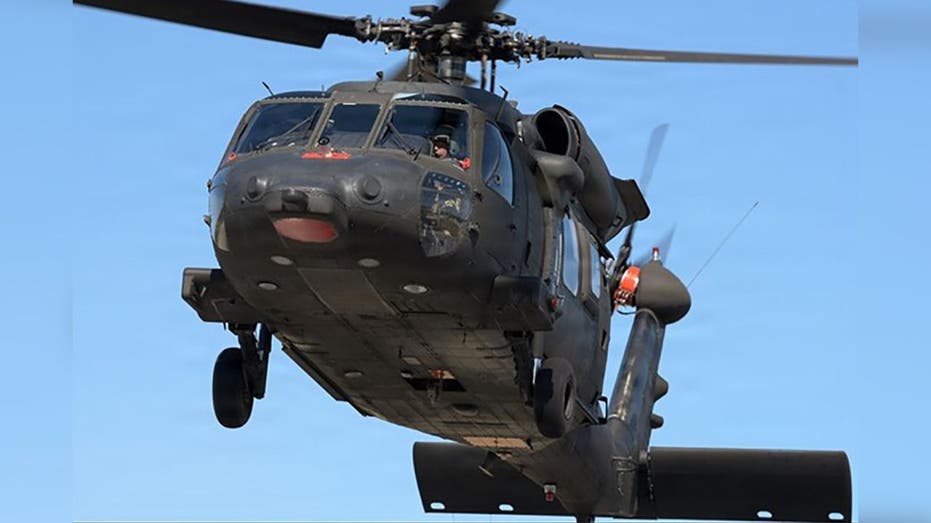
A UH-60 Black Hawk helicopter equipped with advanced autonomy systems flies during testing.(War Department)
The military has previously evaluated comparable mechanisms on prior Black Hawk versions across hundreds of hours of aerial operation, as stated by authorities, indicating the technology’s approaching state of operational preparedness.
In 2022, a self-governing Black Hawk executed a half-hour aerial journey without any personnel aboard, thereby showcasing the technology’s feasibility.
ACCESS FOX BUSINESS ANYWHERE THROUGH THIS LINK
Authorities assert that this newest craft signifies a transition from exploratory trials to practical assessment, emphasizing actual operational assignments and subsequent implementation throughout the entire fleet.