

Horizon Portfolio Management head Zachary Hill and SlateStone Wealth chief market strategist Kenny Polcari discuss how the market will be impacted by the Federal Reserves decision to leave interest rates unchanged on The Claman Countdown.
Key Takeaways for Investors:
- Divergent Fed Views Signal Future Volatility:The 9-3 vote to hold rates steady, despite a hawkish minority pushing for a hike, indicates increasing internal division within the Federal Open Market Committee (FOMC). This signals potential for greater market uncertainty as investors grapple with unclear future policy paths, impacting bond yields and equity sector performance.
- Persistent Inflation Remains Central Risk:Dissenting governors highlighted stubbornly high inflation, particularly the 3.7% PCE and broadening price pressures beyond energy. This underscores that despite the pause, the “higher for longer” interest rate narrative is far from dead, posing ongoing challenges for corporate earnings, consumer spending, and the valuation of long-duration assets.
- Focus Shifts to Forward Guidance and Economic Data:With the Fed opting for caution, markets will intensify scrutiny of upcoming economic data, especially inflation metrics and labor market reports. Any signs of accelerating price pressures or unexpected labor market cooling could quickly reignite calls for rate adjustments, influencing investor sentiment and portfolio positioning across growth, value, and defensive sectors.
The Federal Reserve delivered a pivotal decision this week, opting to leave its benchmark interest rate unchanged, a move keenly observed by global markets. While the consensus among the Federal Open Market Committee (FOMC) members was to maintain the status quo, the emergence of three dissenting votes signals a growing internal debate over the optimal path to tame stubbornly high inflation, sending mixed signals to investors grappling with a complex economic landscape.
On Wednesday, the FOMC, the central bank’s monetary policy-setting panel, voted 9-3 to keep the federal funds rate within its current target range of 3.5% to 3.75%, a level sustained throughout 2026. This decision, following a period of aggressive tightening, reflects a cautious stance amidst elevated economic uncertainty. However, the three dissenting votes — cast by Cleveland Fed President Beth Hammack, Minneapolis Fed President Neel Kashkari, and Dallas Fed President Lorie Logan — underscored a significant concern within the Committee: that inflation, despite some moderation, remains too high and risks becoming entrenched without further policy intervention. Each dissenter advocated for a 25-basis-point rate hike, a move that would have been immediately priced into bond markets and likely triggered a reassessment of equity valuations.
Markets had been largely anticipating a pause, but the hawkish dissent immediately caught the attention of bond traders and equity strategists. The prospect of even a minority of central bankers pushing for further tightening suggests that the ‘higher for longer’ interest rate narrative is far from over, potentially limiting the upside for growth stocks sensitive to borrowing costs and putting a floor under the U.S. dollar. Inflation figures continue to be a primary driver of market sentiment, with the Fed’s preferred gauge, the personal consumption expenditures (PCE) index, up 3.7% in June compared with a year ago. This figure, though lower than previous peaks, remains significantly above the central bank’s 2% target, largely influenced by the energy price shock precipitated by the Iran war earlier this year. This geopolitical event rippled through supply chains, affecting not only energy-intensive industries but also broader consumer goods due to elevated transportation costs.
FED POLICYMAKERS LEAVE RATES UNCHANGED AMID ELEVATED UNCERTAINTY
Inflation has remained stubbornly above the Fed’s 2% target, with energy prices pushing it higher over the course of this year.(Li Rui/Xinhua via Getty Images)
Federal Reserve Chair Kevin Warsh, presiding over only his second FOMC meeting, acknowledged the formidable challenge of returning inflation to the 2% target to restore price stability. His comments, closely dissected by analysts for any subtle shifts in tone, emphasized that holding rates steady was “especially prudent at these uncertain times.” This phrasing likely referred to the confluence of geopolitical tensions, lingering supply chain fragilities, and an uneven global economic recovery. Warsh’s firm declaration, “Not one of my FOMC colleagues is under any illusion, we have begun a new chapter, and we understand that the five-plus years of inflation above target cannot be cured in nine weeks, or by a single month of modest price decreases. This Fed will not waver. Our credibility rests on performing our duties and delivering on our responsibilities,” aimed to reassure markets of the Fed’s commitment to its mandate, even as internal divisions surfaced. Investors will be weighing the sincerity of this commitment against the cautious approach taken.
Here’s a closer look at the key points articulated by the three dissenting FOMC members, whose arguments highlight the ongoing tension between managing inflation and avoiding an overly restrictive policy that could stifle economic growth.
FED’S FAVORED INFLATION GAUGE SHOWED PRICES PULLED BACK IN JUNE
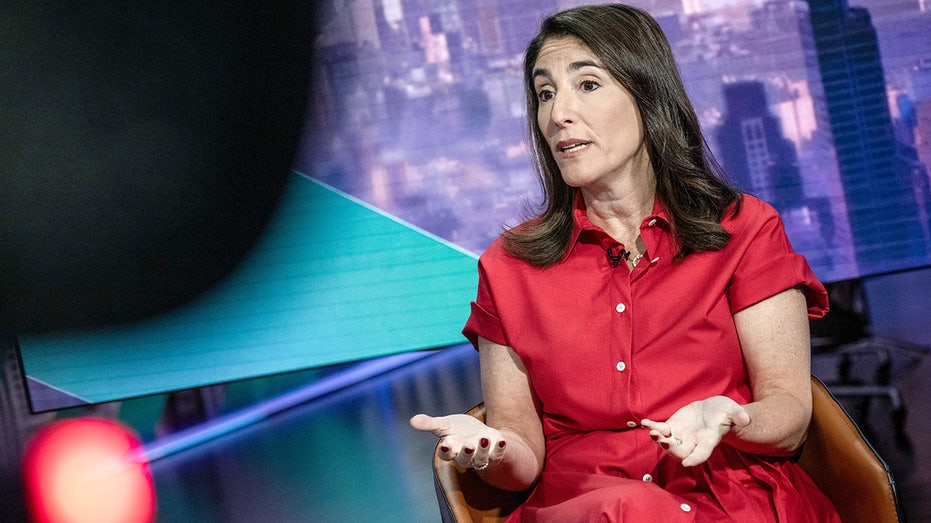
Dallas Fed President Lorie Logan
Dallas Fed President Lorie Logan’s dissent was rooted in a conviction that current monetary policy lacks sufficient restraint. She argued that inflation “does not appear to be on course to sustainably achieve” the Fed’s 2% target, adding a sharp market-oriented observation that, “Every month of above-target inflation compounds the strain on the budgets of American families and businesses.” This sentiment resonates with consumers facing diminished purchasing power and corporations struggling with input costs, ultimately impacting corporate earnings visibility. Logan further noted that, “Even after accounting for productivity gains and temporary supply shocks, inflation appears to be trending toward the mid-2’s, not all the way to 2%, and the risks are to the upside.” Her assessment of the labor market as “solid and perhaps strengthening” eased concerns about the maximum employment component of the Fed’s dual mandate, effectively removing a potential dovish counterbalance to her inflation hawk stance. For market participants, Logan’s comments suggest that without higher real rates, the economy could continue to run hot, fueling inflationary pressures. “Modest action in the near term would reduce the likelihood of needing to take sharper action later,” she concluded, echoing a sentiment that markets often interpret as a preference for proactive tightening to prevent larger, more disruptive moves down the line.
Dallas Fed President Lorie Logan said that inflation doesn’t seem to be returning to its 2% target.(Shelby Tauber/Bloomberg/Getty Images)
Minneapolis Fed President Neel Kashkari
Neel Kashkari, President of the Minneapolis Fed, drew parallels between the current inflationary cycle and the U.S. experience in the 1970s, a period infamous for stagflation and unanchored inflation expectations. He highlighted how both periods saw a series of successive supply shocks impacting commodities, food, and energy markets. While today’s inflation drivers include the pandemic’s lingering effects, wars in Ukraine and the Middle East, and ongoing trade tensions, Kashkari’s historical analogy served as a stark warning to markets. He reminded that central bankers half a century ago initially underestimated the persistence of inflation, believing they could “look through” temporary shocks, only to later realize bolder action was needed. “If inflation remains elevated, in my view, a potential series of small policy moves would be better than waiting and eventually concluding that even bolder actions were necessary,” Kashkari stated, articulating a preference for incremental, pre-emptive tightening. For investors, this perspective suggests a Fed that remains highly sensitive to inflation’s historical precedents and is wary of repeating past policy errors. His argument implies that the risk of doing too little outweighs the risk of doing too much, a hawkish stance that could keep a lid on long-term bond prices.
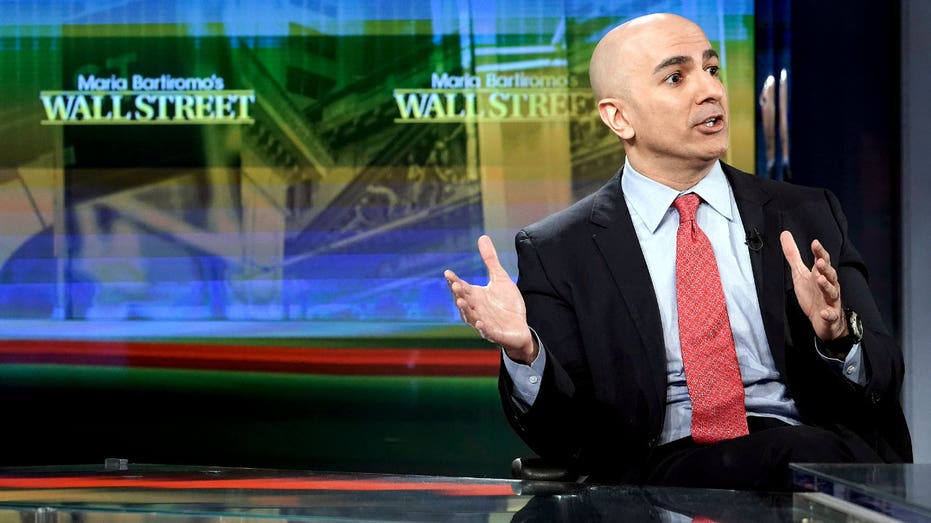
Minneapolis Fed President Neel Kashkari said it wouldn’t be hard to pause or reverse rate hikes if needed.(John Lamparski/Getty Images)
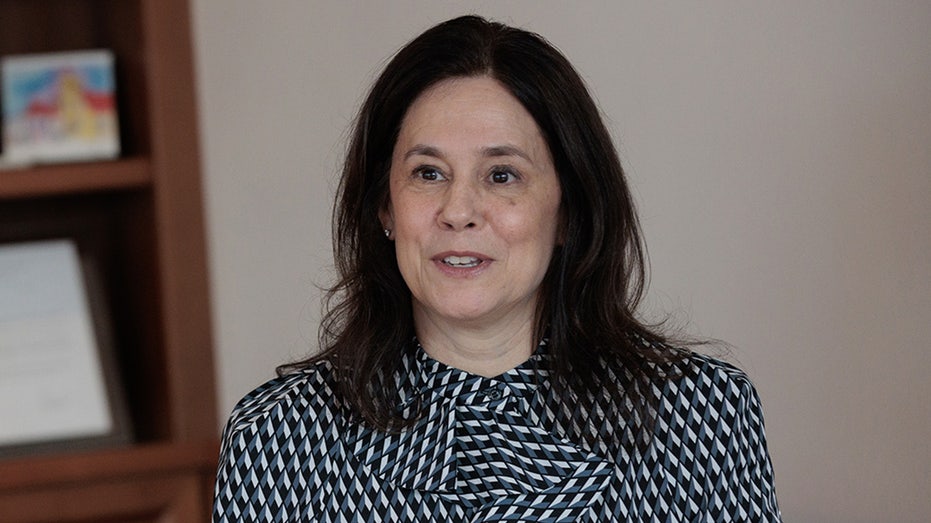
Cleveland Fed President Beth Hammack
Cleveland Fed President Beth Hammack’s dissent centered on a lack of confidence in inflation returning to target autonomously. Her explanation emphasized the increasing cost and challenge of bringing down inflation the longer it persists, a critical point for market participants concerned about the Fed’s “soft landing” aspirations. Hammack noted that while energy price shocks have been a significant contributor to inflation this year, her district’s business contacts report that pricing pressures are “broadening rather than fading.” This observation is particularly concerning for equity markets, as broadening pressures suggest higher input costs across various sectors, potentially squeezing corporate profit margins and leading to more widespread consumer price increases. She further underscored her priority by stating, “Given the stability of the labor market, with the unemployment rate near my estimate of maximum employment, I view high inflation as the more pressing problem.” This indicates a willingness to accept some degree of economic slowdown to achieve price stability, a trade-off that growth-oriented investors might find challenging. Hammock’s preference for a 25-basis-point hike was explicitly stated, believing the current policy stance was “not appropriately restrictive,” signaling that she views current real rates as still too low to curb demand effectively.
Cleveland Fed President Beth Hammack dissented in favor of a 25-basis-point rate hike.(Victor J. Blue/Bloomberg via Getty Images)
GET FOX BUSINESS ON THE GO BY CLICKING HERE
Market Impact:
The Federal Reserve’s decision to hold interest rates, coupled with the clear hawkish dissent, injects a new layer of complexity and potential volatility into financial markets. Immediately, the bond market will likely exhibit increased uncertainty, with short-to-medium term Treasury yields potentially finding a floor as the “higher for longer” narrative gains traction from the dissenting voices. The yield curve’s shape will be closely watched for signs of steepening or further inversion, reflecting investor expectations for future growth and inflation. For equities, the pause offers a temporary reprieve, but the underlying inflation concerns articulated by Logan, Kashkari, and Hammack will temper enthusiasm. Sectors sensitive to consumer spending and input costs may face headwinds if pricing pressures continue to broaden, impacting profit margins and earnings forecasts. Growth stocks, which tend to be more sensitive to interest rate expectations, might see their valuations scrutinized more intensely if the market perceives a higher probability of future hikes. Conversely, defensive sectors and value stocks could show resilience. The U.S. dollar, often a beneficiary of higher rate expectations, might find support from the hawkish tone within the FOMC, impacting multinational corporate earnings as a stronger dollar makes U.S. exports more expensive and reduces the value of overseas profits when repatriated. Commodity markets, particularly energy, will remain highly reactive to geopolitical developments and demand signals, with inflation expectations playing a crucial role in their pricing. Ultimately, the market will now be hyper-focused on every piece of economic data and every Fed speaker, searching for clues on whether the cautious majority or the hawkish minority will dictate future policy, leading to a period of heightened sensitivity and potential swings in investor sentiment.