

Tortoise Capital managing director Rob Thummel discusses the volatility of U.S. energy prices on Making Money.
Key Takeaways
- Robust Supply & Storage Buffers Winter Volatility:The U.S. natural gas market is entering the winter heating season with record production (projected 112.5 Bcf/day) and healthy storage levels (3.88 Tcf), providing a significant cushion against potential price spikes from extreme cold weather.
- Structural Demand Shifts Drive Long-Term Growth:While immediate supply is strong, rising liquefied natural gas (LNG) exports and the burgeoning electricity demand from data centers are emerging as key structural drivers, underpinning long-term demand growth and influencing future investment in the sector.
- Infrastructure as the Critical Bottleneck:Despite abundant natural gas resources and a significant cost advantage, existing interstate pipeline capacity is nearing saturation. This infrastructure constraint, rather than supply itself, poses the primary risk to regional price stability and the ability to meet expanding demand efficiently.
As the chill of winter approaches, the U.S. natural gas market finds itself in an intriguing position, characterized by a paradox of robust supply metrics juxtaposed with evolving demand dynamics and persistent infrastructure challenges. Exclusive insights from the Natural Gas Supply Association’s (NGSA) 2026-27 winter outlook paint a picture of record-setting production capabilities and healthy storage levels, factors that typically signal a bearish outlook for spot prices. However, a deeper dive reveals underlying market forces that could reshape the sector’s trajectory and investor sentiment beyond the immediate heating season.
The NGSA’s forecast, exclusively viewed by FOX Business, projects U.S. dry gas production to soar to an unprecedented 112.5 billion cubic feet (Bcf) per day. This prodigious output is complemented by substantial storage levels, estimated at 3.88 Trillion cubic feet (Tcf). Dena Wiggins, president and CEO of the NGSA, emphasized this strength, stating, “The U.S. is heading into winter from a very strong supply position. That combination gives the market a strong cushion heading into colder months.” For market participants, these figures suggest a well-supplied market, potentially mitigating the severe price volatility witnessed in recent winters, especially if weather patterns remain within normal expectations. This strong fundamental backdrop typically translates to downward pressure on prompt-month Henry Hub futures contracts, while also narrowing basis differentials in producing regions where takeaway capacity is sufficient.
The U.S. is approaching winter with strong natural gas production and storage levels, NGSA said.(Rebecca Droke/AFP via Getty Images)
However, the narrative extends beyond mere supply abundance. The report highlights significant shifts in demand drivers that are critical for understanding the long-term equilibrium of the market. Residential, commercial, and industrial consumption are projected to remain stable under normal weather assumptions. Instead, the engines of demand growth are almost entirely led by rising liquefied natural gas (LNG) exports and the structural needs of an expanding digital economy, particularly data centers. LNG exports are projected to increase by a substantial 2.3 Bcf per day year-over-year. This burgeoning global demand for U.S. gas underscores America’s growing role as a pivotal energy supplier on the world stage, offering critical energy security to allies and leveraging its abundant shale resources. For investors, this translates into continued strong cash flows for LNG export terminal operators and gas producers with access to these facilities, providing a bullish underpin that could counteract domestic oversupply concerns.
The rise of data centers as a significant demand driver is a newer, yet rapidly escalating, phenomenon. The energy intensity required to power expanding digital infrastructure, driven by artificial intelligence and cloud computing, creates a new, less weather-dependent base load demand for electricity, much of which is currently met by natural gas-fired generation. Wiggins affirmed that “production is expected to remain robust even as demand grows, including from LNG exports and the power sector.” This structural demand shift is a key differentiator from historical market cycles, suggesting a more resilient floor for long-term natural gas prices and a sustained need for generation capacity.

Exports of liquefied natural gas (LNG) are helping support record natural gas production.(Stefan Sauer/picture alliance via Getty Images)
Despite these strong fundamentals, weather remains the perennial wildcard, injecting a significant element of risk premium and speculative activity into the market. “Of course, weather remains the biggest variable. A prolonged period of extreme cold can tighten any market,” Wiggins cautioned. A milder winter could lead to lower heating demand, potentially pushing prices lower and increasing end-of-winter storage levels, which could depress futures prices further into the shoulder seasons. Conversely, a prolonged cold snap, especially across major population centers, could rapidly deplete storage and trigger upward price pressure, creating short-term trading opportunities for those adept at weather forecasting and options strategies. Traders will be closely monitoring degree-day forecasts and their impact on futures contract pricing, particularly in the prompt months.
Underpinning the entire market structure is the critical issue of infrastructure. The NGSA report emphatically states that U.S. natural gas maintains a significant cost advantage compared to benchmark prices in Europe and Asia. However, this advantage is increasingly constrained by near-capacity interstate pipelines. “Looking ahead, the biggest question isn’t whether we have enough natural gas, it’s whether we have the infrastructure to get it where it’s needed,” Wiggins articulated. This infrastructure bottleneck creates regional price dislocations, where basins with abundant supply (like the Appalachia region) may see significantly discounted gas prices due to limited takeaway capacity, while demand centers face higher costs. Such basis differentials highlight the need for substantial investment in new pipeline projects and upgrades. The permitting challenges and environmental opposition faced by these projects represent a major impediment to maximizing the economic potential of U.S. gas resources and ensuring grid reliability.
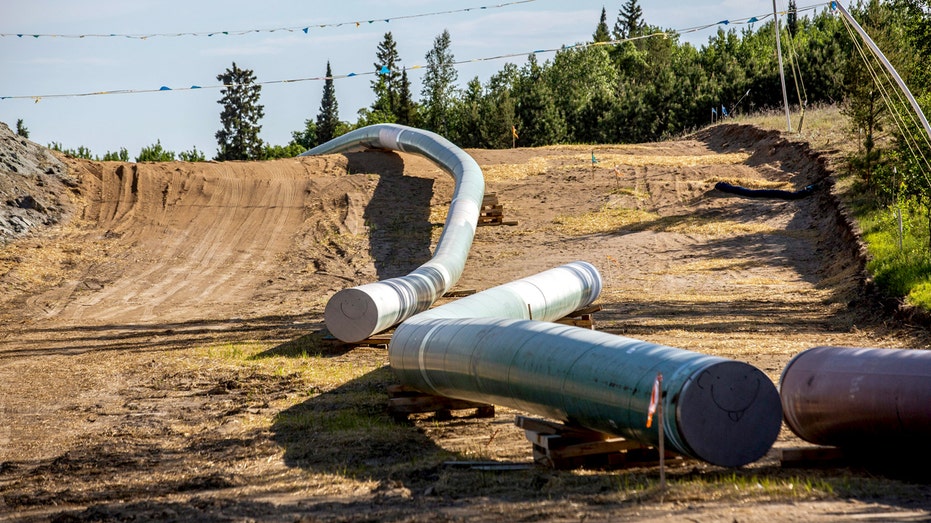
Wiggins noted that U.S. pipelines are at near-capacity and that more investment in infrastructure is needed to ensure natural gas can go where it’s needed.(Kerem Yucel/AFP via Getty Images)
Natural gas’s role in the U.S. electricity generation mix – supplying approximately 40% – further amplifies the infrastructure imperative. It remains the “most scalable resource for meeting grid reliability needs and expanding digital infrastructure,” as highlighted by the NGSA. The increasing penetration of intermittent renewable energy sources necessitates a flexible and reliable backup, a role currently best filled by natural gas power plants. Therefore, investments in gas infrastructure are not just about energy commodity markets, but also about the stability and resilience of the national power grid, especially in an era of growing electrification and digitalization. Without sufficient pipeline capacity, the ability to rapidly ramp up gas-fired generation during peak demand or renewable lulls is compromised, potentially leading to higher electricity prices or even blackouts in constrained regions. This directly impacts utility companies’ operating costs and profitability, as well as industrial users’ access to competitively priced power.
“You can have abundant supply, but if there isn’t enough pipeline capacity to move that gas to homes, power plants and businesses, consumer prices in constrained regions can be impacted,” Wiggins reiterated. This statement encapsulates the core challenge: transforming abundant geological resources into accessible, affordable energy for end-users. Resolving this constraint will be pivotal for maintaining the U.S. cost advantage, supporting industrial growth, and ensuring consumer price stability.
Market Impact
For investors, the natural gas market presents a nuanced landscape. While strong production and storage may temper immediate winter price surges, the structural growth drivers from LNG exports and data centers offer a compelling long-term bullish thesis for gas producers and midstream infrastructure companies. Opportunities may exist in companies with strong export capacity, robust hedging strategies, and those poised to benefit from new pipeline development. However, the persistent infrastructure bottlenecks create regional pricing disparities, making basis trading and careful analysis of regional supply-demand balances crucial. Commodity traders will closely monitor weather patterns, storage reports, and LNG export volumes for short-term price movements. For consumers, the robust supply outlook offers a degree of price stability, yet regional disparities due to pipeline constraints mean some areas may still face higher heating or electricity costs. Policymakers face the delicate balance of promoting infrastructure development to enhance energy security and economic competitiveness, while navigating environmental concerns and permitting complexities. The ongoing evolution of this market will significantly influence energy transition strategies, industrial competitiveness, and ultimately, the cost of living.