
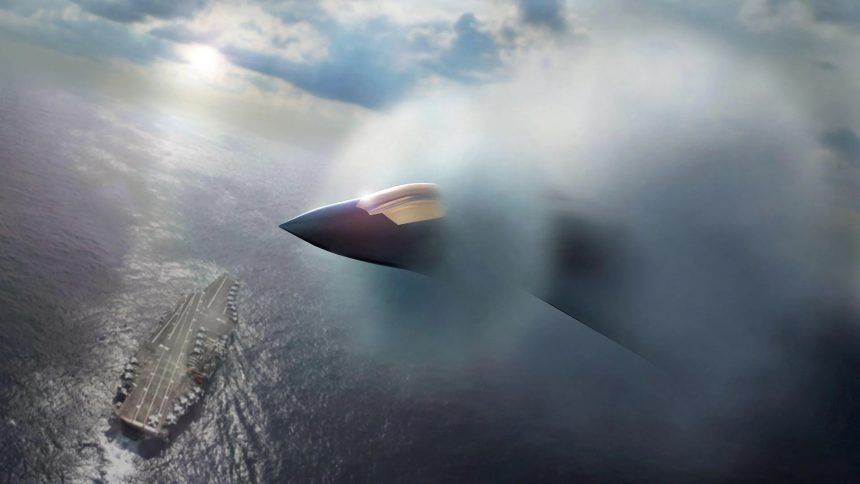
The U.S. Navy has formally awarded Boeing a contract valued at more than $20 billion for the development and production of its next-generation carrier-based fighter, designated the F/A-XX. This significant defense procurement positions Boeing to be the primary developer for two of the three sixth-generation aircraft currently slated for the U.S. military, following its prior selection for the Air Force’s F-47 program.
The F/A-XX is envisioned as a cornerstone of future naval air power, designed to augment, and eventually succeed, the existing F/A-18E/F Super Hornets and EA-18G Growler electronic warfare aircraft. Its integration into the Navy’s carrier air wings is projected to commence in the 2030s, where it will operate in tandem with the F-35C Joint Strike Fighters currently deployed by both the Navy and Marine Corps.
Michael P. Duffey, the Undersecretary of Defense for Acquisition and Sustainment, underscored the strategic importance of this investment in a Pentagon statement released on September 29. “The F/A-XX is a critical pillar in our commitment to maintaining peace through strength,” Duffey stated. “F/A-XX will dominate contested airspace, extend operational reach, and deliver a decisive combat advantage for the warfighter. The F/A-XX platform represents a crucial, non-negotiable investment in America’s national security and long-term air combat capabilities.”
The selection of Boeing marks a notable outcome in the competitive landscape of defense aviation. The firm had previously secured the contract for the Air Force’s sixth-generation fighter, the F-47, in March 2025. This latest award represents a setback for Northrop Grumman, which was the only other company remaining in contention for the Navy’s Next-Generation Air Dominance (NGAD) fighter program. Northrop Grumman is notably the manufacturer of the Air Force’s B-21 Raider stealth bomber.
Duffey emphasized the collaborative effort with Boeing to accelerate the deployment of these advanced capabilities. “We are joining forces with Boeing to field these capabilities rapidly, ensuring our warfighters possess the lethal and highly networked systems required to deter aggression, project undisputed power, and secure absolute air superiority,” he added.
A key operational attribute of the F/A-XX, as detailed in the Pentagon’s release, is its intended capacity to operate alongside and command semi-autonomous Navy drones, known as Collaborative Combat Aircraft (CCAs). This feature highlights a broader strategic shift towards integrating manned and unmanned platforms in future air combat scenarios.
Acting Navy Secretary Hung Cao heralded the contract award as a pivotal moment for naval aviation. “This achievement marks a new era for the U.S. Navy,” Cao remarked. “The sixth-generation fighter is a generational leap in air superiority and will provide the world’s best aviators with unparalleled capabilities to fight, win, and come home safe. We are excited to partner with Boeing, and for our warfighters to continue to dominate the skies and defeat our nation’s enemies.”
Beyond its drone-controlling capabilities, advanced stealth technology is also considered a fundamental characteristic of sixth-generation aircraft like the F/A-XX, crucial for operating effectively in highly contested environments. Moreover, the F/A-XX is designed for significantly increased operational range.
Rear Adm. Michael Donnelly, who served as the former director of the Navy’s air warfare division before his retirement, speculated at an April 2025 conference that the F/A-XX could potentially be the Navy’s final manned fighter aircraft. “It could be our last tactical manned fighter that we operate out of the Navy,” Donnelly stated at the Navy League’s Sea Air Space conference in National Harbor, Md. He further elaborated that the aircraft would embody a shift towards a “man-on-the-loop” rather than “man-in-the-loop” operational philosophy, serving as a critical bridge to a fully integrated “hybrid air wing” – combining piloted aircraft and unmanned platforms – anticipated for the 2040s.
Donnelly also informed reporters at the conference that the F/A-XX is expected to boast a combat range at least 25 percent greater than current Navy fighters before requiring aerial refueling. For context, the F/A-18 Super Hornet possesses a combat range of approximately 1,275 nautical miles, marginally exceeding the F-35C Joint Strike Fighter’s range of over 1,200 nautical miles. “That’s a core attribute of the F/A-XX,” Donnelly affirmed in 2025. “It will definitely have longer inherent range, and then with refueling, you could say that’s indefinite, as long as refueling is available.”
In a statement following the award, Boeing affirmed that the F/A-XX “will revolutionize advancements in open mission systems architecture, advanced mission systems, and operational reach and capacity.” Steve Parker, president and chief executive officer of Boeing Defense, Space and Security, expressed the company’s readiness. “It’s an honor to be selected to produce the Navy’s first sixth-generation platform,” Parker said. “Backed by decades of work, bolstered by game-changing innovations and solidified by the investments we’ve made in new facilities uniquely suited to build multiple products with next-generation capabilities, our dedicated and talented team is ready to execute this critical program.”
Boeing clarified that specific technical and program details regarding the F/A-XX remain classified and therefore cannot be publicly disclosed.
According to J.J. Gertler, a longtime defense analyst, the Navy’s decision to select Boeing could facilitate the leveraging of work already underway for the Air Force’s F-47 sixth-generation fighter. This potential commonality or shared development could accelerate the F/A-XX program and expedite its entry into production. “If it’s based on the F-47 or was codeveloped with the F-47, they might be able to put an aircraft in the air very quickly,” Gertler commented to Air & Space Forces Magazine.
Boeing has made substantial investments in expanding its facilities for advanced aircraft production in St. Louis, Mo., where development of the F-47 is currently taking place. This complex also houses the production lines for the F-15EX Eagle II fighters and T-7 Red Hawk trainer jets for the Air Force. Concurrent with the F/A-XX announcement on September 29, the Pentagon awarded Boeing an additional $2.38 billion contract for 22 more F-15EX fighters, further increasing activity at the St. Louis site.
The company stated that construction is ongoing for its secure manufacturing facility in St. Louis, which it anticipates will become “part of the world’s most advanced, all-digital aerospace design and manufacturing system.” Parker reiterated the company’s strategic planning: “Delivering two advanced fighters in parallel was always our plan, and we invested accordingly. We are ready and able to build multiple concurrent future combat aircraft franchise programs.”
However, Gertler raised questions regarding Boeing’s capacity to fulfill commitments for multiple critical military aircraft programs simultaneously. “We don’t know how much of [Boeing’s new advanced aircraft facility] is taken up by F-47,” Gertler noted. “They’ve got F-15EX numbers expanding. They’ve got T-7 there. Do they have the people to be able to produce this [F/A-XX] aircraft quickly?” These concerns underscore the challenges of managing complex, high-priority defense projects concurrently.
Why This Matters
The U.S. Navy’s award of the F/A-XX contract to Boeing for its next-generation carrier-based fighter signifies a critical step in maintaining American military superiority and has profound implications across national security, technological advancement, and the defense industry. This multi-billion-dollar investment underscores the Pentagon’s commitment to modernizing its air combat capabilities in an evolving geopolitical landscape marked by rising peer competitors.
Strategically, the F/A-XX is designed to ensure the U.S. Navy’s dominance in contested airspaces for decades to come. By replacing aging platforms and operating alongside the F-35C, it aims to deliver unmatched operational reach and combat advantage. This is particularly crucial as global rivals, such as China and Russia, rapidly advance their own military technologies, including stealth aircraft and anti-access/area denial systems. A superior carrier-based air wing remains a cornerstone of U.S. power projection and deterrence worldwide.
Technologically, the F/A-XX represents a leap forward, embodying the characteristics of a “sixth-generation” fighter. This includes advanced stealth, enhanced range, and crucially, the ability to command semi-autonomous drones (Collaborative Combat Aircraft). This integration of manned and unmanned systems is poised to redefine aerial warfare, moving towards a “hybrid air wing” where human pilots leverage AI-powered autonomous assets to increase situational awareness, extend sensor range, and multiply combat effect. The F/A-XX’s potential as the Navy’s last manned fighter also highlights a long-term shift towards greater autonomy in military aviation.
Economically, the contract is a substantial boon for Boeing, solidifying its position as a dominant player in U.S. military aircraft development, with two out of three major sixth-generation fighter programs under its belt. This ensures thousands of high-tech jobs and significant investment in the U.S. industrial base, particularly in facilities like those in St. Louis, Mo. However, it also raises questions about Boeing’s capacity to manage multiple complex programs simultaneously, a concern articulated by defense analysts. The award also represents a missed opportunity for competitors like Northrop Grumman, influencing the broader dynamics of the defense contracting industry.
Ultimately, the F/A-XX program is not merely about a new aircraft; it’s about the future of U.S. air power, the technological frontier of warfare, and the strategic positioning of the nation in a complex global environment.