

Check out what’s clicking on FoxBusiness.com.
**Key Takeaways**
* **Regulatory Shift & Banking Profitability:** The proposed changes to the Community Reinvestment Act (CRA) by Trump administration regulators aim to reduce perceived compliance burdens and redirect bank investments, potentially impacting bank profitability and capital allocation strategies, especially for smaller financial institutions.
* **Market Re-evaluation of CRA Compliance:** Shifting the focus from broad community development donations to direct lending and credit services could lead banks to re-evaluate their CRA compliance frameworks, potentially reducing non-lending expenditures and focusing capital on core banking activities with clearer ROI.
* **Political Volatility & Long-term Planning:** The stark contrast between the current (Biden) and proposed (Trump) CRA approaches underscores significant political risk for financial institutions, necessitating scenario planning for evolving regulatory landscapes based on election outcomes and administration priorities.
Financial regulators operating under the prospective Trump administration are proposing significant changes to a long-standing banking industry rule, the Community Reinvestment Act (CRA), a move that analysts say could reshape lending practices, compliance costs, and capital deployment strategies across the U.S. financial sector. Critics of the existing framework argue that the CRA has strayed from its original intent, becoming a mechanism for funneling funds from financial institutions to advocacy groups, rather than directly stimulating credit access in underserved communities.
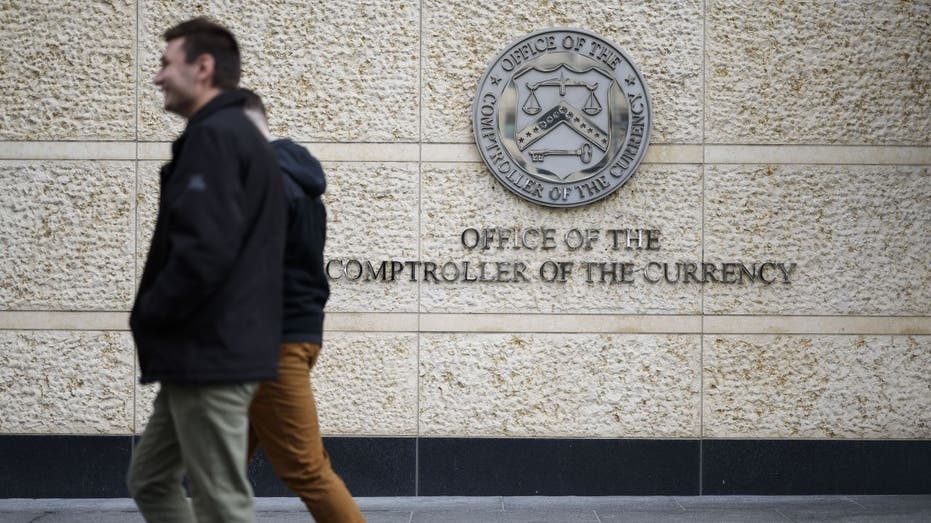
The Office of the Comptroller of the Currency (OCC) and the Federal Deposit Insurance Corporation (FDIC) announced a proposed rule on Friday that targets a substantial overhaul of the CRA. Enacted in 1977, the CRA was designed to combat “redlining,” a discriminatory practice where banks would deny loans or depository services to low-income or minority neighborhoods, ensuring fair access to credit across all communities. However, the interpretation and enforcement of the CRA have evolved significantly over the decades, leading to varied impacts on bank operations and community development outcomes.
Among the core proposed changes are provisions designed to intensify the focus on direct lending and to ensure that community development grants and donations are explicitly directed to the intended communities, rather than being diverted to other activities. This re-calibration is a direct response to longstanding critiques that banks, in their efforts to meet regulatory requirements, have often resorted to donating to advocacy groups, a practice some argue has diluted the law’s effectiveness in fostering direct economic empowerment through credit access.
Comptroller Jonathan Gould, a key figure in the prospective Trump administration’s financial regulatory apparatus, articulated the rationale behind the proposed reforms in a post on X. Gould stated, “Under the Biden Administration, the Community Reinvestment Act became an onerous tax on community banks that failed to drive investment into the very regions they were meant to serve.” This characterization suggests a perception among the new administration that the current CRA framework imposes an inefficient cost burden on financial institutions, particularly smaller ones, without yielding commensurate benefits in actual community investment. The market implications here are clear: a reduction in “onerous taxes” could translate into improved bank profitability and potentially more capital available for core lending activities.
“Today’s proposed reforms will help ensure the CRA is no longer used as a social credit score for banks, nor as a funding mechanism for activist NGO networks under the guise of community development,” Gould further wrote. This strong language signals a departure from what some perceive as a broadening of CRA’s scope beyond traditional financial services into areas of social engineering or political influence. For banks, this could mean a more predictable and financially focused compliance environment, reducing reputational risks associated with perceived political alignments.
TRUMP ADMIN WARNS BANKS ON LENDING TO UNAUTHORIZED WORKERS
Comptroller of the Currency Jonathan Gould said the regulatory changes will prevent the CRA from being used as a “social credit score for banks.”(Al Drago/Bloomberg via Getty Images)
Key Republican lawmakers in Congress, who hold influential positions on panels overseeing the financial services industry, have broadly supported the regulatory initiative on social media. Their endorsements underline the political alignment behind these proposed changes and signal a potential smoother path for implementation, should a Trump administration take office.
Rep. Andy Barr, R-Ky., a prominent member of the House Financial Services Committee and chair of its subcommittee on financial institutions, commented, “For years, left-wing activist groups have weaponized the Community Reinvestment Act to pressure financial institutions far beyond Congress’s original intent.” Barr’s perspective resonates with market participants who have often voiced concerns over the subjective nature of some CRA evaluations, which can create uncertainty and increase compliance costs for banks. His assertion that the CRA has “too often become a tool to limit access to capital” suggests a belief that the current framework inadvertently stifles economic activity rather than promoting it, a view that, if accurate, would have significant implications for credit markets and business expansion.
“Instead of expanding access to credit, the CRA has too often become a tool to limit access to capital. I welcome the Trump Administration’s commonsense reforms to restore the law to its intended purpose and refocus it on lending and community investment,” Barr added. This refocusing, from a market perspective, aims to streamline bank operations, making CRA compliance more directly tied to measurable lending and investment in underserved areas, potentially freeing up resources currently allocated to non-lending activities.
TRUMP ADMIN TO TELL BANKS IMMIGRATION STATUS MAY BE CONSIDERED IN MORTGAGE, CREDIT DECISIONS

Key GOP lawmakers on Congress’ banking industry panels praised the proposed regulation.(J. David Ake/Getty Images)
Sen. Katie Britt, R-Ala., who sits on the Senate Banking Committee and chairs its subcommittee on housing and community development, likewise took to X to express her approval, welcoming the proposal to “restore a more practical” framework for the CRA. Her focus on housing and community development highlights the critical link between CRA reform and the accessibility of mortgages and development loans in specific geographic areas, which in turn impacts local real estate markets and economic vitality.
“Community banks should be focused on expanding access to credit, supporting small businesses, and strengthening local communities, not navigating unnecessary regulatory burdens or subsidizing activist causes,” Britt said. This sentiment underscores the proposed rule’s specific efforts to alleviate the regulatory load on smaller financial institutions. Reduced compliance burdens for community banks could enhance their competitiveness, foster localized lending, and potentially stimulate economic growth on Main Street by channeling more capital directly into local businesses and households.
WALL STREET REVEALS TRUMP EXECUTIVE ORDER HAS SIGNIFICANTLY REDUCED FEDERAL REGULATORY PRESSURE
Conservative activist Christopher Rufo, commenting on the broader political implications, called the proposed rule a “big deal” and a “win for Scott Bessent” (presumably referring to a key economic advisor or future Treasury Secretary), asserting that the CRA “has been used as a mechanism for shaking down banks to fund left-wing activism.” Such political framing, while controversial, indicates the ideological battleground over financial regulation and its perceived societal impacts.
Comptroller of the Currency Jonathan Gould said the proposal would help propel economic growth while reducing unnecessary regulatory burdens.(Ting Shen/Bloomberg via Getty Images)
A central feature of the proposed rulemaking from the OCC and FDIC is its aim to ease burdens on banks with $10 billion or less in assets. These smaller institutions would benefit from more flexible supervision, exempting them from some data collection, maintenance, and reporting requirements that larger banks face. This differential treatment acknowledges the disproportionate impact of complex regulations on community banks, potentially fostering greater competition and efficiency within the smaller end of the banking sector.
The proposal would also sharpen the regulation’s focus specifically on credit services, largely excluding deposit services. This streamlining, coupled with other efforts to improve clarity, transparency, and objectivity in CRA evaluations for banks of all sizes, suggests a move towards a more data-driven and less subjective assessment framework. For banks, this could translate into clearer performance metrics, reduced ambiguity in compliance, and a more efficient allocation of resources towards activities that demonstrably meet CRA objectives.
Gould reiterated the broader vision, adding that the OCC will continue to implement the agenda of President Donald Trump and Treasury Secretary Scott Bessent by “taking steps to reduce unnecessary regulation and propel economic growth on Main Street.” The emphasis on “economic growth” and “Main Street” signals a market-oriented approach focused on tangible economic outcomes, rather than broader social policy objectives, which could be welcomed by investors seeking regulatory stability and growth-oriented policies.
GET FOX BUSINESS ON THE GO BY CLICKING HERE
Market Impact
The proposed CRA reforms could have a multi-faceted impact on the financial markets. For the banking sector, particularly regional and community banks, reduced compliance costs and a clearer mandate focused on direct lending may boost profitability and operational efficiency, potentially leading to increased investor interest in these segments. Large national banks, while still subject to comprehensive CRA evaluations, could see a shift in their capital allocation strategies, redirecting funds from broader advocacy donations towards more direct and measurable lending initiatives, which could be viewed positively by shareholders prioritizing financial returns. However, the political nature of these changes introduces regulatory uncertainty; any flip-flop in policy with future administrations could create volatility for financial institutions engaged in long-term planning. The focus on credit services could stimulate lending in targeted communities, impacting local housing markets and small business development, while the reduced emphasis on broader social funding could affect non-profit organizations that have historically relied on bank contributions for their operational budgets. Overall, the market will likely view these changes as a move towards a more business-friendly regulatory environment, but with an awareness of the potential for ongoing political debate to influence future financial policy.