
Key Takeaways:
- Strategic U.S. Commitment Amid EV Volatility:BMW’s substantial $1.7 billion investment in its South Carolina operations reaffirms a long-term strategic commitment to the U.S. market and domestic electric vehicle (EV) production, notably contrasting with some industry peers who have scaled back EV growth projections.
- IRA Incentives and Supply Chain Resilience:The investment, particularly in a new battery assembly facility, strategically positions BMW to leverage Inflation Reduction Act (IRA) incentives for North American-made EVs, enhance supply chain security, and potentially reduce manufacturing costs, driving competitive advantage.
- Diversified Portfolio for Global Reach:While acknowledging a more measured pace of EV adoption in the U.S., BMW’s “Power of Choice” strategy, supported by Plant Spartanburg’s significant export capabilities, allows for a diversified production output that can cater to both domestic and strong international EV markets, hedging against regional demand fluctuations.
Munich-based automotive giant BMW is doubling down on its U.S. manufacturing footprint, signaling a robust long-term commitment amidst a fluctuating global electric vehicle (EV) market. Sebastian Mackensen, president and CEO of BMW of North America, recently emphasized the automaker’s dedication, stating, “BMW is ‘here for the long game’ in the U.S.” as the company completes a massive $1.7 billion investment in its South Carolina operations.
This significant capital expenditure, initially announced in 2022, marks a pivotal moment in BMW’s North American strategy. It includes a $1 billion upgrade to the iconic Plant Spartanburg and a concurrent $700 million investment in a state-ofthe-art battery assembly facility in nearby Woodruff, South Carolina. Mackensen highlighted the tangible nature of this commitment: “One thing is to announce an investment and another one is to actually do the investment, implement it, [and] build the expansion of this facility.”
The culmination of this investment was underscored by the unveiling of the all-new X5, featuring the iX5—the first battery-electric BMW X5. This model is slated to become the first fully electric BMW assembled in the U.S. when production commences at the end of this year. The iX5 is just the vanguard; BMW anticipates at least five additional fully electric BMW models will be assembled in the U.S. by 2030, charting a clear course for domestic EV expansion.
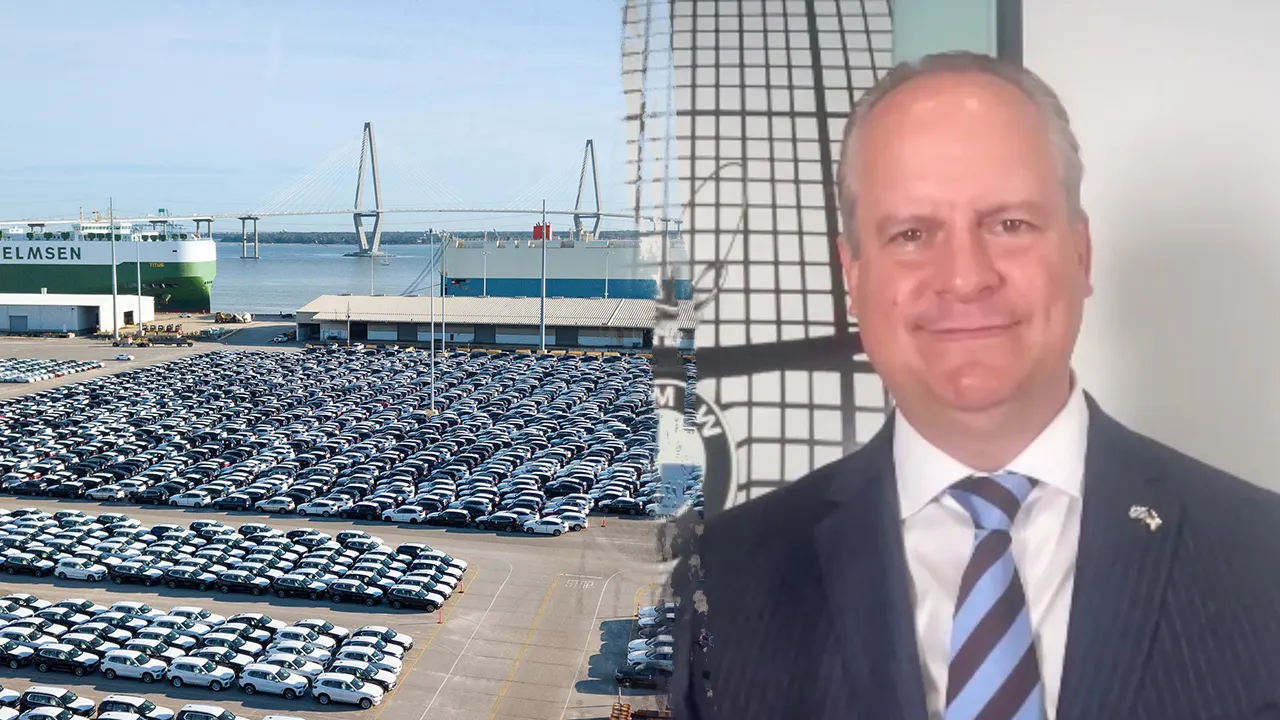
Sebastian Mackensen, president and CEO of BMW of North America, said the investment marks a major milestone in the automaker’s U.S. manufacturing strategy and proves BMW is doing more than making promises.(FOX Business / Fox News)
This move comes at a fascinating juncture for the automotive industry. While some legacy automakers have publicly scaled back or delayed their EV production timelines and investment plans in response to cooling demand and profitability concerns, BMW is steadfast. Mackensen articulated the company’s conviction: “We are convinced that the EV is a relevant and here-to-stay drivetrain option.” This stance positions BMW as a strategic player, balancing the immediate market realities with a clear vision for electrification’s enduring role.
However, Mackensen also offered a nuanced perspective on the U.S. market specifically: “Will it be the majority of vehicles sold? Probably not in the U.S., at least not in the foreseeable future. But at the same time, we are exporting to global markets from this plant.” This statement is critical for understanding BMW’s multi-faceted approach. Plant Spartanburg, established over three decades ago, has long been a global export hub, assembling popular X-series vehicles like the X3, X6, X7, and XM for both U.S. and international customers. This global reach acts as a crucial hedge, allowing BMW to absorb slower U.S. EV adoption rates by catering to stronger demand in other regions, particularly Europe and parts of Asia, where EV mandates are more aggressive.
BMW showcases the all-new X5 at its Spartanburg, South Carolina, plant on June 28, 2026.| Fox News
The economic impact of BMW’s sustained growth in South Carolina extends far beyond the plant gates. Mackensen noted its “changing impact on the whole community, not only in Greenville [and] Spartanburg, but also for the entire state,” attracting a robust ecosystem of suppliers, logistics providers, and supporting businesses. This localized supply chain, particularly for battery components, is also strategic. It enhances supply chain resilience against geopolitical disruptions and aligns with the incentives offered by the U.S. Inflation Reduction Act (IRA), which provides tax credits for EVs and batteries manufactured within North America, offering a significant cost advantage.
The local footprint is integral to BMW’s broader U.S. strategy. With the U.S. representing BMW’s second-largest market by volume, investing where customers are located makes profound economic sense. “It shows our clear commitment to the U.S. market,” Mackensen affirmed, adding, “It makes a lot of sense to assemble your cars where your customers are.” BMW has consistently been the largest automotive exporter from the U.S. by value for over a decade, having shipped nearly 3 million vehicles worth more than $113 billion globally from 2014 through 2025. This dual role—serving a major domestic market while acting as an export powerhouse—solidifies Plant Spartanburg’s strategic importance.
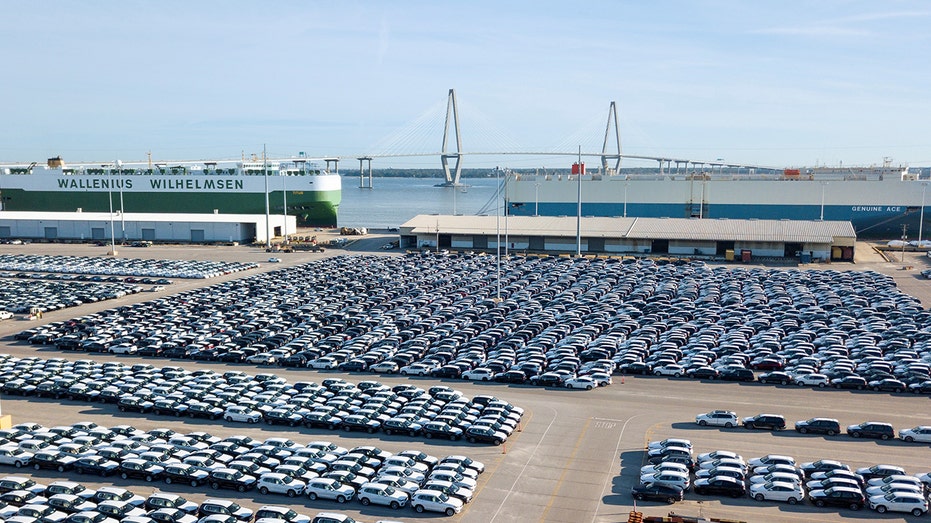
Vehicles await export at the Port of Charleston in South Carolina.(BMW / Fox News)
Stocks In This Article:
Market Impact:
BMW’s substantial investment in U.S. EV manufacturing sends a strong signal to the luxury automotive market and investors alike. It reinforces BMW’s commitment to long-term electrification, positioning the company to capitalize on future EV demand and regulatory landscapes, particularly those driven by IRA incentives. While some competitors are retracting, BMW’s “Power of Choice” strategy and diversified production, leveraging Spartanburg’s export prowess, provide a balanced approach to navigate current EV market uncertainties. This move is expected to bolster BMW’s brand image as an innovator, enhance supply chain security, and potentially improve profitability through localized production efficiencies. For the broader automotive sector, it underscores the ongoing bifurcation of EV strategies, highlighting that significant, strategic investments can proceed even amidst market recalibrations, especially when underpinned by strong global export capabilities and government incentives. This sustained investment could also stimulate further economic development and job creation in the U.S. automotive supply chain.
FOX Business’ Louis Casiano contributed to this report.