
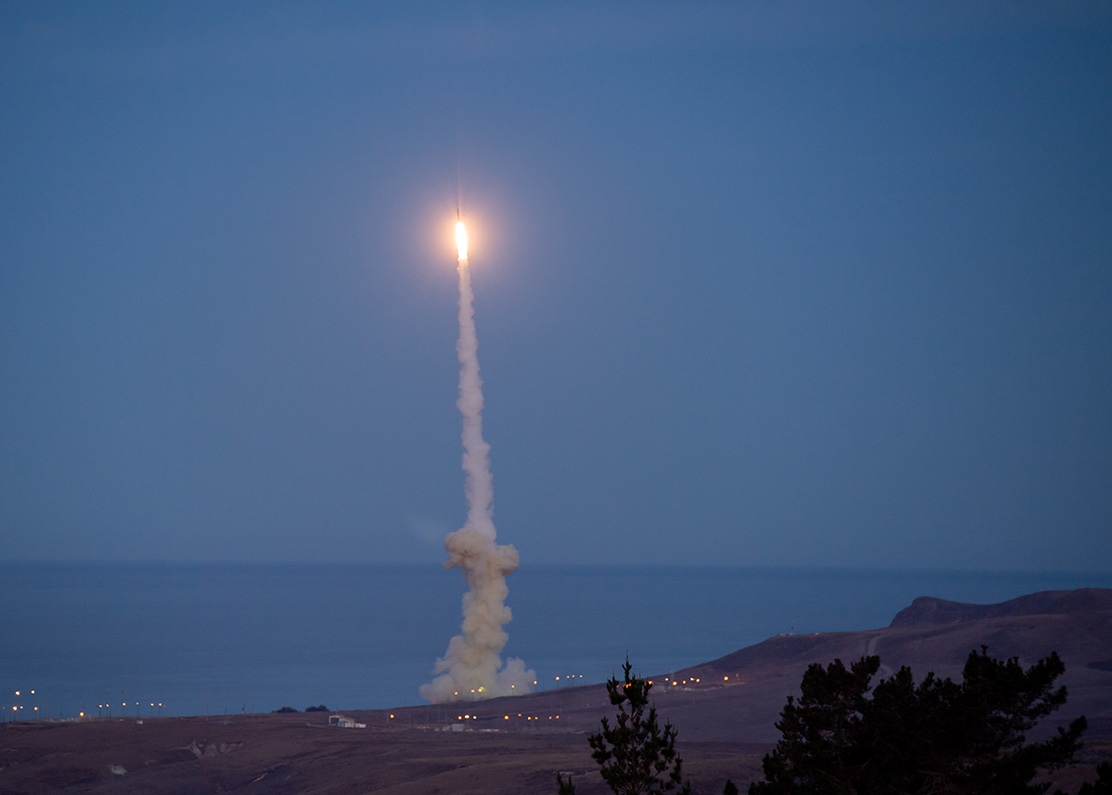
The United States is actively developing a comprehensive defense architecture known as Golden Dome, designed to protect the nation from a growing array of aerial threats. Central to this ambitious undertaking is a specialized task force, Joint Task Force-Gold, established earlier this year under the purview of U.S. Northern Command (NORTHCOM). Leaders of the initiative recently outlined the task force’s extensive responsibilities, which fundamentally involve deploying a robust capability to defend the U.S. homeland against diverse missile and drone attacks. A critical focus for the task force currently centers on two key areas: ensuring the Golden Dome system is resilient against sophisticated cyber threats and guaranteeing its effective operation in complex real-world scenarios, moving beyond theoretical design to practical implementation.
Joint Task Force-Gold was formally established by U.S. Northern Command in January of this year. NORTHCOM is responsible for homeland defense, civil support, and security cooperation for North America, making it the appropriate command to oversee such a critical defensive initiative. The task force is under the leadership of Lieutenant General John Rafferty, who also heads the Army’s Space and Missile Defense Command (SMDC), highlighting the Army’s significant role in this effort. Army Colonel Kevin Stonerook serves as the deputy leader, forming a leadership team with deep expertise in missile defense operations and strategic planning.
During a briefing with reporters on October 14 at the annual Association of the U.S. Army conference held in Washington D.C., Colonel Stonerook provided an update on the task force’s composition and operations. He confirmed that Joint Task Force-Gold comprises approximately 100 dedicated personnel, strategically based at Peterson Space Force Base in Colorado. This team is tasked with working in close collaboration with the Army’s Space and Missile Defense Command to meticulously integrate and coordinate the emerging Golden Dome capabilities across the entirety of the U.S. air and missile defense enterprise. This collaborative approach is crucial for ensuring that the new system seamlessly interfaces with existing defense assets and command structures.
The practical responsibilities of Joint Task Force-Gold are extensive and diverse. They include conducting thorough site surveys to identify and evaluate locations for future Golden Dome operational hubs, with Fort Story, Virginia, already confirmed as the first designated site. The task force also plays a crucial role in providing experienced operators whose real-world insights directly inform the architectural design and operational protocols of the system. Colonel Stonerook particularly highlighted the increasing emphasis on developing robust defensive cyber capabilities for Golden Dome, often referred to as GDA in this context.
“We are helping put together the team of teams,” Colonel Stonerook explained, referring to the complex network of collaborators. “This involves bringing together all the different stakeholders, including both commercial vendors and various government agencies, to truly establish a comprehensive cyber warfare capability for GDA. That’s one of the main things that we’re really focused on,” he reiterated, underscoring the paramount importance of protecting the system’s digital infrastructure from sophisticated adversarial attacks.
The Pentagon’s vision for Golden Dome outlines a sweeping and integrated network comprising advanced sensors, orbiting satellites, and various interceptor systems. This layered defense is specifically designed to safeguard the United States from an increasingly sophisticated array of air and missile threats. These threats encompass conventional unmanned aerial systems (drones), traditional ballistic missiles, and the emerging, highly challenging category of hypersonic weapons, which travel at extreme speeds and maneuver unpredictably. The successful operation of such a vast and complex architecture critically relies on a sophisticated command-and-control (C2) network. This C2 system will serve as the central nervous system, connecting and orchestrating the numerous distributed components. General Michael Guetlein, the Director of the Golden Dome program, has aptly characterized this C2 system as the program’s “glue layer,” emphasizing its indispensable role in binding all elements together into a cohesive and responsive defense shield.
The U.S. Army’s Space and Missile Defense Command (SMDC) is positioned to play a pivotal and foundational role in the overall Golden Dome strategy. SMDC already possesses extensive experience in operating the existing, albeit limited, anti-missile defense capabilities safeguarding the U.S. homeland, systems that were initially fielded over two decades ago. Specifically, SMDC is responsible for the deployment and operational readiness of approximately 40 Ground-Based Midcourse Defense (GMD) interceptors, strategically located to protect the nation from intercontinental ballistic missile attacks. Furthermore, the command manages the National Advanced Surface-to-Air Missile System (NASAMS), which provides crucial air defense for the National Capital Region surrounding Washington D.C. This established expertise provides a robust foundation for the expanded requirements of Golden Dome.
General Rafferty underscored the invaluable experience already present within the Army’s ranks. “We have the most experienced air defense force we’ve ever had,” he stated in an interview with Air & Space Forces Magazine. He elaborated that this mission is not new to SMDC, citing their continuous operation of ground-based interceptors in Alaska and their responsibility for defending the National Capital Region and other vital homeland locations. “We’re going to scale that,” General Rafferty affirmed, highlighting the goal of leveraging this existing expertise to meet the broader demands of Golden Dome. “We have people who do that 24/7, 365, and have, for many years: an incredible base to build on,” he concluded, stressing the deep institutional knowledge and operational rhythm that will be essential for the new system.
Beyond homeland defense, the U.S. Army also bears significant responsibility for missile defense operations globally. Recent events, particularly Iran’s sustained attacks on U.S. forces and allies in the Middle East, have rigorously tested and often strained the Army’s Terminal High Altitude Area Defense (THAAD) and Patriot ballistic missile defense batteries deployed in the region. These operational demands have necessitated the redeployment of Army air defense personnel and systems from other theaters, including Europe and Asia, to reinforce defenses in the Middle East. Hundreds of Patriot and THAAD interceptors have been expended in countering increasingly advanced Iranian ballistic missiles. Crucially, the Army has actively sought to extract vital lessons from this intense operational tempo and the characteristics of these attacks, applying them to refine tactics, improve system performance, and inform future defense strategies, including those for Golden Dome.
The development of Golden Dome necessitates a strategic blend of existing, proven defense technologies with innovative, cutting-edge, and entirely novel systems. While some components will leverage current capabilities, achieving the overarching goal of a comprehensive missile defense shield will require significant advancements in sensor technology, command-and-control systems, and interceptor capabilities. Joint Task Force-Gold’s core mission is to bridge the gap between technological development and operational reality by integrating real-world experience and practical considerations into the program’s evolution.
General Rafferty articulated the challenge: “They’re in a sprint to deliver materiel,” referring to the rapid development and acquisition efforts. He emphasized that the focus cannot solely be on technology. “We better be ready to train it, to man it, to have the right organization, the sustainment for it,” he stressed, highlighting the critical need for a holistic approach that ensures personnel, logistics, and organizational structures are prepared to support the advanced systems once they are deployed.
Drawing on past experiences, General Rafferty drew a parallel to challenges he encountered while leading the Army’s Long Range Precision Fires Cross-Functional Team. That initiative focused on modernizing the Army’s surface-to-surface weapons. His objective then was to deliver new equipment “as quickly as we could” to enhance combat capabilities. However, he noted that the rapid acquisition of materiel often outpaced the readiness of personnel to effectively utilize it. “The rest of everybody was sprinting to, ‘Hey, how are we going to fight with this thing?’” he recalled, illustrating the crucial gap between technological delivery and operational proficiency. This historical lesson directly informs Joint Task Force-Gold’s current approach to Golden Dome.
In a similar vein, Joint Task Force-Gold is specifically mandated to facilitate a smooth and effective transition of Golden Dome from a conceptual framework to a fully operational reality. By collaborating intensively with the Pentagon’s dedicated Golden Dome office, formally known as the Direct Reporting Program Manager (DRPM), the task force aims to inject practical operational considerations throughout the capability development process. General Rafferty emphasized that a core objective of JTF-Gold is to rigorously examine and ensure how the complex system will function effectively and efficiently on a practical, day-to-day basis, not just in theoretical models but in the hands of trained operators.
To bolster the Pentagon’s ambitious timeline of fielding an initial Golden Dome capability by 2028, Joint Task Force-Gold has been instrumental in organizing and hosting a series of intensive planning sprints. These collaborative events bring together a wide spectrum of participants, including representatives from all companies involved in development and various government agencies contributing to the program. Colonel Stonerook stated that the primary objective of these sprints is “to really focus on operationalizing GDA,” ensuring that technical development aligns directly with operational needs. The inaugural planning sprint took place in February in Colorado Springs, Colorado, attracting over 300 attendees. A subsequent event is already scheduled for late October, reflecting the ongoing and accelerated pace of development and integration efforts.
Furthermore, Joint Task Force-Gold has actively participated in the large-scale test events orchestrated by the Golden Dome program office. Over the past year, the program has conducted at least two such tests. While officials have characterized these tests as successful, specific details regarding their precise objectives or outcomes have not been publicly disclosed. Nevertheless, these real-world demonstrations are vital for validating system components, identifying potential challenges, and refining operational concepts before full deployment.
General Rafferty confirmed that these testing events have provided invaluable insights, significantly enhancing Joint Task Force-Gold’s understanding of the practical requirements for eventually operating the Golden Dome capability. “Some of the testing events that the DPRM’s office has run have been really instructive about the types of soldiers that we need to man this,” General Rafferty noted. He explained that JTF-Gold’s role involves “bringing those issues to light and then creating opportunities for learning about the systems as they’re coming out.” This proactive approach allows teams to “lean forward on what the training package is or what kind of individuals we need,” ensuring that the human element of the defense system is developed concurrently with the technology, preparing a highly skilled and specialized workforce.
General Rafferty concluded by expressing confidence in the readiness of the U.S. Army’s personnel. “We have the most experienced, combat-proven air defense force in the world ready to come and help man an expanded Golden Dome from America,” he affirmed. This statement underscores the military’s commitment to leveraging existing human capital and expertise to operationalize this next-generation defense system, ensuring the protection of the homeland against future aerial threats.
Why This Matters
The development and operationalization of the Golden Dome defense system represent a critical evolution in U.S. national security strategy, with far-reaching implications. First and foremost, it addresses a rapidly escalating threat landscape. Adversaries are continually advancing their capabilities in ballistic missiles, cruise missiles, unmanned aerial systems (drones), and, most notably, hypersonic weapons. These new threats challenge existing defense systems due to their speed, maneuverability, and ability to evade detection. Golden Dome aims to establish a layered, comprehensive shield that can counter this complex spectrum of threats, thereby enhancing the direct protection of the U.S. homeland and its critical infrastructure from potential attacks.
Beyond immediate defense, a robust system like Golden Dome contributes significantly to strategic deterrence. A credible ability to defend against missile and drone attacks can complicate an adversary’s calculations, potentially discouraging aggressive actions. The emphasis on real-world operational readiness, including extensive training, dedicated personnel, and sustainable logistics, ensures that this advanced technology translates into actual defensive capability, rather than remaining a theoretical asset. This pragmatic approach is vital for ensuring the massive investment in Golden Dome delivers tangible security.
The intense focus on developing a defensive cyber capability for Golden Dome also highlights the growing importance of cyber warfare in modern conflict. Any sophisticated defense network relies heavily on interconnected digital systems, making it a prime target for cyberattacks designed to disrupt, degrade, or disable its functions. Securing Golden Dome against such threats is as crucial as its physical interceptors and sensors, underscoring a broader recognition that cybersecurity is an integral component of national defense.
Furthermore, the program’s collaborative nature, involving multiple government agencies and private sector companies, reflects a concerted national effort to harness diverse expertise. This fosters innovation and drives technological advancements not only in missile defense but potentially in related fields that could have broader societal applications. The establishment of dedicated task forces like Joint Task Force-Gold, aimed at integrating materiel development with operational training and personnel readiness, signifies a mature approach to fielding complex military systems. It acknowledges that effective defense relies equally on cutting-edge technology and the highly skilled individuals trained to operate and maintain it, ensuring that the U.S. remains prepared to face the security challenges of the 21st century.