
Stay informed with free updates
Simply sign up to the War in Ukraine myFT Digest — delivered directly to your inbox.
Key Takeaways
- Critical air defense shortages in Ukraine are amplifying geopolitical risk, threatening vital infrastructure, and increasing market volatility, particularly in energy and defense sectors.
- The global defense industry faces immense pressure to accelerate production of advanced interceptors like Patriot missiles, presenting both significant opportunities and supply chain challenges for major contractors.
- Stalled Western commitments and depleting allied stockpiles signal potential shifts in the conflict’s dynamics, impacting investor confidence and driving a heightened geopolitical risk premium across global markets.
Kyiv’s air-defence crews were left helpless during recent waves of Russian ballistic missile attacks for one simple reason: their Patriot interceptor launchers were empty. This stark reality not only underscores a critical military vulnerability but also sends a chilling signal across global financial markets, highlighting an escalating geopolitical risk premium and potential for increased volatility.
The severe shortage of the only weapon capable of shooting down Russia’s advanced ballistic missiles is exposing a critical gap in Ukraine’s defenses, just as Moscow intensifies its attacks ahead of the crucial winter months. For investors, this translates into elevated concerns over regional stability, the potential for wider economic disruption, and the accelerating demand pressure on the global defense industrial base.
Ukrainian officials confirmed that the country had already expended the small number of interceptors provided by Washington in recent weeks when missiles struck Kyiv on August 5 and again three days later. In both attacks, Ukraine intercepted none of the ballistic missiles fired at the capital, a failure that immediately weighed on market sentiment regarding Ukraine’s defensive capabilities and the efficacy of Western aid. This rapid depletion cycle points to a significant procurement challenge and an urgent need for scaled-up production from defense contractors like Raytheon Technologies, manufacturer of the Patriot system.
These unintercepted attacks have sharpened fears in Kyiv that the strategic advantage it appeared to gain earlier this summer through long-range strikes inside Russia could rapidly erode before winter. This erosion directly impacts investor confidence in Ukraine’s long-term resilience and the broader stability of Eastern European markets, as US caution over escalation and depleted allied stockpiles leave Ukraine exposed to Moscow’s intensifying missile campaign.
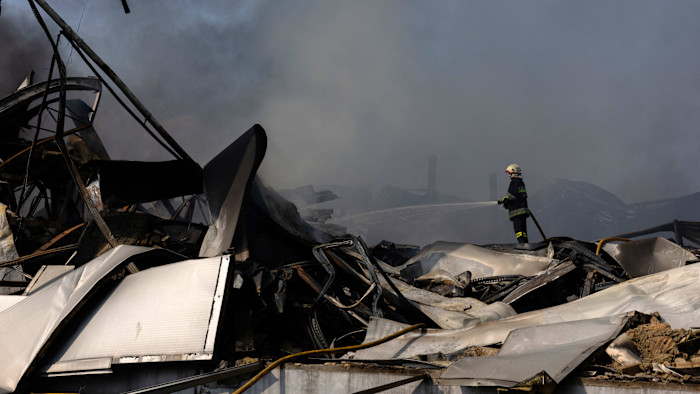
Ukraine’s Air Force reported Russia launched 24 ballistic missiles, four anti-ship missiles, and 115 drones at Kyiv on August 5. While 98 of the drones were shot down, the complete failure to intercept any missiles highlights a critical disparity. Three days later, six more Russian ballistic missiles hit targets in Kyiv, killing three people, according to Ukrainian officials. Each such incident, beyond its human cost, represents a direct hit on infrastructure and civilian morale, factors that investment analysts closely monitor for their impact on economic recovery prospects and sovereign risk.
The shortage has become so acute that Ukraine’s air force has stopped routinely disclosing the number of missiles Russia fires, in order to avoid revealing how many it fails to intercept, Ukrainian officials told the FT. This lack of transparency, while understandable for security reasons and public morale, creates an information vacuum that can fuel speculation and uncertainty in financial markets, making it harder for investors to accurately assess the conflict’s trajectory and its economic implications.
“We definitely need more protection for our people,” President Volodymyr Zelenskyy wrote on X after the bombardment, critically calling out Ukraine’s partners for delays in providing additional air defenses. Zelenskyy’s plea is, in essence, a direct demand signal to the global defense industry. He specified, “Anti-ballistic capabilities, interceptor missiles for Patriot, SAMP/T, NASAMS, Hawk, and our F-16s — all of this works and helps protect lives when it is here, in Ukraine, rather than sitting in warehouses thousands of kilometres away from Russian strikes against life.” This articulates a clear and substantial market opportunity for manufacturers like Raytheon (Patriot), MBDA (SAMP/T), Kongsberg (NASAMS), and Lockheed Martin (F-16s, PAC-3 interceptors), provided political will translates into firm orders and expedited production.
Kyiv estimates it needs at least 300 PAC-3 interceptors for its Patriot systems to withstand what officials expect will be another winter of heavy Russian missile and drone attacks on Ukraine’s power, gas, and water infrastructure. This quantified demand represents billions of dollars in potential contracts for defense firms and highlights the massive scale of rearmament needed. The vulnerability of Ukraine’s energy grid also poses a direct threat to European energy security, potentially driving up natural gas and electricity prices, reminiscent of the market volatility seen in prior winters.

Ukraine had entered the summer with rare optimism after its long-range strikes on Russian energy facilities triggered the country’s worst fuel crisis since the collapse of the Soviet Union and appeared to give Kyiv one of its strongest positions since 2022. This period of perceived strength had briefly buoyed market sentiment, hinting at a potential stabilization. However, that momentum is now at risk of fading before winter, as US caution over escalation and depleted allied stockpiles leave Ukraine exposed to Moscow’s intensifying missile campaign, threatening to reverse any positive market sentiment and reintroduce significant uncertainty.
Ukraine’s supplies of interceptors have dwindled just as Moscow has increased the production and use of its ballistic missiles. Russian forces launched a record 198 ballistic and hypersonic missiles in July, according to Vadym Skibitsky, deputy head of Ukraine’s HUR military intelligence agency. He further stated that Russia was producing about 60 ballistic missiles monthly, but in July it had rolled out at least 65. This stark contrast between dwindling Ukrainian stockpiles and increasing Russian production highlights a critical supply-demand imbalance, underscoring the urgent need for Western defense industrial base to accelerate output and potentially signaling a prolonged conflict with significant economic strain.

Zelenskyy has implored European partners who hold substantial stocks of Patriot interceptors, such as Spain and Greece, to share more of them with Ukraine. Such requests place allied nations in a difficult position, balancing their own national security needs against the urgent demands of Ukraine, a dynamic that directly influences the global arms market and the pace of new defense orders.
The situation is further complicated by the recent conflict with Iran, which severely depleted US and Gulf allies’ stockpiles of interceptors. These vital munitions are likely to take months or even years to be replenished, creating a global demand shock that affects lead times, pricing, and the ability of manufacturers to meet multiple simultaneous needs. Many of Kyiv’s partners are worried they could be left without ample supplies, intensifying the zero-sum nature of current defense allocations and driving up demand for faster, more agile production capabilities.
In a potentially positive market signal, Magdalena Sobkowiak-Czarnecka, Poland’s deputy defence minister, indicated Warsaw was within days of a decision to send a batch of Patriots to Ukraine. Such a move, if confirmed, would be closely watched by investors as a gauge of European commitment and could potentially open doors for follow-on orders for Poland’s own re-stocking efforts.
However, US President Donald Trump has appeared to step back from an agreement reached at the Nato summit in Turkey last month to grant Ukraine a licence to produce Patriot interceptors in Ukraine and Europe. This political wavering introduces significant uncertainty into defense planning and market forecasts. A licensing agreement would have represented a substantial long-term investment opportunity for European defense firms and a strategic step towards Ukraine’s self-sufficiency, but its stalling creates headwinds for regional industrial development.

During Zelenskyy’s White House meeting with Trump in late July, the US president did not agree to provide additional Patriot air-defence interceptors — the only ones capable of shooting down Russia’s ballistic missiles — to cover the next few months, according to people familiar with the talks. This lack of concrete commitment from a key ally injects considerable risk into market assessments, particularly for defense stocks and the broader outlook for continued Western support.
Sergiy Kyslytsya, a deputy head of Ukraine’s presidential office who attended the Oval Office meeting, asserted that Trump had not rejected Zelenskyy’s request. “There was no no,” he said, adding that Kyiv remained hopeful the US would provide more missiles. However, the absence of an explicit approval, despite the urgency, leaves the market in suspense, with defense sector investors particularly attuned to any signals of concrete orders.
Speaking to his top military and security officials in Kyiv in early August, a frustrated Zelenskyy suggested politics might be a factor in the decisions over interceptor supplies. “Maybe these are also political steps to make Ukraine more, let’s say, compliant.” Such geopolitical maneuvering directly impacts market perception, potentially fostering an environment of increased risk aversion among investors who prioritize stability and predictable policy frameworks.
Cartography by Steven Bernard and illustration by Bob Haslett
Market Impact
The dwindling supply of advanced air defense systems in Ukraine, coupled with Russia’s intensified missile production, has significant implications across global financial markets. Defense contractors, particularly those manufacturing Patriot systems and their interceptors (e.g., Raytheon Technologies, Lockheed Martin), face both unprecedented demand and immense pressure to scale production, potentially leading to substantial new orders but also supply chain bottlenecks and extended lead times. The vulnerability of Ukraine’s energy infrastructure ahead of winter poses a direct threat to European energy security, likely triggering renewed volatility in natural gas and oil markets, similar to previous cold seasons. Furthermore, the perceived shift in the conflict’s dynamics and the West’s wavering commitment to sustained military aid contribute to a heightened geopolitical risk premium, influencing investor sentiment towards riskier assets, strengthening safe-haven currencies, and potentially driving capital flows towards less volatile sectors. Companies involved in future reconstruction efforts, once the conflict subsides, will also closely watch these developments, as stability and security assurances are paramount for long-term investment viability.