

EPA Administrator Lee Zeldin discusses rising oil prices amid U.S.-Iran tensions, the Trump administration’s energy strategy, Everglades restoration funding and new efforts to phase out animal testing on ‘Mornings with Maria.’
Key Takeaways
- Policy-Driven Production Surge:The Trump administration’s “energy dominance” agenda, characterized by deregulation of methane and flaring emissions (NSPS OOOOb and OOOOc), aims to significantly bolster U.S. oil and gas output, potentially influencing global supply dynamics and commodity prices.
- Geopolitical Risk & Diversification Demand:Elevated U.S.-Iran tensions underscore the fragility of Middle Eastern energy supplies, driving Indo-Pacific nations to increasingly seek more secure, logistically streamlined energy imports from the U.S., enhancing American geopolitical leverage and export market opportunities.
- Long-Term Energy Mix Evolution:Beyond traditional hydrocarbons, a strategic push towards advanced nuclear technologies like Small Modular Reactors (SMRs) signals a diversified U.S. energy future, balancing baseload power needs with decarbonization goals, attracting new investment into clean energy infrastructure.
EPA Administrator Lee Zeldin, a key architect of the Trump administration’s energy policy, conveyed a profoundly optimistic outlook Thursday regarding the trajectory of U.S. energy markets. Speaking amidst an environment of rising global oil prices fueled by persistent U.S.-Iran tensions and a notable drawdown in domestic crude inventories, Zeldin emphasized the administration’s strategic pivot towards achieving “energy dominance,” a vision he believes will reshape international energy trade and reinforce American economic and geopolitical standing.
“I’m very bullish about where this is going to be going once the conflict is over,” Zeldin told FOX Business, specifically referencing the ongoing geopolitical volatility in the Middle East. His comments arrive at a critical juncture for energy markets, where supply chain anxieties, demand fluctuations, and regulatory shifts are converging to create a complex investment landscape.
On “Mornings with Maria,” Zeldin highlighted advancements across the nuclear, oil, and gas sectors as harbingers of a robust future for the American energy industry. This confidence comesdespite recent reportsindicating U.S. crude oil stockpiles have extended their decline for a sixth consecutive week. Such a persistent draw on inventories typically signals strong demand or tighter supply, often acting as an upward catalyst for benchmark crude prices like WTI and Brent, underscoring the immediate market relevance of Zeldin’s commentary.
A Diversified Energy Future: Nuclear, Oil, and Gas Strategies
“We see it on the nuclear front with new small modular reactors, new builds,” Zeldin noted. The potential for Small Modular Reactors (SMRs) represents a significant, albeit longer-term, investment opportunity within the energy sector. SMRs promise to deliver scalable, flexible, and often carbon-free power generation, appealing to utilities seeking to diversify their energy mix, enhance grid reliability, and meet decarbonization targets without the colossal upfront costs and construction timelines of traditional large-scale nuclear plants. Investment in SMR technology could unlock substantial growth for specialized engineering firms, advanced materials suppliers, and power infrastructure developers, positioning the U.S. as a leader in next-generation nuclear energy.
BURGUM, ZELDIN, WRIGHT: THIS IS HOW AMERICA WILL ACHIEVE ENERGY DOMINANCE
EPA Administrator Lee Zeldin attends a meeting with U.S. President Donald Trump and NATO Secretary General Mark Rutte in the Oval Office of the White House on Mar. 13, 2025, in Washington, D.C. (Andrew Harnik/Getty Images / Getty Images)
“On theoil and gas sideat the EPA, we have been advancing a number of actions related to methane and flaring. It’s a top priority for the industry,” Zeldin affirmed. These actions refer to the National Energy Dominance Council’s efforts to reassess and potentially revise regulations known as NSPS OOOOb and OOOOc. These standards govern methane and volatile organic compound (VOC) emissions from oil and natural gas operations, crucial for environmental impact and operational costs.
The Trump administrationhas actively pursued changesto some of these requirements as part of its overarching push for energy dominance. From a market perspective, easing these regulations could translate into reduced compliance costs for upstream and midstream oil and gas companies, potentially stimulating increased drilling activity and production. While this may be viewed positively by investors seeking higher returns from the conventional energy sector, it also raises questions regarding environmental, social, and governance (ESG) considerations, which are increasingly influencing institutional investment decisions and corporate valuations.
OIL RISES ON IRAN FEARS, BUT EXPERT SAYS SUPPLY IS STRONG — WHAT IT MEANS FOR PRICES
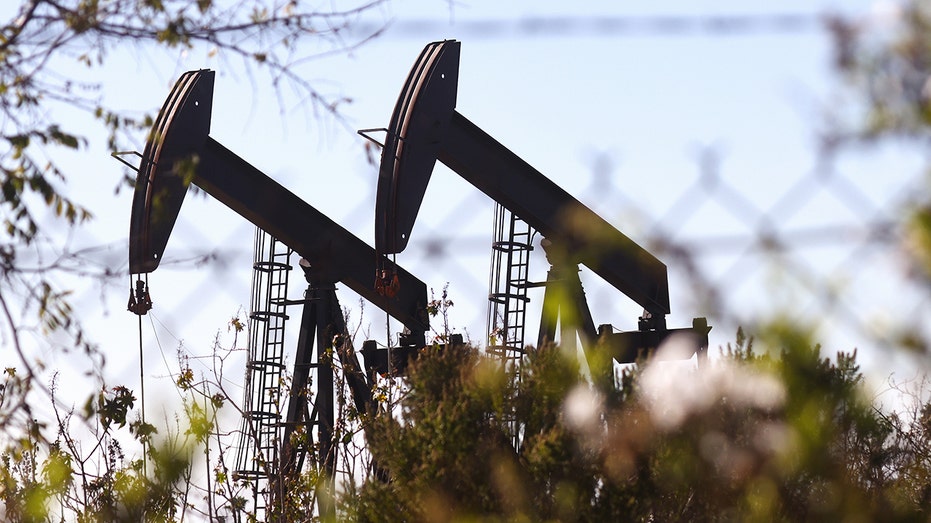
Oil pumpjacks stand in the Inglewood Oil Field on November 23, 2021 in Los Angeles, Calif. (Mario Tama/Getty Images / Getty Images)
Geopolitical Shifts and Global Energy Demand
Beyond domestic policy, Zeldin underscored theNational Energy Dominance Council’sproactive engagement with international partners. He specifically highlighted that Indo-Pacific nations are seeking to diversify their energy supply chains “like never before.” This trend is a direct response to the heightened geopolitical risks associated with traditional energy corridors, particularly the Middle East, where U.S.-Iran tensions can quickly escalate, impacting shipping lanes and global crude benchmarks.
The strategic advantage of U.S. energy exports, particularly liquefied natural gas (LNG) and crude oil, lies in the perceived security and reliability of its supply chain. “They’re realizing how long it takes them to be able to get their sources from the Middle East, that they don’t always have freedom of navigation, but they could get it faster from the U.S. with what has always been total freedom of navigation,” Zeldin explained. This shift represents a significant market opportunity for U.S. energy producers and infrastructure companies involved in export terminals, pipelines, and shipping. For nations reliant on stable energy imports for their industrial bases and economic growth, securing diverse sources from a geopolitically stable partner like the U.S. becomes a paramount strategic imperative, translating into long-term contracts and sustained demand.
GET FOX BUSINESS ON THE GO BY CLICKING HERE
Hennion & Walsh Asset Management President and CIO Kevin Mahn joins ‘Mornings with Maria’ to weigh the strength of the AI-driven market rally as experts debate whether oil prices are headed lower or could spike amid Middle East tensions.
“So the strategic look, [if] you look midterm, long term, that decision that’s being made by these other countries, that will help as well,” Zeldin concluded. This macro-level strategic reorientation by major energy consumers towards U.S. suppliers underscores a fundamental shift in global energy geopolitics, with profound implications for trade balances, currency valuations, and the long-term competitive positioning of American energy firms.
Market Impact
The policy directives and market outlook articulated by EPA Administrator Lee Zeldin signal a potentially transformative period for the energy sector. For investors, this implies a renewed focus on U.S.-based oil and gas producers, especially those poised to benefit from reduced regulatory burdens and enhanced export capabilities. Companies involved in the development and deployment of Small Modular Reactors (SMRs) could also see significant long-term capital appreciation as nuclear energy gains traction as a reliable, clean power source. However, the market must also weigh the potential for increased volatility driven by geopolitical events, as well as the ongoing tension between a fossil fuel-centric “energy dominance” agenda and global decarbonization efforts. While eased environmental regulations may initially boost hydrocarbon production, they could also attract greater scrutiny from ESG-focused investors, leading to bifurcated market performance within the broader energy complex. Ultimately, the confluence of domestic policy, technological innovation, and global geopolitical shifts will dictate the winners and losers in the evolving energy market landscape.