
Gain entry to the Editorial Summary without cost
Roula Khalaf, the FT’s Editor, curates her preferred articles in this periodical email.
Investors across Europe are supporting a pair of the swiftest-expanding technology firms from the continent, which are crafting economical anti-air solutions to help bridge a significant deficiency in Europe’s military capabilities.
The capital procurement by Frankenburg Technologies and Tytan Technologies, revealed on the fourth year marking Russia’s comprehensive incursion into Ukraine, occurs while emerging European defence enterprises aim to boost the output of essential provisions.
This recent funding concerned “the wider domain of aerial protection,” stated Balázs Nagy, Tytan’s co-founder and co-chief executive, whose AI-driven interceptor unmanned aerial vehicles have been utilized in Ukraine.
Aerial protection has garnered significant attention due to the surge of unmanned aircraft on the battlefront, revealing the constraints of costly traditional air defence setups which were conceived for distinct perils. Nations in Europe have elevated their defence expenditures; however, Nato has cautioned that the coalition requires a substantial augmentation of its aerial and projectile defence capacities to deter Russian hostility.
Tytan, situated in Munich, has secured €30mn, with leadership from the Nato Innovation Fund and the European investment firm Amira, in addition to existing financial backers like OTB Ventures and Lakestar. The transaction appraises Tytan, established in 2023, at over €100mn, as per individuals knowledgeable about the capital acquisition.
The firm intends to deploy these funds for augmenting its production capabilities and broadening its range of offerings. Its objective is to manufacture 3,000 intercepting units monthly prior to the conclusion of the current year.
“The solutions we are crafting originate in Europe and are intended for Europe,” Nagy remarked, further noting that the implication of this funding was that “Europe possesses the capacity to fund emerging air defence enterprises.”
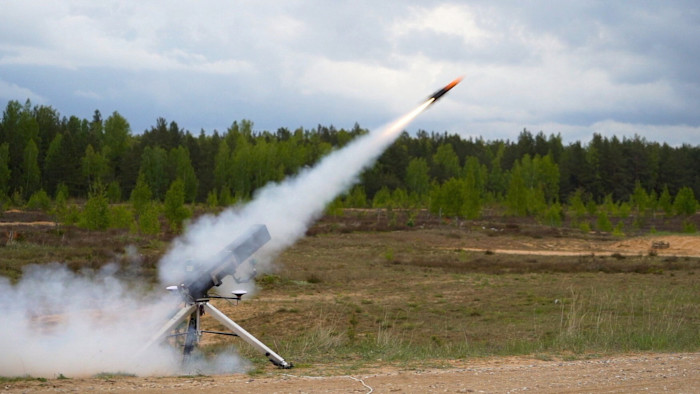
Frankenburg, based in Estonia, has also secured €30mn for the creation of economical projectile systems during a funding cycle spearheaded by the technology investment company Plural and involving Estonia’s SmartCap. The nascent enterprise chose not to disclose its worth. Its appraisal stood at slightly below €150mn following the preceding year’s initial funding stage, as reported by the data analytics firm PitchBook.
Frankenburg, established in 2024, intends to utilize the fresh funds to boost its production. The firm, headed by CEO Kusti Salm, previously the permanent secretary of Estonia’s defence ministry, stated that a key objective is the establishment of two “high-volume manufacturing facilities” within the EU, capable of producing over 100 projectiles daily at each location.
The recently acquired capital will additionally be employed for acquiring constituent parts and setting up specialized manufacturing plants for rocket engines and explosive payloads inside the EU.
Enterprises destined to “secure contracts and influence defence are those that not only conceptualize items but also engineer producible goods,” remarked Sten Tamkivi, a partner at Plural, also a prominent supporter of the tech unicorn Helsing. He further asserted that defence solutions ought to be “economical, swift, and available in quantities numbering in the millions.”
While Europe possesses veteran entities that construct projectiles, Tamkivi noted that these firms were “primarily dedicated to manufacturing exceptionally premium, highly accurate, and exceedingly costly apparatus.”
Salm stated that Frankenburg introduced “cost-effectiveness and extensive production capacity to missile systems.” Procurement networks will be streamlined, and readily accessible parts from the market will be employed.
He further mentioned that the firm had intentionally scrutinized all elements “utilized within our supply chain and verified their availability elsewhere — a crucial step toward extensive production.”