
Gain complimentary access to the Editor’s Summary
Each week, Roula Khalaf, the FT’s Editor, compiles her top articles in this periodical.
Presented here is the online edition of our Unhedged bulletin. Individuals with a Premium subscription may registerat this linkto receive the bulletin daily on weekdays. Standard subscribers have the option to enhance their subscription to Premium at this point, or peruse all FT bulletins
Greetings for the day. I suppose. Who can predict the pleasantries that lie ahead? Those involved in the energy sector continue to be deeply perturbed by developments concerning Iran, whereas individuals in finance appear remarkably composed (with the exception of the gilts market, which we will address shortly). Is it possible for you to account for this divergence? We cannot either, but please share your thoughts regardless, or simply greet us:[email protected]
Government Bonds Re-Enter Disfavor
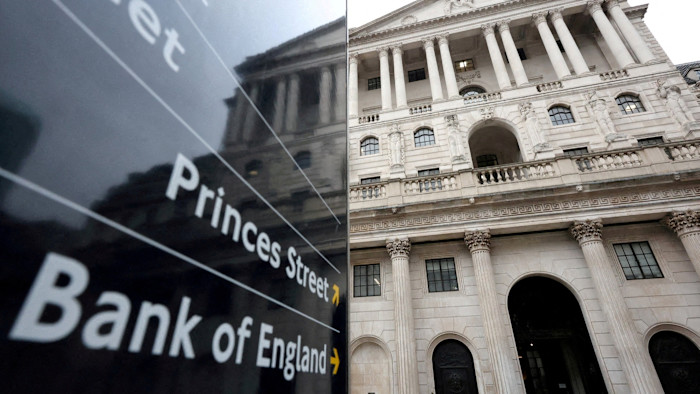
A significant shift in the market last week involved British government securities. These bonds plummeted on Thursday, primarily impacting shorter-term instruments, subsequent to market participants sensing a predisposition by the Bank of England to increase borrowing costs, contrary to its earlier signals prior to the escalation of hostilities near Iran.
Circumstances evolved, prompting the Bank to revise its stance, which is perfectly understandable. Furthermore, it has refrained from pledging to any specific future strategy. Nevertheless, the magnitude of the impact on government bonds was truly immense. On Thursday, the return on two-year bonds increased by 0.3 percentage points (!). While many nations’ bond markets are volatile, none demonstrate such distinctive fluctuations as Britain’s. German Bunds and US Treasuries saw their yields rise by roughly half the increment observed in the UK on that day. Matters deteriorated further on Friday; gilts experienced an additional increase of approximately 0.2 percentage points. A colleague messaged me that Friday afternoon with a single plea: “ASSISTANCE”.
Before the Bank of England’s decision on Thursday, the market had discounted one interest rate reduction. Currently, however, it indicates an 85 percent probability of an increase in April, implying three rate hikes are fully anticipated for this year, with a potential fourth. Is this truly plausible? Especially considering an economy that expanded by a mere 0.1 percent in real terms during the fourth quarter?
One might reasonably inquire why the market for UK government bonds has become the subject of such widespread criticism. Our tireless journalistic associates addressed this very question on Friday. Presented below are a few further considerations:
First:The lingering, somber influence of Liz Truss and Kwasi Kwarteng. While it might seem somewhat absurd, nearly four years later, to persist in attributing blame to the disastrous mini-budget of late 2022, investors in UK government bonds, especially those beyond Britain’s borders, continue to reference it when explaining their heightened wariness toward this market.
Second:Targeting the lagging participants. As articulated in my weekend commentary, the United Kingdom exhibits particular weaknesses regarding its debt burden and its capacity for fiscal manoeuvre, which are not present to the same degree in other major economies. If any nation is poised to experience stagflation, the market appears to be wagering on the UK.
Third:Attributing fault to hedge funds. While they are a convenient scapegoat, let’s examine this concept more closely: Initially, it bears mentioning that sovereign debt authorities globally, in fact, appreciate hedge funds. Despite their less-than-stellar reputation, these funds actively participate during debt issuance, frequently behave much like conventional institutional investors (insurers and pension funds), and contribute to secondary market fluidity (a role that proved especially valuable during the 2022 “mini”-Budget upheaval). Furthermore, they assist in filling the vacuum created by certain pension schemes that no longer absorb long-term debt with their previous intensity.
As highlighted by the OECD in its recent comprehensive debt analysis, market participants who are “price-aware” constitute a growing and significant segment of the investor pool in both public and private debt markets. In this regard, hedge funds rank prominently. Below is an informative OECD diagram illustrating the propensity of different purchasers to retain bonds until maturity, contrasted with their demand for extended-duration bonds and their susceptibility to price changes:
Salman Ahmed, who leads macro strategy globally at Fidelity International, informed me that this situation could pose a challenge during volatile market conditions, as has distinctly occurred in this instance.
“The structure of the UK government bond market has become less robust,” he stated. “Significant involvement from hedge funds is evident, and the consequences become apparent during such periods. The market’s operational integrity is currently strained.” Should Salman’s assessment be accurate, I remain uncertain regarding the extent of our ability to intervene. Similar to basis traders within the US Treasuries market, hedge funds might exhibit volatility, yet their absence would be profoundly felt.
A Noteworthy Article
The impending development
The FT Unhedged Audio Broadcast

Are you eager for more from Unhedged? Tune intoour freshly launched podcast, offering a quarter-hour exploration of the newest market updates and monetary headlines, twice each week. You can review prior editions of the bulletinat this link.