
Stay informed with free updates
Simply sign up to the Oil myFT Digest — delivered directly to your inbox.
Key Takeaways
- Unprecedented Physical Market Tightness:North Sea Forties Blend physical oil prices soared to a record $147 a barrel, significantly eclipsing the Brent futures benchmark at $97, signaling an acute, immediate scarcity of crude oil exacerbated by the Strait of Hormuz disruption.
- Critical Geopolitical Supply Paralysis:Iran’s continued effective control and halt of oil tanker passage through the Strait of Hormuz, a conduit for 20% of global oil supplies, has triggered a severe physical supply crisis, with Asia being particularly vulnerable to potential widespread shortages.
- Market Dysfunction & Capacity Strain:The extreme volatility led to the suspension of trading in vital hedging instruments (Brent Contracts for Difference) and a substantial 600,000 b/d reduction in Saudi Arabia’s oil production capacity, underscoring a deepening global energy crisis and severe market stress.
A relentless scramble among European and Asian refineries to secure dwindling oil cargoes has propelled North Sea crude prices to unprecedented highs, as Iran’s persistent stranglehold on the Strait of Hormuz ignites fresh and profound anxiety across global energy markets. This confluence of geopolitical tension and burgeoning physical scarcity is sending shockwaves through the derivatives and physical trading landscapes alike.
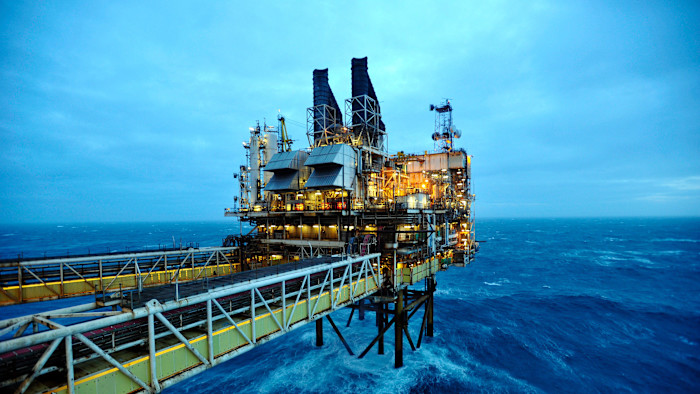
Forties Blend, a crucial marker for North Sea oil for immediate delivery and a key component of the Dated Brent benchmark, surged to almost $147 a barrel on Thursday. This valuation stands starkly above the peaks reached on the eve of the 2008 financial crisis, illustrating the sheer desperation of traders to secure physical barrels to compensate for the enormous volumes now effectively trapped or severely delayed in the Persian Gulf, according to LSEG data. The substantial premium commanded by Forties Blend over the international benchmark Brent futures, which for June delivery traded around $97 a barrel, is a textbook example of extreme backwardation. This market condition, where prompt delivery prices are considerably higher than future prices, is a definitive signal of an acute physical supply shortage and robust immediate demand, indicating that the market believes current scarcity will ease over time, but the present situation is dire.
The intensity of this rush for physical cargoes has not only inflated prices but also severely disrupted fundamental pillars of the oil market. Traders reported an unprecedented inability to purchase Brent Contracts for Difference (CFDs) for next week. These essential financial instruments, which track the price gap between immediate and future delivery, are widely used by market participants to hedge against volatile oil price movements. The issue arose after prices exceeded $30 a barrel, breaching a critical threshold set by Intercontinental Exchange (ICE), the primary bourse for European oil trading. Such a halt in trading for a widely used hedging tool is highly unusual; several market participants noted they could not recall a similar incident, highlighting the extreme and unforeseen levels of market stress. This disruption has forced some critical dealing activity off-exchange, potentially increasing counterparty risk and reducing transparency in an already opaque market. ICE did not respond to requests for comment, further adding to market uncertainty.
These mounting signs of stress emphatically underscore how the global energy crisis is deteriorating, despite assurances from US President Donald Trump that Tehran would soon reopen the Strait of Hormuz. Prior to the US and Israel’s recent conflict with Iran, this narrow choke point transported approximately 20 per cent of global oil supplies, making it one of the world’s most critical maritime passages. However, only a handful of ships, predominantly those with direct connections to Iran, have managed to transit the strait since the two-week ceasefire was announced on Tuesday. This effectively constitutes a de facto blockade, as Iran leverages its control over the vital waterway.
Asia, in particular, finds itself acutely vulnerable to this disruption, given that about 80 per cent of its oil and petroleum products typically transit the Strait of Hormuz. A prolonged closure or restricted passage could precipitate severe energy shortages and economic instability across the region. Iran has maintained that the pact with the US permits it to retain control over the strait, demanding that all vessels seek permission from Iran’s Revolutionary Guard Corps and pay an associated fee. Crucially, within hours of the deal to pause fighting, Iran unilaterally halted the passage of oil tankers through the strait, citing Israeli strikes on Lebanon as its justification.
“If this continues for a few more days, we can see the market deciding that the straits are closed indefinitely, which could lead not only to an increase in price but to a crisis in Asia,” warned Amos Hochstein, a former energy adviser to president Joe Biden. “This is not just about high prices. This is about an actual physical shortage, which is playing out.” His comments underline the shift from a price concern to a fundamental availability concern, a far more severe scenario for global economies.
Adding to the market’s woes, Saudi Arabia confirmed on Thursday that its oil production capacity had fallen by a significant 600,000 barrels a day following recent attacks on its energy infrastructure. These targeted strikes have damaged critical production capacity at the Khurais and Manifa fields, effectively knocking out approximately 5 per cent of the kingdom’s normal 12 million b/d capacity. Furthermore, the energy ministry stated that this week’s attack on the East-West pipeline, a vital alternative route for oil exports designed specifically to bypass the Strait of Hormuz, caused an additional loss of approximately 700,000 b/d in throughput. These capacity reductions from the world’s swing producer significantly compound the global supply crisis, removing a critical buffer that would typically mitigate such disruptions.
Dennis Kissler, senior vice-president at the trading division of BOK Financial, cautioned that tight supplies “in the physical market are going to stay like that till we get ships moving through the Strait of Hormuz.” He added: “You will see the futures market sell off but the physical market will stay tight because it will take 20 days to correct the logistical problems even when the strait opens.” This highlights the crucial distinction between often sentiment-driven futures trading and the immutable realities of physical logistics and shipping times.
Dated Brent, a closely tracked measure of the price of physical oil shipments bought and sold in the North Sea that includes Forties Blend, surged 7 per cent on Thursday to $131.96, according to an assessment by pricing agency Platts. This surge retraced some of a fall the previous day, which had been prompted by overly optimistic reactions to the ceasefire deal. Meanwhile, trading activity remained comparatively tamer in the futures market. Brent for June delivery rose a modest 1 per cent in New York trading at $97.20, while US benchmark West Texas Intermediate (WTI) for May delivery jumped 4.7 per cent to $99.16. The divergence between the explosive physical market and the more restrained futures market underscores a growing disconnect, where futures contracts, while reactive to news, are slower to fully price in the severe, immediate logistical and supply-side constraints.
Helima Croft, head of global commodity strategy at RBC Capital Markets, succinctly captured this disparity, calling the prices in futures markets a “lagging indicator for the physical market realities of Middle Eastern waterways.” Her observation underscores that while futures may be influenced by diplomatic hopes, the tangible constraints of physical supply chain disruption are the true drivers of immediate market stress.
The geopolitical backdrop remains fraught with uncertainty. Iran had yet to commence direct talks with the US despite the two-week ceasefire agreed this week, Iran’s foreign minister Abbas Araghchi told his Saudi Arabian counterpart, Prince Faisal bin Farhan, in a phone call on Thursday, according to an Iranian readout. This signals a continued impasse on the diplomatic front. In response, Trump is dispatching a delegation led by vice-president JD Vance, special envoy Steve Witkoff and the president’s son-in-law Jared Kushner to Islamabad for talks this weekend, highlighting the urgent international effort to de-escalate the crisis and secure the vital oil transit routes.
Market Impact
The ongoing crisis surrounding the Strait of Hormuz and its immediate impact on physical oil markets carries profound implications for the global economy. Firstly, the soaring cost of crude oil, particularly for prompt delivery, will inevitably translate into higher energy costs for consumers and businesses worldwide, fueling inflationary pressures that could force central banks to maintain or even accelerate interest rate hikes, risking a broader economic downturn. Industries heavily reliant on oil, such as transportation, aviation, and petrochemicals, face significant margin compression and potential operational disruptions. Secondly, the physical shortages, especially in Asia, could cripple regional economies, disrupting supply chains far beyond energy. Third, the unprecedented dysfunction in key hedging markets for oil signals a heightened perception of geopolitical risk and market instability, potentially deterring investment and increasing volatility across all commodity classes. Finally, the reduction in Saudi Arabia’s spare capacity, combined with the Hormuz blockade, severely diminishes the global oil market’s ability to absorb future supply shocks, leaving it exceptionally vulnerable to further geopolitical events or production outages. Investors should brace for sustained volatility, elevated inflation, and a significant drag on global economic growth until a clear resolution for the Strait of Hormuz is achieved and supply chains normalize.
Additional reporting by Ahmed Al Omran in Jeddah