
Unlock the Editor’s Digest for free
Roula Khalaf, Editor of the FT, selects her favourite stories in this weekly newsletter.
**Key Takeaways**
1. **Elevated Energy Volatility:** The intensifying conflict, particularly in key transit regions and near energy infrastructure, is driving up geopolitical risk premiums on global oil and natural gas prices, threatening renewed inflationary pressures and impacting energy-dependent economies worldwide.
2. **Supply Chain Disruptions & Shipping Costs:** Further destabilization in the Levant and potential expansion of maritime threats could exacerbate existing Red Sea disruptions, leading to higher shipping insurance premiums, extended transit times, and persistent inflationary pressures on global supply chains.
3. **Increased Geopolitical Risk Premium & Flight to Safety:** The escalation fuels broader risk aversion among investors, prompting a flight to safe-haven assets like gold and US Treasuries, while potentially depressing regional equity markets and deterring foreign direct investment in the Middle East.
In a move sending palpable ripples across global financial markets, Israel has significantly intensified its military operations against Hizbollah in Lebanon and Hamas in Gaza. This escalation, despite the nominal ceasefires previously established in both theatres, comes at a critical juncture for regional stability and global economic outlook, particularly concerning energy markets and supply chain resilience. The renewed aggression arrives amidst ongoing, delicate talks between US and Iranian officials aimed at brokering a broader de-escalation deal for the Middle East – an agreement Israeli officials openly fear would curb their campaign against Hizbollah, a key Iranian proxy.
The financial implications of this deepening conflict are multifaceted and immediate. Global oil benchmarks, already sensitive to Middle Eastern instability, reacted swiftly to reports of Israeli troops pushing deeper into Lebanese territory and the targeted killing of Mohammed Odeh, the new head of Hamas’s military wing, in northern Gaza. Odeh’s death follows closely on the heels of his predecessor, Izz al-Din al-Haddad, killed just two weeks prior, underscoring Israel’s strategic focus on decapitating the military leadership of its adversaries. This sustained pressure, driven in part by calls from influential far-right Israeli politicians for a full-scale resumption of the offensive in Lebanon, injects a substantial geopolitical risk premium into commodity prices, raising fears of supply disruptions from the wider region.
Further complicating the geopolitical and economic landscape, Israel’s defence minister Israel Katz announced a revival of a controversial “voluntary emigration plan” for Gaza. This declaration directly contradicts key tenets of US President Donald Trump’s recently unveiled 20-point peace plan, which explicitly encourages Palestinians to remain in the enclave. Such policy dissonances not only strain diplomatic relations but also sow further uncertainty about the long-term viability of peace initiatives, directly impacting investor confidence in the region’s future stability and any potential reconstruction efforts that would require significant international capital.
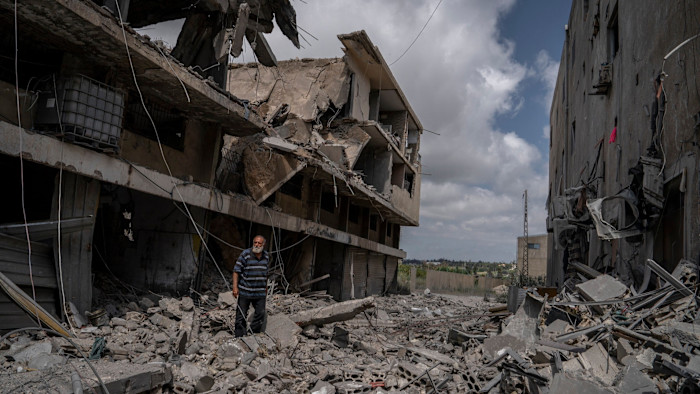
In Lebanon, the fragile ceasefire with Hizbollah, in effect since April 16, has demonstrably unravelled. Israeli forces have conducted frequent strikes across southern and eastern Lebanon, resulting in hundreds of casualties. Hizbollah has retaliated with rockets and drones aimed at Israeli targets. However, the current wave of fighting marks the most intense period since the truce was announced. On Tuesday, the Israeli military issued evacuation orders for 50 towns and villages in Lebanon – the most sweeping set of directives in a single day since the ceasefire’s inception. This mass displacement, affecting potentially hundreds of thousands in an already economically fragile nation, creates a burgeoning humanitarian crisis that will demand significant international aid, further straining public finances in donor nations and diverting capital from other development initiatives. The 1 million people already displaced have largely been unable to return, crippling local economies reliant on agriculture and small businesses.
The human cost has been stark, with renewed Israeli attacks on Tuesday killing 31 people, according to the Lebanese health ministry, including a strike near Tyre that claimed 14 lives, among them children and women. Crucially for infrastructure and long-term economic stability, Israeli strikes also pounded Lebanon’s eastern Bekaa Valley, including areas near the dam that forms Lake Qaraoun, Lebanon’s largest water reservoir. Targeting or even risking damage to critical civilian infrastructure like water supplies, while not immediately impacting global markets, elevates the perceived risk for foreign direct investment in Lebanese recovery and development projects, and underscores the potential for widespread societal disruption that has broader implications for regional stability.
The timing of these intensified bombings, coinciding with preparations for Eid al-Adha, a major Muslim holiday, further compounds the humanitarian and psychological toll. As Israeli military expanded its ground invasion in southern Lebanon, pushing north of the “security zone” it previously occupied, Hizbollah responded with a barrage of 32 claimed attacks, primarily targeting Israeli ground forces. These included swarms of drones, artillery shells, and rockets directed at Israeli troops and tanks near the Litani River, close to the village of Zawtar al-Sharqieh. Since March 2, the conflict in Lebanon has claimed over 3,200 lives, with Hizbollah’s attacks responsible for over 25 Israeli soldiers and civilians. This ongoing cycle of violence not only deepens humanitarian concerns but also introduces persistent uncertainty into regional supply chains, particularly impacting shipping routes in the Eastern Mediterranean and potentially extending to the Suez Canal, a critical artery for global trade.
From a market perspective, the immediate ramifications are significant. The escalation is likely to keep a floor under oil prices, with Brent crude potentially testing higher resistance levels as traders price in an increased probability of broader regional conflict. This, in turn, fuels inflation expectations globally, complicating central banks’ monetary policy decisions. Shipping costs and insurance premiums for vessels traversing the Eastern Mediterranean and indirectly, the Red Sea, are expected to rise, impacting commodity movements and global supply chains already reeling from prior disruptions. Defence sector stocks, conversely, may see sustained investor interest, reflecting anticipated increases in military spending and demand for advanced weaponry. Gold, as a classic safe-haven asset, is poised to benefit from heightened risk aversion, while regional currencies and sovereign bonds of exposed economies could face downward pressure. Investors are likely to shy away from emerging markets with direct or indirect links to the conflict, opting for less volatile assets.
**Market Impact**
The intensifying conflict in Lebanon and Gaza casts a long shadow over global markets, primarily through the immediate upward pressure on oil and natural gas prices, reflecting an elevated geopolitical risk premium. This fuels inflationary concerns, potentially prompting a hawkish stance from central banks. Furthermore, increased instability in the Eastern Mediterranean threatens to exacerbate global supply chain disruptions by raising shipping costs and insurance premiums for critical trade routes, while simultaneously driving capital towards safe-haven assets and away from riskier regional investments, creating a broader environment of investor caution and volatility.