
Key Takeaways:
- Surging Valuations in Defence Tech:Helsing’s $18bn valuation underscores a significant re-rating of the European defence technology sector, driven by geopolitical instability and increased military spending.
- AI and Autonomous Systems Attract Capital:The substantial funding round highlights strong investor confidence in companies leveraging artificial intelligence, drones, and autonomous systems to revolutionize modern warfare.
- European Defence Innovation Accelerates:Despite some “bubble” warnings, the oversubscribed funding round signals sustained capital inflow into a new generation of European defence start-ups, fostering indigenous technological capabilities.
Unlock the Editor’s Digest for free
Roula Khalaf, Editor of the FT, selects her favourite stories in this weekly newsletter.
Munich, Germany –In a stark illustration of the seismic shifts in global capital allocation and geopolitical priorities, Helsing, the German defence technology group backed by Spotify co-founder Daniel Ek, is poised to close a new funding round at an eye-watering valuation of approximately $18 billion. This significant leap not only solidifies Helsing’s position as one of Europe’s most valuable start-ups but also serves as a potent bellwether for the burgeoning investment frenzy in the defence technology sector, reshaping the landscape of national security and venture capital.
The impending $1.2 billion fundraising, led by prominent US firm Dragoneer Investment Group with existing backer Lightspeed Venture Partners co-leading, is reportedly in advanced stages. While final timing remains fluid, the sheer scale and speed of this valuation growth – a substantial increase from its €12 billion ($14 billion) valuation less than a year ago – speaks volumes about the market’s aggressive re-evaluation of defence assets.
A New Geopolitical Catalyst for Capital
Helsing’s meteoric rise is inextricably linked to the dramatic changes in the global security environment. Russia’s full-scale invasion of Ukraine in February 2022 served as a brutal awakening for European governments, prompting a rapid pivot towards significantly increased military spending. This commitment, reinforced by NATO allies’ pledges to allocate at least 2% of GDP to defence, has transformed the sector from a niche or often ESG-constrained investment area into a highly sought-after growth play.
Investors, once wary of defence due to ethical considerations or perceived slow innovation cycles, are now pouring capital into companies developing cutting-edge military capabilities. The conflict in Ukraine, characterized by its reliance on drones, AI-driven targeting, and sophisticated battlefield data analytics, has highlighted the urgent need for agile, technologically advanced solutions, creating an unprecedented market opportunity for start-ups like Helsing.
The AI Arms Race: From Software to Hardware
At its core, Helsing’s appeal lies in its pioneering approach to integrating artificial intelligence into defence systems. Founded in 2021, the Munich-based company initially focused on developing AI software to process vast amounts of battlefield data, offering real-time insights to improve military decision-making and operational effectiveness. This foundational expertise in data fusion and cognitive warfare positioned Helsing perfectly for the demands of modern conflict.
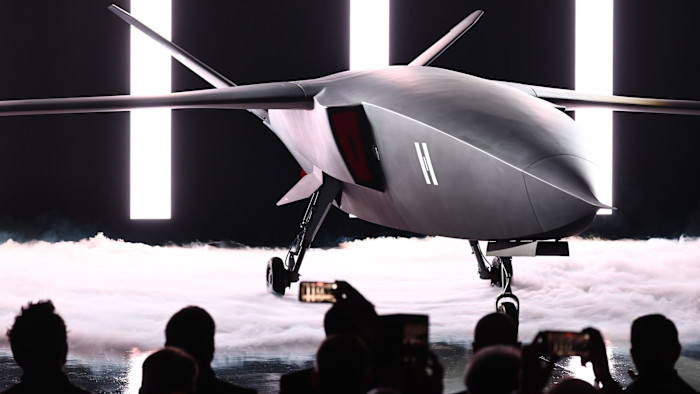
The firm has since strategically expanded its remit, moving beyond pure software to encompass hardware development. Its entry into producing kamikaze drones – single-use autonomous machines designed for targeted strikes – and autonomous underwater vessels (AUVs) signifies a holistic vision for future warfare. These developments are not just incremental improvements; they represent a fundamental shift towards unmanned, interconnected systems that leverage AI for enhanced precision, speed, and reduced human risk.
The oversubscribed nature of Helsing’s latest funding round underscores the intense investor interest in this new generation of defence start-ups. Investors are not merely betting on increased defence budgets; they are specifically targeting companies capable of delivering disruptive technologies that address the evolving nature of threats.
Navigating the “Bubble” Debate and Competitive Landscape
While the enthusiasm is palpable, some established figures in the defence industry, such as Rheinmetall chief executive Armin Papperger, have voiced concerns about a potential “bubble” forming, particularly around drone developers. This sentiment echoes historical patterns in nascent, rapidly growing tech sectors where valuations can outpace immediate revenue generation. However, proponents of the new defence tech wave argue that the current investment cycle is fundamentally different, driven by long-term strategic necessity rather than speculative hype alone.
Indeed, many believe that European governments continue to over-invest in “legacy” technology platforms like conventional tanks and fighter jets, neglecting the rapid advancements in unmanned systems and other innovative, often cheaper, technologies. This perspective fuels the argument that significant capital injection into companies like Helsing is not just warranted but critical for modernizing Europe’s defence posture.
Helsing operates in a vibrant, albeit fiercely competitive, landscape. Its rivals include US-based titans like Anduril Industries, founded by billionaire Palmer Luckey, which is reportedly seeking a new funding round at a valuation exceeding $60 billion. In Europe, it competes with other defence tech unicorns such as drone makers Quantum Systems and Stark, the latter backed by US tech billionaire Peter Thiel. This influx of tech-savvy entrepreneurs and investors signals a definitive shift in who is driving innovation in the defence sector.
Validation on the Battlefield and Strategic Partnerships
Helsing’s journey has not been without its challenges. Its initial kamikaze drone model, the HF-1, developed in collaboration with a Ukrainian partner, faced early criticism regarding its performance and price. However, the company has quickly iterated, with its successor, the HX-2, reportedly approved for frontline use by Ukraine’s military and successfully engaging Russian targets. This real-world validation in a high-intensity conflict zone is invaluable, demonstrating the rapid learning cycles and adaptive capabilities of these new defence tech firms.
Further cementing its credibility, Helsing has secured significant strategic partnerships and contracts. Its collaboration with established European defence contractors like Sweden’s Saab, alongside its work on unmanned aircraft designed to fly alongside crewed fighter jets, indicates a blend of disruptive innovation with traditional defence integration. Most notably, Helsing has been selected to supply drones to the German armed forces in an initial €269 million deal, with an option for up to €1.46 billion in future HX-2 drone provisions. Such government contracts provide crucial revenue streams and further market validation.
Despite the lead US investment firms in this round, the company’s ownership structure remains predominantly European, with nearly 80% European ownership. This aspect is crucial for Europe’s stated aim of building strategic autonomy and fostering indigenous defence industrial capabilities, ensuring that critical technologies and intellectual property remain within the continent.
Previous backers, including Accel, Plural, General Catalyst, Greenoaks, Saab, and BDT & MSD Partners, attest to a broad base of institutional and strategic investor confidence. Helsing declined to comment on the funding round, and Dragoneer and Lightspeed did not respond to requests for comment, in line with typical private funding confidentiality.
Additional reporting by Tim Bradshaw
Market Impact:
Helsing’s latest funding round sends a clear signal to the global investment community: defence technology, particularly that rooted in AI and autonomous systems, is a high-growth sector with significant long-term potential. For investors, this re-affirms the “re-rating” of defence assets and suggests continued opportunities for both venture capital and private equity in innovative start-ups, as well as potential for M&A activity involving traditional defence primes. Established defence contractors will face increased pressure to either acquire or strategically partner with these agile tech firms to remain competitive, accelerating consolidation and diversification within the industry. From a geopolitical standpoint, the robust private sector investment in European defence tech bolsters the continent’s ambitions for strategic autonomy, reducing reliance on external suppliers and fostering a new generation of indigenous capabilities that are critical for national security in an increasingly volatile world. The success of companies like Helsing could also encourage other tech entrepreneurs and venture capitalists to enter the defence space, further catalyzing innovation and potentially redefining the boundaries between civilian and military technology development.