
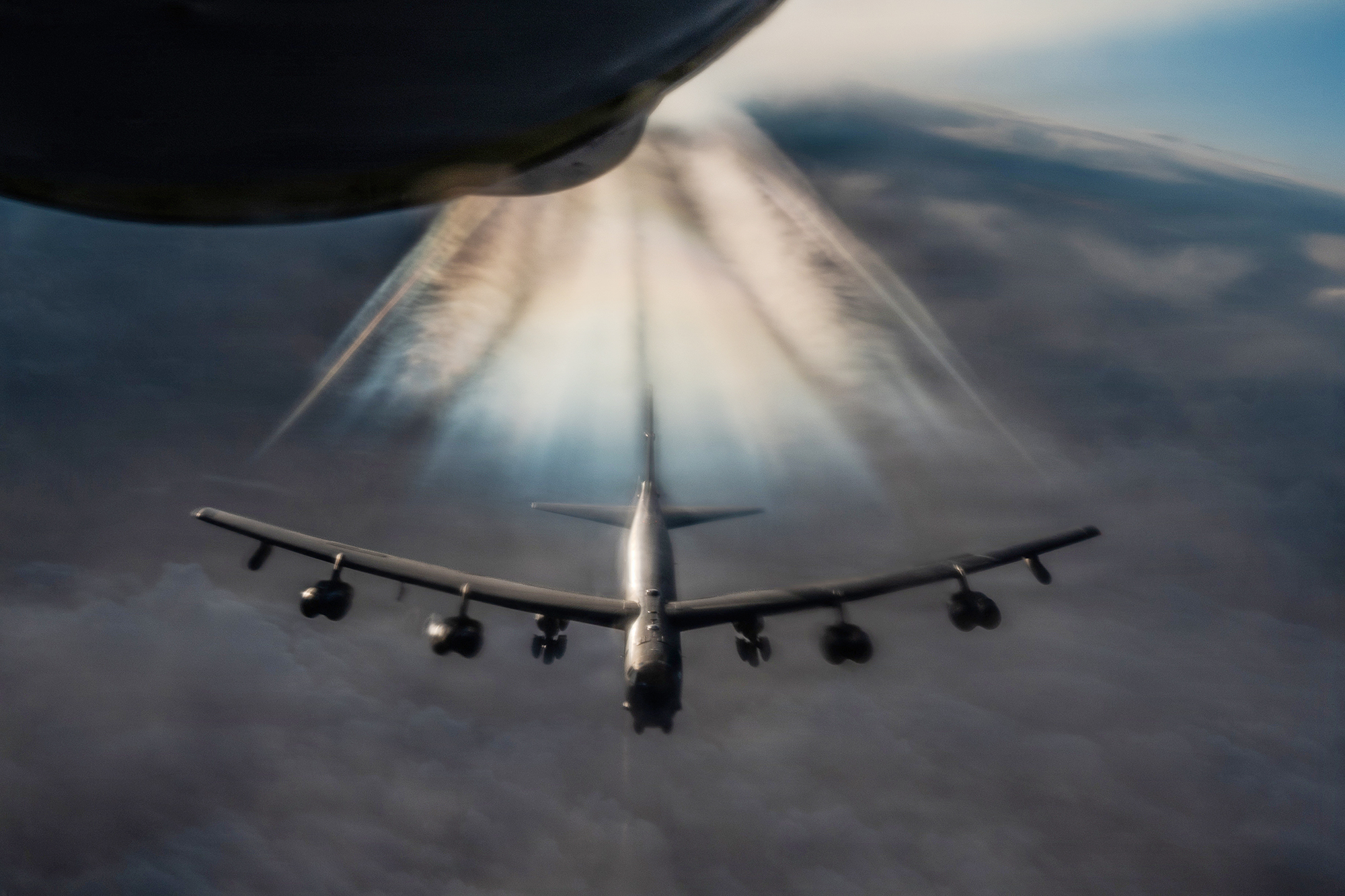
U.S. Air Force Initiates Study for Future Bomber Fleet Amid B-52 Modernization
The United States Air Force is embarking on a comprehensive assessment of its long-range strike capabilities, initiating a “Heavy Bomber Analysis of Alternatives” (AoA) to determine the composition of its bomber fleet beyond the mid-21st century. This study comes as the Air Force prepares for a significant modernization effort of its B-52 Stratofortress aircraft, which is slated to receive extensive upgrades designed to keep it operational into the 2050s.
B-52 Stratofortress Modernization Underway
The B-52 Stratofortress, a strategic bomber that has been in continuous service since the 1950s, is undergoing a substantial overhaul. The first of 76 B-52H models is scheduled to begin this modernization process later this year. The program, designated as the B-52J modification, includes several key enhancements aimed at improving the aircraft’s reliability, efficiency, and operational capabilities.
Key components of the B-52J upgrade include the replacement of the aircraft’s aging eight engines with new Rolls-Royce powerplants, which are expected to boost fuel efficiency, reduce maintenance, and extend range. The cockpit will be transformed with a new “glass cockpit” featuring advanced avionics and controls, enhancing situational awareness for pilots and reducing pilot workload. Additionally, the aircraft will receive new landing gear, an improved radar system, and other major structural and technological modifications. This extensive work is being conducted by Boeing at its facility in San Antonio, Texas, with the explicit goal of extending the B-52’s service life for several more decades, potentially making it operational for nearly a century.
Future Bomber Fleet Analysis and Budget
The Air Force’s long-term planning for its bomber fleet involves a multi-faceted approach that extends beyond the current modernization efforts. Official documents accompanying the fiscal year 2027 budget request detail the commencement of the “Heavy Bomber Analysis of Alternatives.” This study will explore various options for future long-range strike capabilities, including potential new requirements for the B-52 platform itself, the development of an entirely new aircraft design, or a combination of both approaches. The initial phase of the AoA will focus on defining the necessary key performance parameters and attributes that future bomber platforms will require to meet evolving global security challenges.
In preparation for this analysis, the Air Force allocated $3.9 million in fiscal year 2025 to conduct a classified proof-of-concept demonstration related to the B-52. For the upcoming fiscal year 2027, the service is seeking $1 million to formally initiate the new analysis of alternatives. This funding underscores a deliberate and phased process to thoroughly evaluate strategic options before committing to specific procurement paths for future bomber programs.
Strategic Vision for the Bomber Force
The Air Force’s current strategic plan for its bomber fleet anticipates a significant shift in its composition over the coming decades. The plan calls for the acquisition of at least 100 B-21 Raider stealth bombers, which are designed for advanced penetration capabilities into highly contested airspace. Concurrently, the modernized B-52J fleet will be retained, primarily for stand-off missions. In contrast, the Air Force intends to retire its B-1B Lancer conventional bombers and its B-2A Spirit stealth bombers in the 2030s, consolidating its long-range strike power around the new B-21 and the extensively upgraded B-52.
Expert Perspectives on Future Capabilities
Mark Gunzinger, a former deputy undersecretary of defense, retired Air Force colonel, and a recognized expert in bomber strategy who previously flew the B-52, suggests that the Air Force’s analysis will likely encompass a broad spectrum of possibilities for its future bomber force. These alternatives could include the development of a new stand-off bomber specifically designed for launching long-range munitions, further modifications to the B-52 Stratofortress beyond the current planned upgrades, the creation of a new aircraft specifically designed to carry a large number of cruise missiles, or even an expansion of the B-21 Raider production beyond current plans.
Gunzinger emphasizes the enduring viability of the B-52 airframe, despite its age. He notes, “While the aircraft is old, the airframe is still relatively young in terms of flight hours and the stresses it’s absorbed over the years. So it’s a perfectly viable airframe.” He characterizes the ongoing analysis as more than just a potential B-52 replacement study, viewing it as a comprehensive examination of the entire stand-off strike mission area and the optimal solutions for the distant future, considering evolving threats and technological advancements.
The study is expected to weigh crucial attributes such as stealth capabilities, which are vital for aircraft operating closer to heavily defended targets. However, the increasing sophistication and range of stand-off weapons—those launched from outside enemy airspace—could potentially reduce the imperative for every bomber to possess deep-penetrating stealth. Other critical factors under consideration include speed and range, the types and quantities of weapons to be carried, the overall size and payload capacity of the aircraft, and the necessity for robust electronic warfare and self-defense systems to ensure survivability in future combat environments.
Balancing Stand-off and Penetrating Strike
A significant factor influencing the future fleet composition is the planned retirement of the B-1B Lancer. The B-1B currently boasts the largest conventional weapons payload capacity in the U.S. bomber fleet, capable of carrying up to 75,000 pounds. It is also the fastest, with a top speed exceeding 900 miles per hour (Mach 1.2). In comparison, the B-52 can carry up to 70,000 pounds but has a top speed of approximately 650 miles per hour.
Gunzinger highlights the strategic importance of maintaining a balanced bomber force, advocating for a combination of both stand-off and penetrating strike aircraft. This diversity allows the Air Force to tailor its strike packages to specific mission requirements and threat environments. Stand-off attack involves aircraft remaining outside contested enemy airspace and deploying long-range weapons. Conversely, the B-21 Raider is specifically designed with advanced stealth capabilities to penetrate deep into adversary territory and strike highly protected targets, such as hardened bunkers or deeply buried installations, with precision.
“Both are needed,” Gunzinger asserts, underscoring that the core question revolves around determining the optimal mix of these capabilities to maximize effectiveness and minimize risk. He points out that an exclusive reliance on an all-B-21 bomber force, while formidable, might limit operational flexibility and capacity in certain scenarios, particularly for missions requiring very large conventional payloads or broad area coverage from stand-off ranges.
The Role of the B-21 Raider
The B-21 Raider, featuring a modular and open-systems architecture, is designed for ease of upgrades as new technologies emerge, ensuring its relevance for decades to come. While the Air Force is currently committed to procuring at least 100 B-21s, there is ongoing discussion about potentially expanding this fleet further. Admiral Samuel Paparo, head of U.S. Indo-Pacific Command, notably expressed support for a B-21 fleet of 200 bombers during testimony to lawmakers in April, indicating a potential need for greater numbers to meet future operational demands, especially in the vast Indo-Pacific theater.
Although exact specifications for the B-21 remain largely classified, visual observations and expert analysis suggest it may have a smaller payload capacity compared to the B-52. In highly contested environments, the B-52’s role is primarily limited to carrying stand-off missiles, launching them from outside enemy defenses. In contrast, the B-21 would be tasked with direct penetration missions, leveraging its stealth to strike targets deep within adversary territory.
Why This Matters
The U.S. Air Force’s decision to conduct a “Heavy Bomber Analysis of Alternatives” and its ongoing modernization of the B-52 Stratofortress represent critical strategic shifts with far-reaching implications for global security and military power projection. This initiative is not merely about replacing an aging aircraft; it signifies a re-evaluation of how the United States intends to deter adversaries and conduct long-range strike operations in an evolving geopolitical landscape.
Firstly, the longevity of the B-52, coupled with its extensive upgrades, highlights a pragmatic approach to defense spending and resource management. By investing significantly in a proven airframe, the Air Force aims to extend the utility of an existing asset, providing a cost-effective platform for stand-off missions while new, more expensive stealth bombers like the B-21 are integrated into service. This ensures continuous long-range strike capability without creating a capability gap during the transition period, which is crucial given current global instabilities.
Secondly, the comprehensive analysis reflects an acknowledgment of the dynamic nature of future threats. As potential adversaries develop more sophisticated air defense systems and anti-access/area-denial (A2/AD) capabilities, the balance between “stand-off” capabilities (launching weapons from a safe distance) and “penetrating” capabilities (evading defenses to strike targets deep within enemy territory) becomes paramount. The study will likely shape doctrines for how these distinct capabilities are employed, influencing target sets, mission profiles, and the overall strategic messaging to both allies and adversaries regarding U.S. deterrent capabilities.
Thirdly, the composition of the future bomber fleet directly impacts America’s capacity for global power projection. A robust and versatile bomber force provides a critical element of deterrence, signaling to potential aggressors the ability to strike targets anywhere in the world, at any time, with both conventional and, if necessary, nuclear weapons. The decision to retire the B-1B and B-2A in favor of a B-21 and B-52J combination represents a calculated risk and a commitment to a specific vision of future warfare. The B-21’s advanced stealth and adaptability, combined with the B-52’s large payload capacity for conventional stand-off munitions, aim to create a flexible force capable of responding to a wide array of contingencies, from conventional conflicts to strategic deterrence.
Finally, the economic implications are substantial. Bomber programs represent multi-billion dollar investments, affecting defense budgets, technological innovation, and job creation within the aerospace industry. The outcomes of this analysis will dictate significant spending decisions for decades, influencing the trajectory of military aviation technology and the industrial base supporting it. Ultimately, these decisions will define the U.S. Air Force’s strategic bombing capabilities, shaping its role in maintaining international stability and national security well into the latter half of the 21st century and beyond.