
Keep apprised through no-cost notifications
Merely enroll in the Chinese economy myFT Digest – delivered straight to your email inbox.
The International Monetary Fund (IMF) has urged China to halve its governmental backing for industry, as global apprehensions intensify over the excess production capacity in the world’s second-biggest economy.
The fund calculated that China dedicates approximately 4% of its Gross Domestic Product (GDP) to subsidizing enterprises within crucial sectors, suggesting a reduction of that amount by 2 percentage points in the medium term.
China’s industrial policies “are causing international repercussions and strains” and, combined with sluggish domestic consumption, have rendered China “more dependent on manufactured goods exports as a driver of growth,” stated the fund.
“While industrial policy has facilitated technological advancements in certain areas, its overall impact on the economy has been detrimental,” commented Sonali Jain-Chandra, mission chief for China and Asia Pacific at the IMF, citing “inefficient resource allocation” and “excessive expenditure.”
The fund had previously called for China to scale back its industrial strategies but had not quantified the recommended reduction.
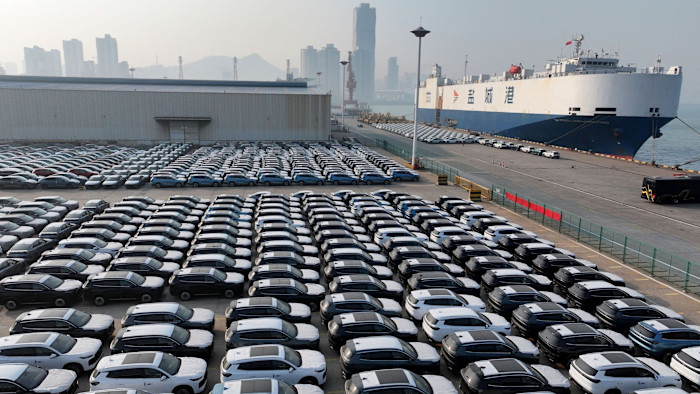
These recommendations, presented in an IMF report, follow China’s increased export volume of manufactured items, including high-value goods such as electric vehicles (EVs), which has generated friction with Western nations regarding its subsidies.
China’s worldwide trade surplus in merchandise exceeded $1 trillion last year. Global leaders like France’s Emmanuel Macron have lamented “intolerable imbalances” in trade relations.
The IMF applauded an initiative from Beijing aimed at curbing “involution,” a term China uses to describe intense price competition, but emphasized the need for it to further “clarify its approach.”
Chinese policymakers are grappling with multiple difficulties, including the looming threat of deflation, subdued consumer confidence, elevated youth unemployment, and a prolonged property market downturn that shows few signs of improvement.
In 2024, the IMF advised China to allocate 5.5% of GDP over a four-year period to counteract the property slowdown by ensuring the completion of unfinished housing units and assisting non-viable developers in exiting the sector.
In the report released this week, it called for a 5% allocation of GDP over three years from the central government. “The core proposal remains unchanged,” stated Thomas Helbling, IMF deputy director for Asia Pacific, who noted that unfinished properties and their repercussions for Chinese investor confidence persist as the “major unresolved issue.”
“The lingering effects from the boom have not been adequately addressed,” he asserted.
The IMF also encouraged China to transition towards an economy driven by “consumption-led growth.” It advised China to ease restrictions on internal migrants’ access to social welfare benefits, adopt a more progressive taxation framework, and augment pension provisions.