
President Donald Trump communicates with the American populace after military actions undertaken by the U.S. and Israel targeting Iran.
Reports indicate Iran has initiated measures to limit passage through the world’s foremost oil export channel, following substantial U.S. and Israeli military assaults, fueling worries of a major impediment to international energy markets.
A European Union maritime task force representativeinformed Reutersthat craft navigating the vicinity are receiving nautical broadcast alerts from Iran’s Revolutionary Guards, directing vessels to avoid transit through the Strait of Hormuz.
The directive has not been officially validated by Iran.
SUPREME LEADER OF IRAN KHAMENEI DEAD FOLLOWING ISRAEL’S STRIKE ON IRAN
Reacting to the mounting friction, numerous petroleum corporations and mercantile enterprises have temporarily halted the dispatch of unrefined petroleum and propellant via this maritime channel, as indicated by Reuters, referencing market informants.
This occurrence comes after extensive military assaults initiated on Saturday by the U.S. and Israel, targeting Iran.
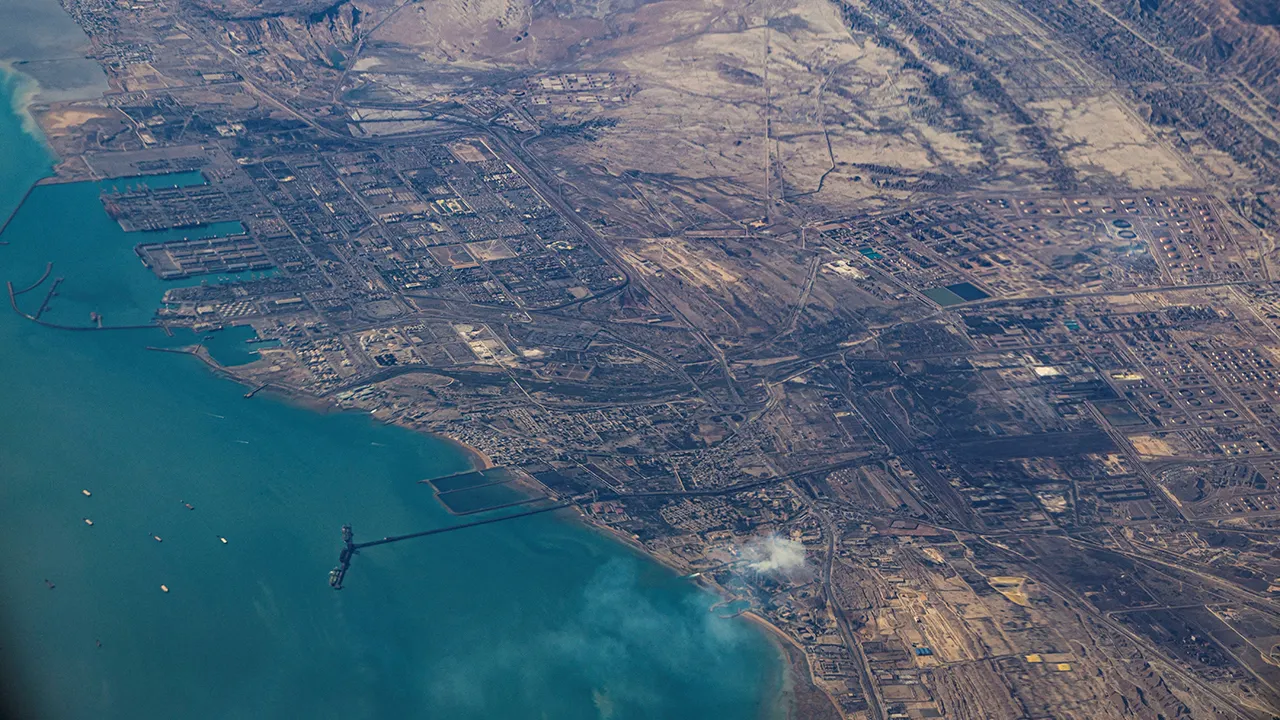
An aerial view of Port of Fujairah, United Arab Emirates, in the Strait of Hormuz, on Dec. 10, 2023. (REUTERS/Stringer / Reuters)
Approximately one-fifth of the worldwide crude provision transits via the Strait of Hormuz, a constricted yet strategically crucial conduit connecting Middle Eastern petroleum creators with international trading hubs.
Principal shipping nations — comprising Saudi Arabia, Iraq, the United Arab Emirates, Kuwait, and Iran — depend significantly on this thoroughfare.
OIL RISES ON IRAN FEARS, BUT EXPERT SAYS SUPPLY IS STRONG — WHAT IT MEANS FOR PRICES
A prolonged interruption of any kind might propel fuel costs dramatically upward.
Brent crude, a primary worldwide petroleum pricing standard, concluded trading around $73 per barrel on Friday — but observers caution that rates might skyrocket upon the resumption of trading.
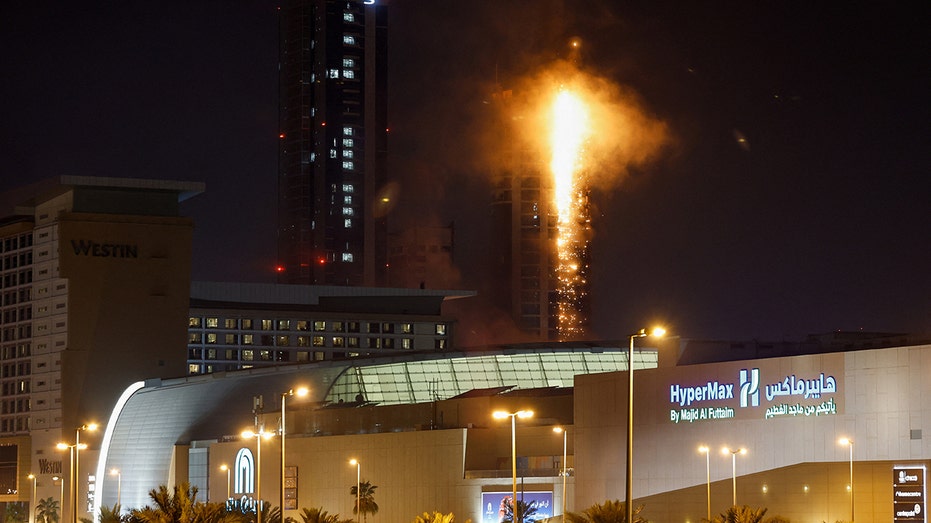
Smoke rises from a burning building hit by an Iranian drone strike, after Israel and the U.S. launched strikes on Iran, in Seef district, Manama, Bahrain, on Feb. 28, 2026. (REUTERS/Stringer / Reuters)
“If hostilities persist into Sunday, crude rates would probably react by climbing by $5-10 above the existing $73 foundational level, premised on Iran’s assertion that it has sealed off the Strait of Hormuz and the hindrance in maritime oil transport,” petroleum market commentators at Eurasia Group informed Reuters.
IRAN REGIME ‘ABOUT TO COLLAPSE,’ PRINCE REZA PAHLAVI SAYS AS ECONOMIC CRISIS DEEPENS
Barclays analysts delivered an even graver admonition.
“Oil markets could encounter their gravest anxieties on Monday,” Barclays analysts informed Reuters. “In the current circumstances, we project Brent might reach $100 [per barrel], while the industry struggles against the risk of a possible interruption to provisions amidst an escalating volatile environment inthe Middle East.”
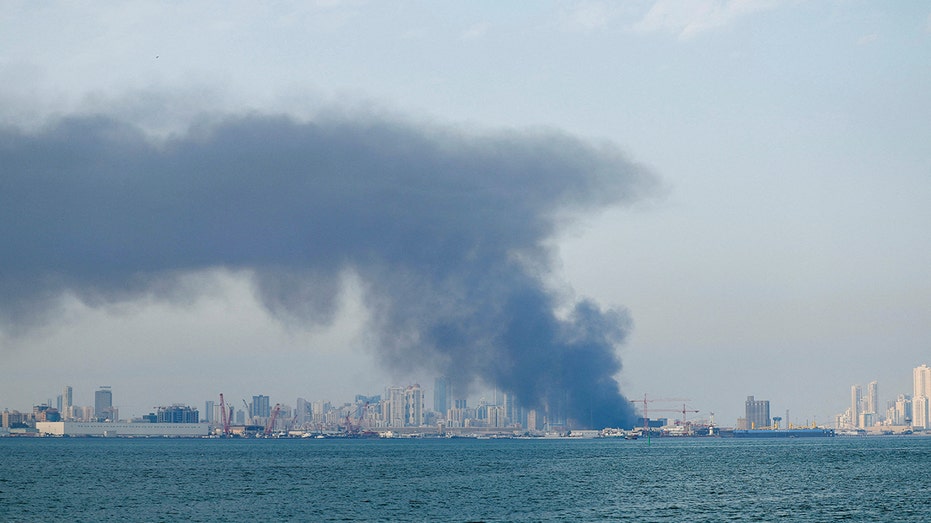
Smoke rises after reported Iranian missile attacks, following strikes by the United States and Israel against Iran, in Manama, Bahrain, Feb. 28, 2026.(REUTERS/Stringer / Reuters)
Foreign exchange markets could likewise undergo instability.
Throughout the short-lived Iran confrontation last June, the U.S. dollar initially dropped approximately one percent prior to recovering.
GET FOX BUSINESS ON THE GO BY CLICKING HERE
Air carriers have alreadyrescinded trips throughout sections of the Middle East, and airline equities might face increased pressure should aerial boundary restrictions broaden, as reported by Reuters.
Reuters supplied news coverage.