
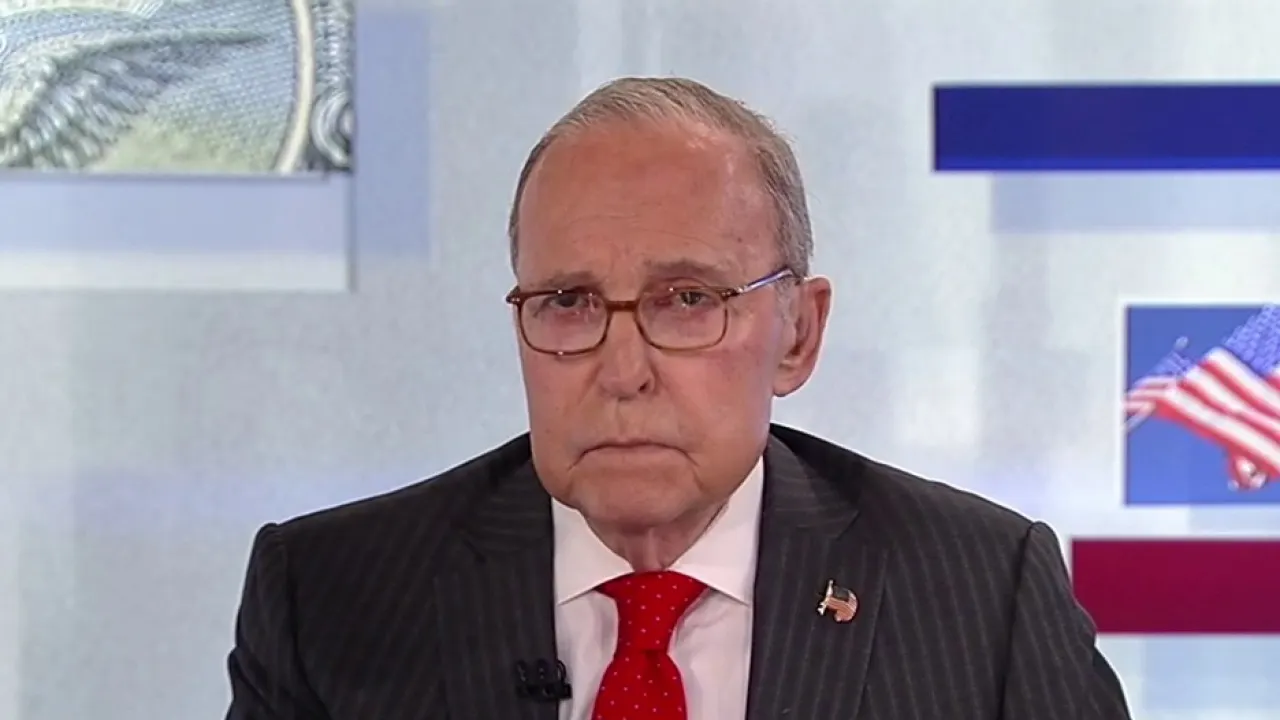
FOX Business host Larry Kudlow ponders the future of the Iranian conflict on ‘Kudlow.’
**Key Takeaways:**
1. **Elevated Geopolitical Risk Premium:** Aggressive rhetoric and the threat of military action against Iran are embedding a significant geopolitical risk premium into global asset prices, particularly crude oil, leading to sustained volatility and uncertainty in energy markets.
2. **Strait of Hormuz Vulnerability:** Any direct or perceived threat to the free passage of oil tankers through the Strait of Hormuz immediately triggers spikes in oil prices and marine insurance rates, creating substantial headwinds for global supply chains and consumer energy costs.
3. **Ambiguous Diplomatic Pathways:** The lack of clear, consistent communication regarding diplomatic initiatives versus military escalation prolongs market uncertainty, discouraging long-term investment and fostering a risk-off sentiment in equities and emerging markets.
Recent commentary from prominent voices reflects a hawkish stance on U.S. policy towards Iran, advocating for an aggressive, decisive approach that would effectively neutralize Tehran’s capabilities across military, nuclear, and economic fronts. This perspective, while rooted in national security objectives, carries profound implications for global financial markets, particularly in the energy sector and broader geopolitical risk landscape. The narrative suggests that the U.S. has already significantly crippled Iran, raising the question of whether to “finish the job” rather than engage in protracted negotiations.
The call for “unconditional surrender” from Iran, rather than a negotiated settlement, injects a high degree of unpredictability into an already volatile region. Such rhetoric, implying a non-diplomatic resolution, tends to exacerbate market jitters. Investors react to the specter of direct conflict by re-evaluating risk exposure, leading to capital flight from riskier assets like emerging market equities and into safe havens such as U.S. Treasuries, gold, and the U.S. dollar. The potential for a complete “obliteration” of Iran’s capabilities, while a political objective, would translate into an unprecedented shock to global oil supply, sending crude prices skyward and potentially triggering a global recession. This geopolitical risk premium is a tangible cost, affecting everything from corporate earnings to consumer spending power.
Adding to the market’s unease is the conflicting information surrounding potential denuclearization talks. Reports of negotiations for a five to twenty-year denuclearized Iran stand in contrast to official statements downplaying or rejecting such timelines. This divergence in messaging creates a vacuum of information that is often filled by speculation, driving short-term volatility in commodity futures. A longer negotiation timeline, while potentially reducing immediate escalation risk, implies prolonged uncertainty, keeping energy prices elevated due to ongoing regional instability. Conversely, a rejection of any long-term diplomatic process points toward a more confrontational approach, immediately repricing oil futures upwards as traders factor in a higher probability of supply disruption.
Central to these market dynamics is the Strait of Hormuz, a critical maritime choke point through which approximately 20% of the world’s total petroleum liquids and a significant portion of global liquefied natural gas (LNG) pass. The reference to “Project Freedom” and the desire for “complete control over the entire Arabian Gulf including the Strait of Hormuz” is a direct signal to energy markets. Any military action or even heightened military posture in this area directly impacts shipping insurance premiums, which can skyrocket, making the transport of crude and refined products significantly more expensive. This cost is ultimately passed on to consumers and businesses globally, contributing to inflationary pressures and supply chain disruptions. The active demonstration of force in the Strait, while intended to project strength, also carries the inherent risk of miscalculation or accidental escalation, a prospect that financial markets view with extreme caution.
Furthermore, the pausing of “Project Freedom” was reportedly influenced by concerns from Gulf allies such as Saudi Arabia, Kuwait, and the UAE, following an attack on a UAE oil installation. This episode underscores the fragility of regional energy infrastructure and the interconnectedness of geopolitical stability with global oil supply. Reassurances and renewed cooperation with these allies regarding the use of military bases and airspace, while consolidating a united front, also signifies an increased capacity for military projection. From a market perspective, this strengthens the U.S. deterrent, potentially stabilizing regional oil production in the long term, but also enhances the perceived readiness for military engagement, thus maintaining a baseline level of geopolitical risk in the region. Attacks on critical oil facilities, as seen previously, can immediately remove significant barrels from the market, leading to sharp price reactions and calls for emergency oil releases from strategic reserves.
The broader geopolitical implications extend beyond immediate energy market shocks. The explicit intent to “show the world, including the three uglies; Communist China, Russia, and North Korea” the extent of American power, ties the Iran situation into a larger framework of great power competition. This global power play has implications for international trade routes, technology supply chains, and foreign direct investment. Investors will increasingly factor in the risk of broader geopolitical fragmentation, potentially leading to increased protectionism and deglobalization trends. Such systemic risks can prompt a re-evaluation of global asset allocation, favoring markets perceived as more stable and less exposed to these geopolitical fault lines.
Finally, the absence of a defined deadline for Iran’s response, or the removal of such a deadline, creates prolonged market uncertainty. Markets inherently dislike ambiguity, preferring clear timelines and defined outcomes, even if those outcomes are unfavorable. An open-ended situation invites endless speculation and keeps risk premiums artificially high. The implicit threat of “the next round of bombing” if an immediate response is not forthcoming represents the most severe scenario for financial markets. Such an event would trigger an immediate and dramatic surge in crude oil prices, a sharp sell-off in equities, particularly those sensitive to energy costs and global trade, and a significant flight to safe-haven assets, potentially precipitating a global economic downturn. The “decapitation” of Iran, while a military objective, would equate to a seismic shock for global energy security and financial stability.
**Market Impact:**
The current geopolitical climate surrounding Iran mandates that investors remain acutely aware of its profound market implications. Persistent hawkish rhetoric and the tangible threat of military escalation continue to imbue crude oil prices with a substantial geopolitical risk premium, leading to sustained volatility in energy markets. Any perceived or actual disruption to shipping through the Strait of Hormuz will immediately translate into higher oil futures and marine insurance costs, directly impacting global supply chains and inflationary pressures. Furthermore, the ambiguity surrounding diplomatic efforts versus military action fosters prolonged uncertainty, contributing to a broader risk-off sentiment that can trigger capital shifts from equities into safe-haven assets. Companies with significant exposure to Middle Eastern supply chains or high energy input costs are particularly vulnerable. A full-scale military conflict, while an extreme scenario, would undoubtedly lead to a global economic contraction, making vigilant monitoring of geopolitical developments an imperative for all market participants.