
Key Takeaways:
- Discounted Capital Infusion:Kodiak AI’s stock plunged 37% following a $100 million equity raise at a steep discount, signaling investor willingness to fund but not at its current market valuation.
- Accelerated Cash Burn:Despite a modest revenue increase, Kodiak’s operating losses doubled year-over-year, highlighting significant cash burn challenges as it scales its capital-intensive autonomous trucking operations.
- Operational Milestones Continue:The company announced new commercial contracts and pilot programs, including a deal with Roehl Transport and a defense collaboration, indicating tangible progress towards driverless deployment despite financial headwinds.
Kodiak AI’s Stock Plunges After Deeply Discounted $100M Capital Raise
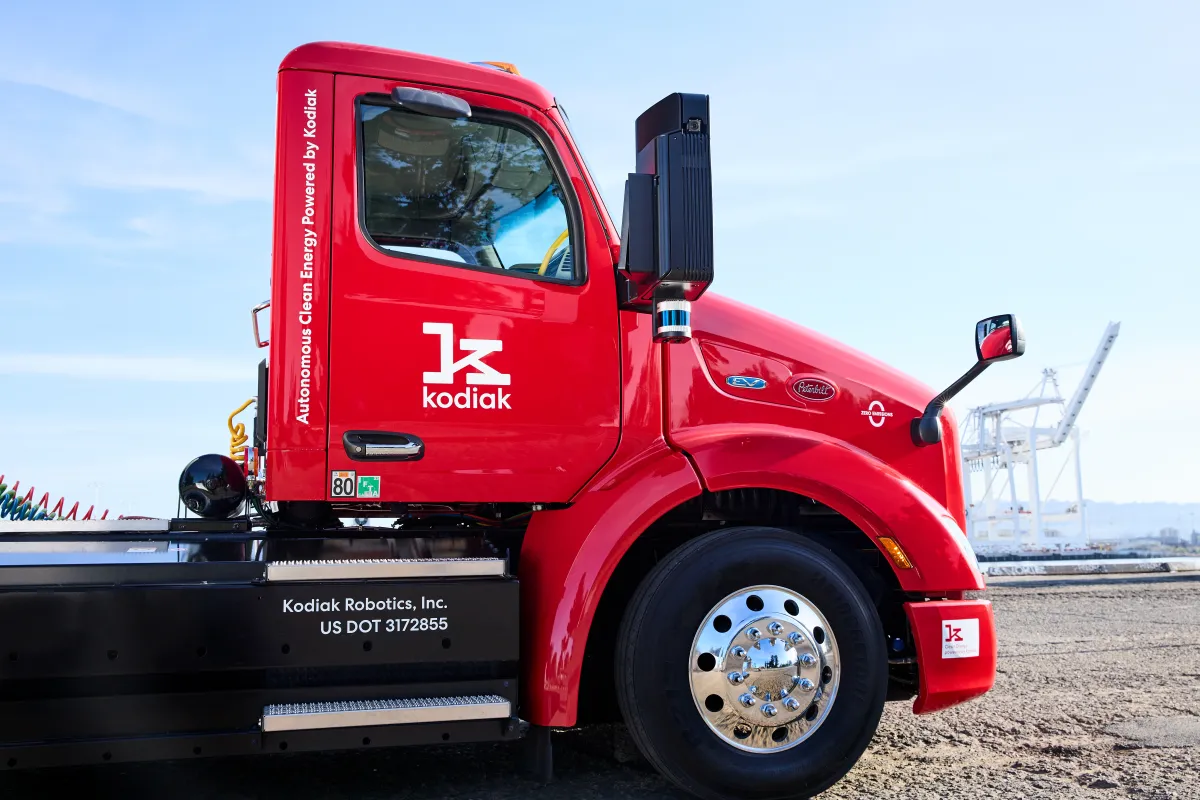
Kodiak AI, a prominent player in the self-driving truck sector, saw its stock tumble a dramatic 37% in after-hours trading Thursday. The sharp decline came on the heels of the company’s disclosure that it had secured $100 million in financing by selling shares at a significant discount, a clear indicator of cautious investor sentiment regarding its current market valuation despite the urgent need for capital.
The financing round, led by existing backer Ares Management and several undisclosed institutional investors, priced shares at $6.50 each. This figure sits well below Kodiak’s closing price of $9.10, as detailed in a filing with the Securities and Exchange Commission (SEC). The deal further sweetened the pot for investors by including warrants, offering them the option to purchase additional shares at an even lower price, starting at $6.
The High Cost of Autonomy: Financial Realities Bite Hard
The terms of the raise underscore the immense financial pressures facing Kodiak as it endeavors to scale its ambitious self-driving truck business. Developing and deploying autonomous technology, whether for off-road industrial applications or public highway logistics, is an inherently capital-intensive undertaking. Kodiak’s latest financial results paint a stark picture of these challenges.
For the first quarter, Kodiak reported revenue of $1.8 million, a modest increase from the $1.4 million logged in the same period last year. However, this growth was overshadowed by a substantial surge in operational losses, which doubled from $18.9 million to $37.8 million year-over-year. These figures illuminate why investors reacted so negatively to the discounted share sale: the company is burning through cash at an accelerated rate, and while the $100 million infusion is sizable, it does little to fundamentally alter the near-term financial trajectory towards profitability.
Building Momentum: New Partnerships and Operational Expansion
Despite the financial headwinds, Kodiak has made demonstrable progress on the business development front, securing new commercial contracts and expanding its operational footprint. These achievements suggest that the underlying technology and service model continue to attract industry partners.
Key recent advancements include:
- Roehl Transport Partnership:A new commercial contract with Roehl Transport will see Kodiak-equipped trucks autonomously hauling freight between Dallas and Houston. This operation involves four round trips per week, with a human safety operator still present behind the wheel as a precautionary measure.
- Off-Road Pilot with West Fraser Timber Co.:Kodiak is initiating a pilot program to test its autonomous trucks in off-road industrial settings, specifically for log-hauling operations at West Fraser Timber Co. in Alberta, Canada. This expands Kodiak’s reach beyond traditional highway logistics.
- Defense Collaboration with General Dynamics Land Systems:A strategic collaboration with the military vehicle maker aims to develop autonomous ground vehicles for defense applications, diversifying Kodiak’s market potential.
These new engagements complement Kodiak’s existing roster of on-highway customers, which includes industry giants like Werner, J.B. Hunt, Bridgestone, Martin Brower, and C.R. England, all of whom utilize Kodiak for freight hauling.
Techcrunch event
San Francisco, CA
|
October 13-15, 2026
The Road to Driverless: Strategy and Validation
Kodiak founder and CEO Don Burnette remains optimistic about the company’s trajectory towards fully driverless trucking. In a recent interview, Burnette confirmed the company is “on track to move to driverless trucking on public highways later this year,” emphasizing the momentum gained from new partnerships and ongoing initiatives. “We’re excited about the progress that we’re making as we march toward our driverless launch later this year,” he stated.
A key strategic shift for Kodiak’s driverless future is its “driver-as-a-service” model. While Kodiak currently owns and operates the trucks for its on-highway customers, Burnette indicated that this arrangement will change with driverless operations. Under the new model, customers will own and operate the trucks, with Kodiak providing its autonomy software and support as a service. This mirrors the system already in place with its off-highway customer Atlas for a driverless deployment in the Permian Basin of Texas.
While the goal is to remove the human safety driver by the end of 2026, Burnette stressed that full driverless operations on public highways would only commence once the technology has undergone rigorous validation. To track this progress, Kodiak introduced its “autonomy readiness measure,” a proprietary zero-to-100 score that quantifies the completion of its internal safety validation processes. As of April, Kodiak reported an 86% completion rate, underscoring the methodical approach to safety before wider deployment.
A Look Back: SPAC Origins and Previous Funding
Kodiak’s journey to the public markets began in September via a merger with special-purpose acquisition company (SPAC) Ares Acquisition Corporation II, an affiliate of Ares Management. The deal, which initially valued the startup at approximately $2.5 billion, was intended to provide a significant capital boost for its growth ambitions.
At the time of the SPAC merger, Kodiak raised $275 million in financing. This included over $212.5 million from various institutional investors, with $145 million in Private Investment in Public Equity (PIPE) funding and about $62.9 million in trust cash from Ares. However, typical of many SPAC transactions, the initial trust cash of $562 million diminished significantly due to some SPAC investors redeeming their shares—a standard provision allowing investors to recover their money before a merger is finalized. This dynamic often leaves SPAC-merged companies with less capital than initially projected, adding to the pressure to secure further funding, as evidenced by the recent discounted raise.
Bottom Line:Kodiak AI faces the inherent dilemma of highly innovative, capital-intensive ventures: massive investment is required to reach a scalable, profitable stage, but the market is demanding clearer financial performance. The recent discounted capital raise, while providing essential liquidity, reflects investor apprehension about the company’s aggressive cash burn relative to its revenue growth. Kodiak’s consistent operational progress with new contracts and a clear path to driverless deployment are positive signals, but the coming years will be a crucial test of whether it can translate technological milestones into sustainable financial viability and justify its ambitious valuation in the burgeoning, yet challenging, autonomous trucking landscape.
When you purchase through links in our articles, we may earn a small commission. This doesn’t affect our editorial independence.
{content}
Source:{feed_title}