
FOX Business contributor Josh Schafer discusses the California Democratic Party’s endorsement of a billionaire tax and raises questions on the revenue on ‘The Big Money Show.’
Key Takeaways
- **Capital Flight Risk:** The proposed 5% California billionaire wealth tax sparks concerns from investors like Mark Cuban, warning it could accelerate an exodus of startup founders, venture capital, and high-net-worth individuals, fundamentally altering the state’s economic landscape and innovation ecosystem.
- **Liquidity vs. Valuation:** A central market challenge highlighted is the distinction between “paper billionaires” with illiquid assets (like private company stock) and those with readily available cash. The debate exposes the significant practical difficulties in taxing unrealized gains without forcing asset sales or creating complex, state-backed lending schemes that carry inherent risks.
- **Market Signal & Precedent:** The contentious discussion serves as a critical market signal regarding potential future wealth taxation policies. A successful implementation in California could inspire similar measures in other states, potentially impacting broader investment strategies, asset allocation, and the competitive environment for businesses and talent across the U.S.
The Golden State finds itself at a critical economic crossroads, as a proposed 5% billionaire wealth tax, enshrined in California’s Proposition 40, ignites a fierce debate that reverberates far beyond Sacramento. This isn’t merely a political squabble; it’s a high-stakes clash over fundamental market principles, capital allocation, and the future competitiveness of one of the world’s largest economies. At the heart of the maelstrom are tech mogul and investor Mark Cuban and Democratic Rep. Ro Khanna, whose heated exchange on social media has laid bare the deep divisions over how to fund public services without stifling the very engines of wealth creation.
The exchange centered on California’s Proposition 40, a controversial ballot measure that would impose a one-time 5% wealth tax on residents with more than $1 billion in assets. The measure has been endorsed by the California Democratic Party, while some notable leaders, including Gov. Gavin Newsom, have expressed opposition, reflecting an internal party rift over its economic viability.
In a video posted on X on Saturday, Khanna made the case for the tax, arguing that it would help preserve health care for working-class Californians. He said the “Sacramento establishment” and lobbyists opposing the measure were “blatantly out of touch.”
STEVE HILTON WARNS CALIFORNIA ECONOMY WILL ‘ABSOLUTELY COLLAPSE’ UNDER ‘INSANE’ BILLIONAIRE TAX
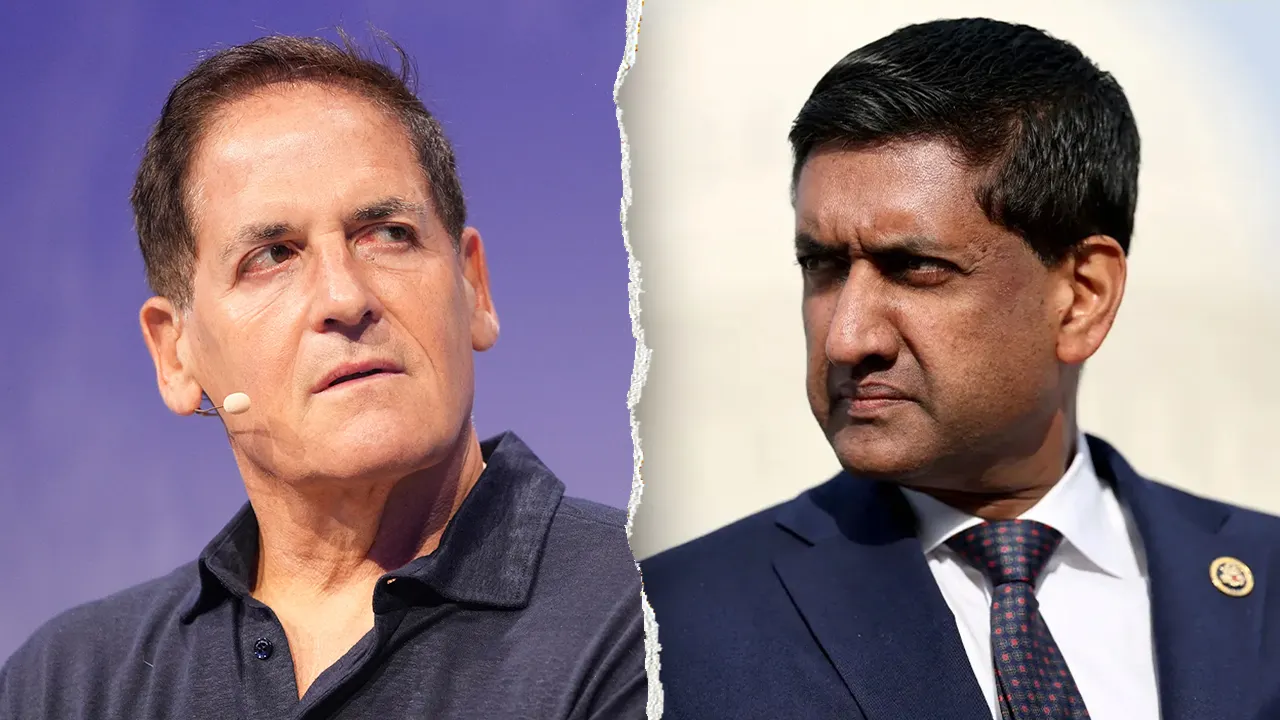
Mark Cuban, left, and Rep. Ro Khanna, D-Calif., clashed on social media over California’s proposed 5% wealth tax on billionaires.(Leah Millis/Reuters; Nathan Laine/Bloomberg via Getty Images / Getty Images)
Cuban’s counter-argument is deeply rooted in the practical realities of venture capital and startup finance. He highlighted that founders of rapidly appreciating startups often become billionaires on paper without possessing hundreds of millions in liquid assets needed to pay such a tax. This phenomenon of “cash poor, stock rich” is common in the tech sector, where wealth is typically tied up in illiquid private equity or company stock, awaiting a liquidity event like an IPO or acquisition. Forcing such founders to sell shares prematurely or seek burdensome loans could, Cuban argued, cripple nascent companies and deter future innovation.
“They are the definition of cash poor, stock rich,” Cuban wrote on X. He warned that the measure could cause startup founders and investors to leave California, a state already grappling with a narrative of business exodus due to high costs and regulatory burdens.
“If this passes, only idiot startup founders stay in Cali,” Cuban wrote.
TRUMP WARNS NEW HOCHUL, MAMDANI PIED-À-TERRE TAX COULD ACCELERATE NYC WEALTH EXODUS
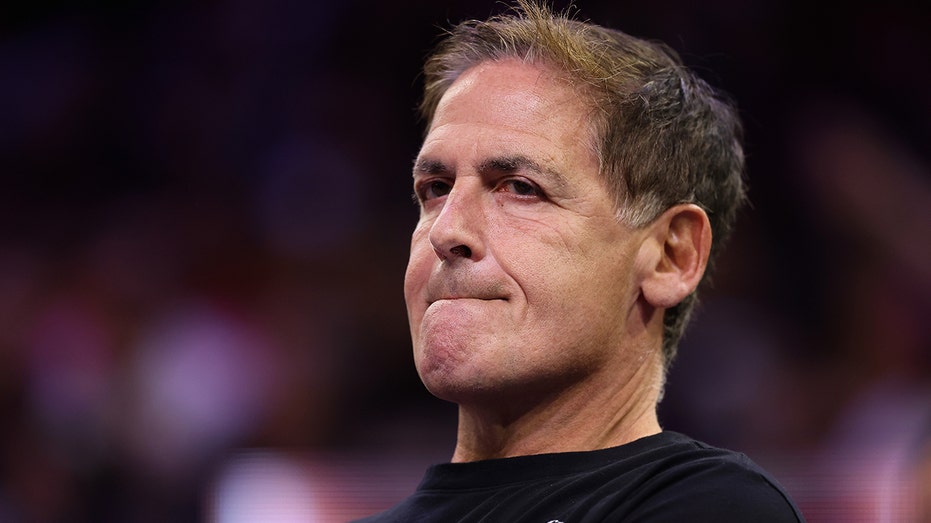
Billionaire investor Mark Cuban warned that California’s proposed 5% wealth tax could drive startup founders and investors out of the state.(Christian Petersen/Getty Images / Getty Images)
Cuban went further, warning that the measure could also influence where he invests, signaling a broader chilling effect on venture capital flows. “I will make NOT being in California a pre requisite for an investment,” he continued. “Ideology is not a strategy Ro,” he added, underscoring the investor community’s pragmatic approach to capital deployment.
Khanna then proposed a workaround for founders whose wealth is largely tied up in private-company stock. “Why not a non recourse loan for pledged stock as collateral for this situation?” Khanna wrote.
KEN GRIFFIN’S NYC SKYSCRAPER MOVES FORWARD DESPITE FEUD WITH MAYOR ZOHRAN MAMDANI
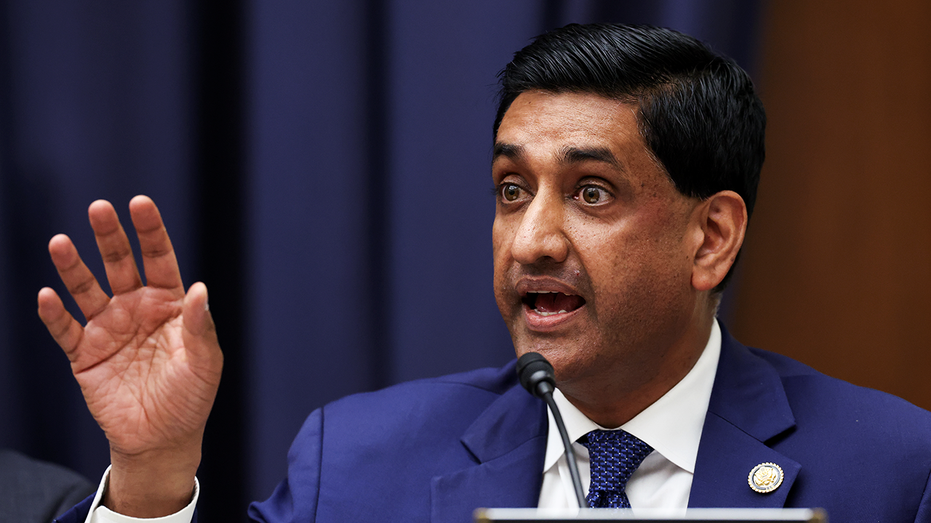
Rep. Ro Khanna, D-Calif., defended a proposed one-time 5% wealth tax on California residents with more than $1 billion in assets.(Win McNamee / Getty Images)
Khanna proposed addressing the concerns surrounding illiquid founders by allowing them to pledge shares in their companies as collateral for a government loan that could then be used to pay the wealth tax. The loan could remain outstanding for roughly 10 years, after which the founder would either repay the government in cash or the government would take possession of the pledged shares. Because the loan would be nonrecourse, the founder would not be personally liable if the company failed.
Cuban blasted the proposal as “insane,” highlighting a critical market inefficiency. He argued that California would effectively lend founders money that would immediately be returned to the state as payment of the tax. This circular flow of funds, he contended, would initially generate no net cash revenue for the state from these specific taxpayers. Furthermore, it introduces the state as a quasi-venture capitalist, taking on the risk of private company performance. Should a company fail, the state would be left with devalued or worthless shares, effectively turning a tax into a highly speculative investment with taxpayer funds.
“What’s the point of that?” he wrote.
BOB IGER, JOSH KUSHNER SHOCKINGLY PURCHASE LAKERS MONTHS AFTER MARK WALTER BECAME MAJORITY OWNER
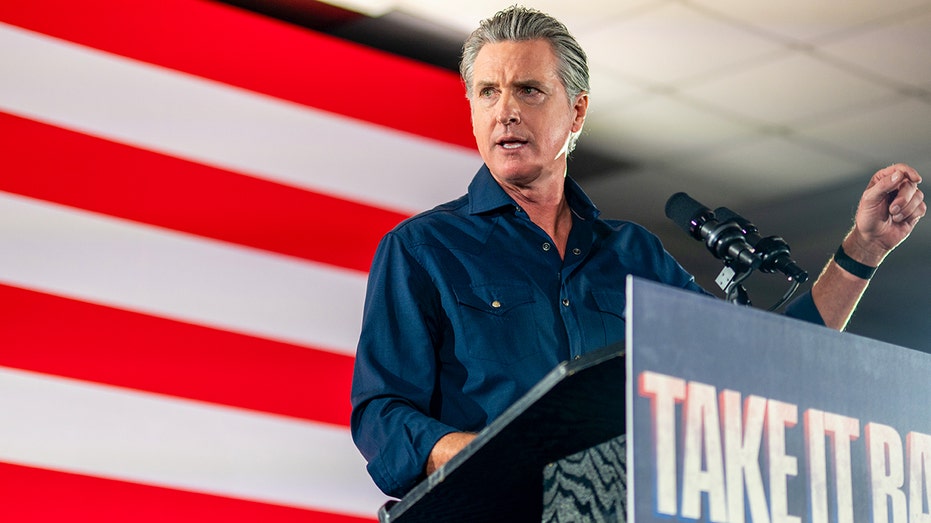
California Gov. Gavin Newsom has expressed opposition to the proposed one-time wealth tax on the state’s billionaires.(Brandon Bell/Getty Images / Getty Images)
Cuban also argued that California could eventually wind up owning shares in private companies if founders were unable to repay the loans. “Cali, You make it. We take it!” Cuban wrote.
Khanna pushed back on Cuban’s criticism, arguing that the government would still collect the tax from billionaires with liquid assets. “The government would still collect from the vast majority of billionaires who are not illiquid,” Khanna wrote. Khanna claimed that 72% of billionaire wealth is held in public stock and said the proposed financing mechanism would be aimed at true “paper billionaires” whose fortunes are tied to illiquid assets. He argued that if a private company succeeds, California would ultimately collect on the loan, while founders would not be personally liable if the company failed.
CALIFORNIA VOTERS TO CONSIDER BALLOT MEASURE TO INCREASE TAXES ON BILLIONAIRES
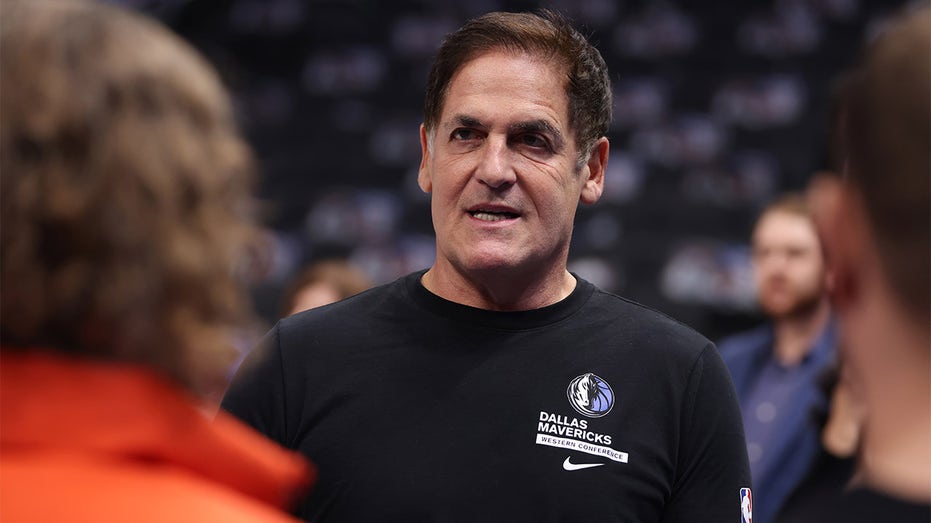
Mark Cuban warned that if California’s proposed billionaire wealth tax passes, he would make not being based in the state a prerequisite for certain startup investments.(Tim Heitman/Getty Images / Getty Images)
Khanna then broadened his argument, telling Cuban that ordinary Americans support higher taxes on billionaires. “Mark, come on a road trip with me around California, Pennsylvania and the country and ask ordinary Americans how they feel about a billionaire tax,” Khanna wrote. “Most say, I promise you, why only 5 percent?”
Cuban shot back: “You don’t understand business Ro.” He argued that even a successful founder could spend 10 years growing a company, create thousands of jobs and pay hundreds of millions of dollars in federal and state taxes without ever having $250 million in liquid assets available to repay the proposed state loan. This scenario highlights a core conflict: the value of wealth generation through entrepreneurial reinvestment versus the desire for immediate tax revenue from that wealth.
“Is that what you want your state to be?” Cuban wrote.
CLICK HERE TO GET FOX BUSINESS ON THE GO
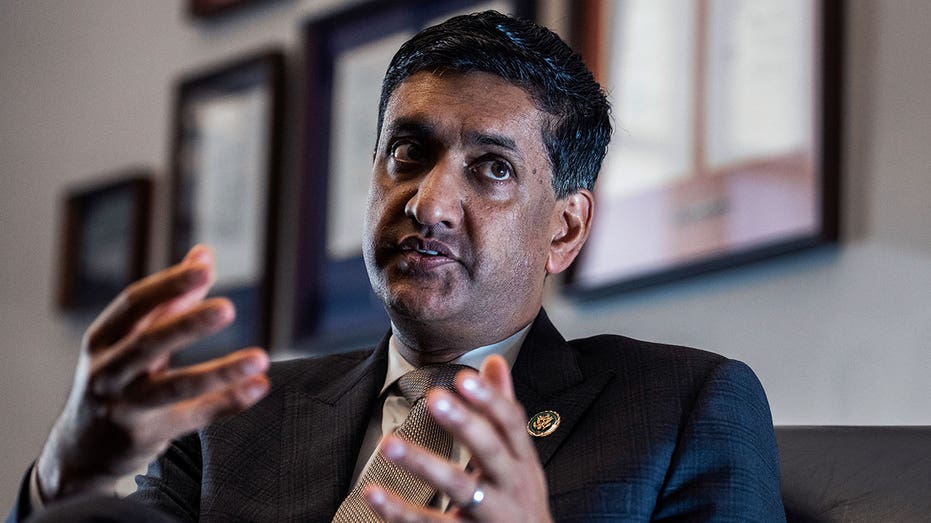
Rep. Ro Khanna, D-Calif., argued that California’s proposed billionaire tax would help protect health care for working-class and middle-class residents.(Tom Williams/CQ-Roll Call, Inc via Getty Images / Getty Images)
Khanna continued to push back, arguing that most of the roughly 250 California billionaires who could be affected by the tax do not face the liquidity problem Cuban described.
Cuban responded with his sharpest criticism yet, arguing that forcing startup founders to sell shares to satisfy the tax would punish entrepreneurs who reinvest their wealth into growing their companies, creating jobs and paying employees rather than taking cash out for themselves. This perspective underscores the critical role of reinvested capital in economic expansion and job creation. A wealth tax, in this view, could be seen as penalizing the very act of fostering economic growth.
“Ro, this is the biggest f— you in the history of entrepreneurship. Ever,” Cuban wrote.
Market Impact
The potential implementation of California’s Proposition 40 carries significant implications for financial markets, venture capital ecosystems, and state-level economic competitiveness. If passed, the wealth tax could accelerate the migration of high-net-worth individuals and capital out of California, shifting investment towards more tax-friendly states. This capital flight would directly impact the availability of early-stage funding for startups, potentially stifling innovation and job creation in the state’s crucial tech sector. Investor sentiment, particularly among those backing illiquid ventures, would likely sour on California-based opportunities, leading to a reallocation of funds. Furthermore, the debate itself highlights the increasing tension between social policy goals and the dynamics of wealth creation, prompting a re-evaluation of location-based investment strategies across the board. The outcome in California could set a precedent for other states or even federal policy, signaling a broader shift in how wealth is taxed and potentially influencing valuations, asset allocation, and the overall trajectory of financial markets in the long term.