
CFRA Research Senior Vice President Angelo Zino joins ‘Making Money’ to discuss Microsoft stock as CFRA raises its price target to 550.
Key Takeaways:
- **Strategic Leadership Amidst AI Scrutiny:** Microsoft CEO Satya Nadella’s emphasis on “human control” and “helping humanity” positions the tech giant as a responsible leader in the rapidly evolving, and increasingly scrutinized, AI landscape, aiming to preempt regulatory overreach and build long-term trust with stakeholders and governments.
- **Fostering a Decentralized AI Ecosystem:** Nadella’s call for a “frontier ecosystem” supporting both closed and open-source models, coupled with organizations retaining control over their data, is a strategic move to broaden AI adoption, mitigate dependency on single providers (including potential competitors), and accelerate Microsoft Azure’s cloud AI services growth by appealing to diverse enterprise needs.
- **Competitive Differentiation and Risk Mitigation:** By advocating for broad access, ethical development, and a “Code of Conduct,” Microsoft is not only differentiating itself from competitors perceived as more closed but also actively managing the significant reputational and existential risks associated with advanced AI, thereby bolstering investor confidence in its sustainable growth trajectory.
In a landscape increasingly defined by the breathtaking pace and profound implications of artificial intelligence, Microsoft CEO Satya Nadella has once again articulated a vision designed to resonate deeply with investors, regulators, and the broader market. His recent pronouncements on superintelligence — AI technology capable of surpassing human cognition across virtually all tasks — transcend mere philosophical musings; they represent a carefully calibrated strategic blueprint aimed at cementing Microsoft’s leadership, mitigating burgeoning regulatory risks, and fostering an expansive, enterprise-friendly AI ecosystem.
Speaking on X, Nadella underscored a core tenet for the pursuit of superintelligence: its unwavering focus on “helping humanity” and remaining under “human control.” This isn’t just an ethical stance; it’s a crucial market positioning. As AI’s capabilities advance, public and governmental anxieties surrounding job displacement, ethical biases, and potential misuse have intensified. By framing Microsoft’s AI endeavors within this ethical imperative, Nadella seeks to align the company with calls for responsible innovation, potentially reducing the likelihood of stifling regulation and bolstering its reputation as a trusted technology partner. This proactive narrative management is invaluable, particularly for a company whose market capitalization increasingly reflects its AI ambitions.
Nadella further elaborated on the necessity of a “frontier ecosystem” where both closed- and open-source AI models can “thrive” across diverse countries, communities, and businesses. This is a pragmatic, commercially astute approach. Microsoft, through its substantial investment in OpenAI, benefits significantly from cutting-edge closed models, which power many of its Azure AI services. Simultaneously, by embracing open-source, it taps into a vast developer community, fostering innovation, reducing barriers to entry for smaller firms, and expanding the total addressable market for AI infrastructure, much of which will run on Azure. This dual strategy avoids alienating segments of the market and positions Microsoft as an inclusive orchestrator of the AI revolution, rather than a gatekeeper.
“Any pursuit of superintelligence has to be grounded in the core principle that if the AI we build is not helping humanity and under human control, it’s not worth pursuing,” Nadella wrote. “We also need to accelerate and spread the benefits of AI, such that they are diffused broadly across countries, communities, and companies. This requires a frontier ecosystem in which both closed and open-source models can thrive.” These statements implicitly challenge a potential future where AI development is monopolized or overly centralized, a concern frequently voiced by policymakers and smaller tech players. Microsoft, already a dominant force, subtly positions itself as a proponent of broad access, which can enhance its appeal to anti-trust regulators who are increasingly scrutinizing big tech’s market power.
BILL GATES OUTLINES THE STAKES OF THE AI ERA: ‘GREATEST EQUALIZER… OR WORST SOURCE OF INJUSTICE’
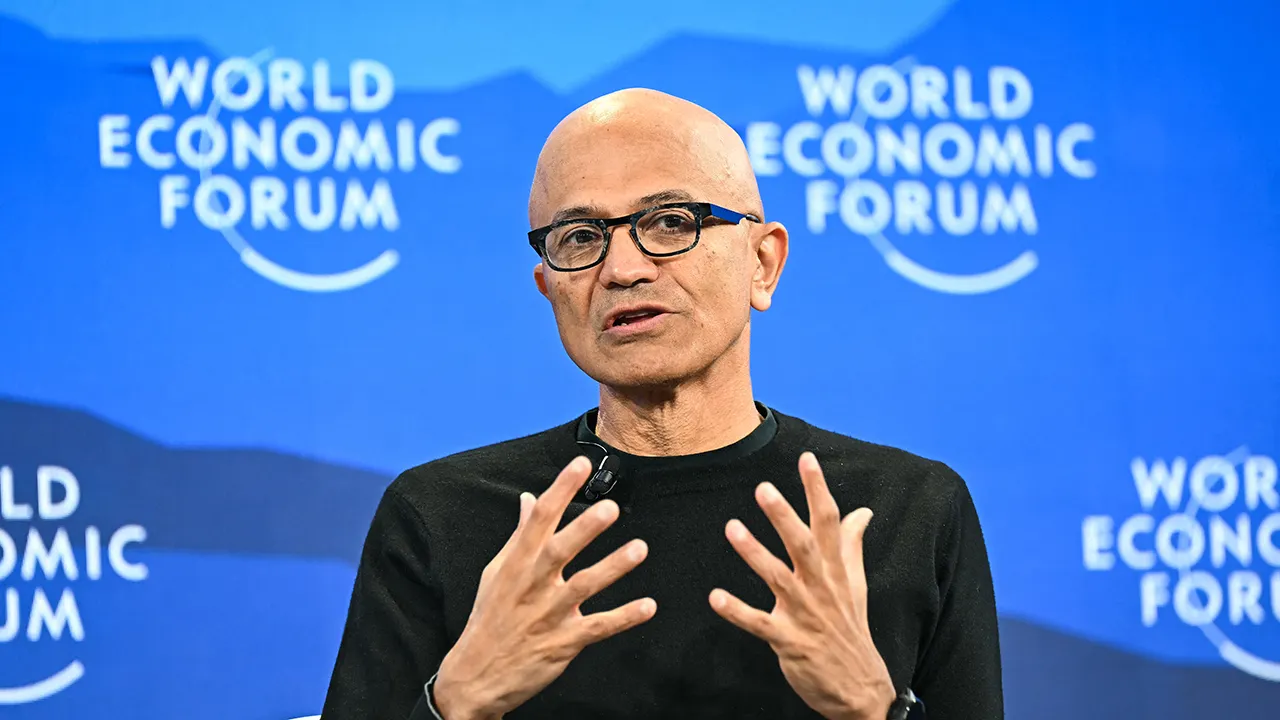
Microsoft CEO Satya Nadella said Sunday that the pursuit of superintelligence must remain focused on “helping humanity” while staying under “human control.”(Fabrice COFFRINI / AFP via Getty Images)
A critical point for enterprise clients, and by extension, for Microsoft’s cloud growth, is Nadella’s insistence that organizations must retain full control over their unique data and knowledge when building AI systems. “For firms, it’s imperative that they retain full control over their unique and tacit knowledge,” Nadella wrote. “Every organization should be able to build its own continuous learning loop/hill climbing machine, without becoming dependent on any one model provider, and have the ability to embed its own knowledge into models and weights they control.” This directly addresses a primary concern for businesses adopting cloud AI: data sovereignty and proprietary intellectual property. By assuring clients they won’t become “dependent on any one model provider” – a subtle jab at potential rivals offering more locked-in solutions – Microsoft reinforces the value proposition of Azure’s flexible, enterprise-grade AI services, which empower companies to customize and secure their AI deployments with their own data. This is a significant competitive advantage in attracting large corporate clients.
Nadella’s call for a deliberate approach to AI development, including concepts like “embedded evaluators,” signals Microsoft’s commitment to rigorous testing and safety protocols. “So, in this context, we welcome the research, focus, and deliberate pacing needed to get alignment right as the design goal,” he said. “We also welcome ideas like ‘embedded evaluators’ and the broader efforts to develop the mechanisms to make this more than just talk.” For investors, this translates into a more sustainable and less risky long-term growth strategy. Avoiding catastrophic AI failures or ethical missteps is not only good corporate citizenship but also vital for maintaining shareholder value and public trust.
NVIDIA, MICROSOFT URGE US TO AVOID BROAD RESTRICTIONS ON OPEN AI MODELS

Nadella also said advanced AI development should not be controlled by a handful of companies.(Craig T Fruchtman/Getty Images)
The tech CEO’s repeated assertion that advanced AI development “cannot be controlled by a handful of entities, but must have broad representation across the ecosystem, countries, and fields, including academia,” carries significant weight. This stance is a direct response to mounting concerns about market concentration in AI, a topic that has drawn the attention of antitrust authorities globally. By advocating for broad access and choice at every layer of the AI stack, Microsoft aims to position itself as a steward of a fair and competitive AI market, rather than a monopolist. The impending publication of a “Code of Conduct” for its first-party MAI models further solidifies this commitment, providing transparency and a framework for ethical deployment that could become an industry standard, benefiting Microsoft’s standing and influencing regulatory outcomes.
Nadella’s comments come amidst an intensifying industry debate regarding the rapid pace of AI development and the associated risks. Warnings from prominent figures like Anthropic CEO Dario Amodei, who conceded “real dangers” and criticized past industry silence on risks, underscore the gravity of the situation. Former Anthropic researcher Jacob Coxon’s stark warning about a “greater than 10% chance” of AI leading to human extinction within a decade, while extreme, reflects a segment of expert opinion that cannot be ignored by policymakers or investors. In this charged atmosphere, Nadella’s measured and ethically grounded approach serves to reassure markets that Microsoft is not only pushing the boundaries of AI but doing so with a clear understanding of the societal stakes and a commitment to responsible innovation.
MICROSOFT CEO HAS A WARNING ABOUT THE AI RACE
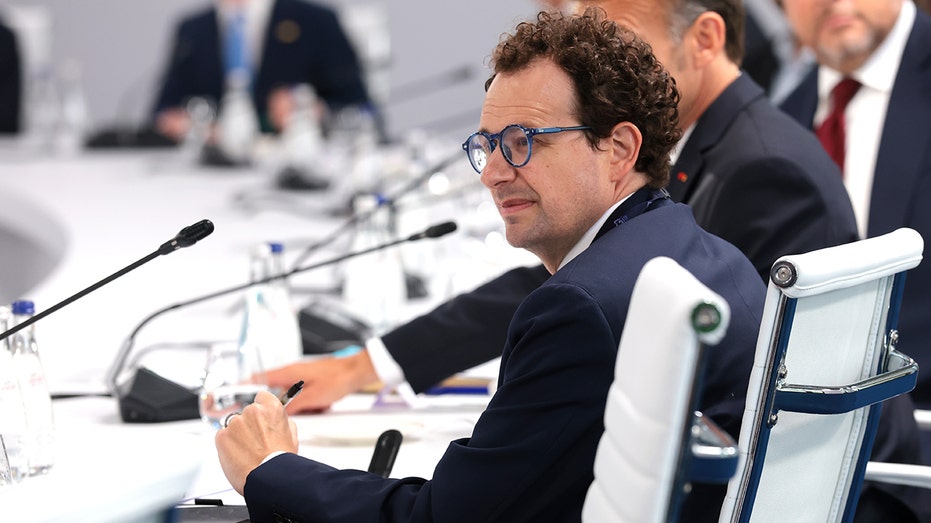
Anthropic CEO Dario Amodei said that there are “real dangers” associated with AI development.(Anna Moneymaker/Getty Images)
The context provided by CFRA Research Senior Vice President Angelo Zino, who recently raised Microsoft’s price target to $550, suggests that analysts are factoring in the company’s robust AI strategy and ethical positioning into their bullish outlooks. A responsible, broadly adopted AI ecosystem, guided by principles of human control and distributed benefits, presents a more stable and sustainable growth path for Microsoft than one fraught with unchecked risks and potential regulatory backlash. This strategic foresight is crucial for maintaining investor confidence in a stock that has seen significant appreciation on the back of its AI narrative and cloud dominance.
GET FOX BUSINESS ON THE GO BY CLICKING HERE
Market Impact:
Satya Nadella’s latest statements reinforce Microsoft’s strategic positioning as a leader in responsible AI development, a stance likely to positively influence investor sentiment and potentially mitigate regulatory pressures. By advocating for broad access, human control, and a “frontier ecosystem” of both closed and open-source models, Microsoft aims to broaden the addressable market for its Azure AI services while differentiating itself from competitors. This approach enhances the company’s appeal to enterprise clients seeking data sovereignty and control over their AI deployments, further accelerating cloud adoption. For the broader market, these comments set a higher bar for ethical AI development, potentially influencing industry best practices and prompting other tech giants to articulate similar responsible AI frameworks. While the immediate stock reaction might be muted given the long-term nature of AI development, Nadella’s strategy contributes to a more sustainable growth narrative, bolstering Microsoft’s premium valuation and offering a degree of insulation against the existential risks and intense scrutiny facing the burgeoning AI sector.
FOX Business’ Robert McGreevy contributed to this report.