
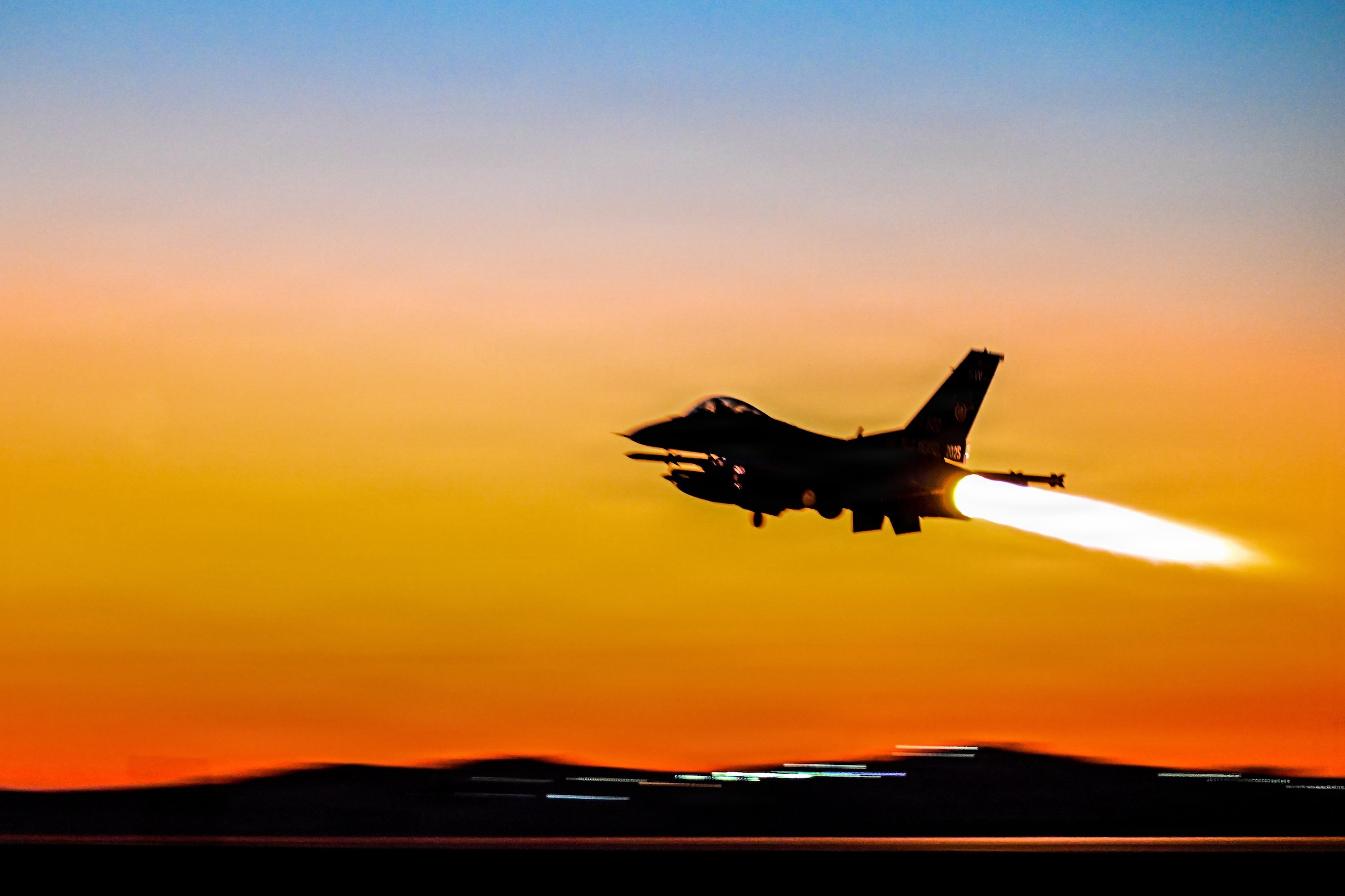
Operation Epic Fury, the United States military’s largest air campaign in a generation, involved strikes on approximately 13,000 targets in Iran before the first in a series of fragile ceasefires commenced in April. Even as hostilities continue to escalate intermittently, the former commander of Air Forces Central has identified several crucial lessons that underscore the complexities of major combat operations in the contemporary era, contrasting sharply with decades of counter-terrorist engagements in the Middle East.
Lt. Gen. Derek C. France, who concluded his tenure last month as Air Forces Central commander and the Combined Forces Air Component Commander (CFACC) for U.S. Central Command on August 4, noted that “A lot of things surprised me in a good way.” He specifically highlighted the unexpected strength of joint partnerships within the U.S. military during the conflict.
A notable success involved the close coordination between Airmen and Soldiers operating Patriot anti-missile defenses, which proved effective against Iranian missiles and drones targeting air bases across the Middle East. General France also expressed admiration for the ability of U.S. air wings to swiftly resume flight operations following these attacks.
“We had bases generating sorties,” France stated. “Occasionally, we’d have to make some adjustments on tankers to make an effective sortie. But I never had a base that said, ‘We are not effective and we can’t meet the next three or four [windows] of ATO tasking.’ … At a macro sense, it was not a factor.” This indicated a high level of operational resilience despite sustained threats.
However, one critical area General France singled out for urgent improvement was the logistical system for supplying munitions. He noted that the system proved inadequate in the initial stages of the war, necessitating a controlled “metering” of weapons usage over time.
“Our logistics system needs some serious revamping as far as its flexibility,” France emphasized. He cited instances where “You would have cases where bases say, ‘Hey, I’ve got all these bomb bodies, but I can’t use them because I don’t have the tail kits yet.'” This disconnect between component availability severely hampered the efficient deployment of ordnance.
The necessity of augmenting base self-defense emerged as another crucial lesson from the conflict. U.S. Central Command (CENTCOM) had not faced such sophisticated and sustained threats to its fixed installations since the 1991 Desert Shield/Desert Storm campaign, which involved Saddam Hussein’s notoriously unreliable Scud missiles. The modern threat, characterized by repeated waves of attacks involving multiple missiles and drones, presented an entirely different challenge. While U.S. Patriot missile systems and THAAD interceptors successfully neutralized the majority of incoming threats, some weapons did penetrate defenses, highlighting areas for improvement in U.S. base protection strategies.
“From a base defense standpoint, we’ve still got some gaps as far as long-range air domain awareness, so you’re not surprised by things once they’re in your base defense zone,” France explained. This suggests a need for enhanced early warning and detection capabilities to counter increasingly sophisticated and numerous airborne threats.
General France also suggested that building command centers underground, thereby providing inherent self-protection, warrants serious consideration. He articulated the rationale: “You have to have some C2 [Command and Control] element that’s survivable underground, and if you’re going to generate airpower, you need something where your aircrew can actually get some sleep and extract themselves from that potential.” He acknowledged the impossibility of hardening every facility but stressed the importance of protecting critical C2 nodes and providing prioritized subterranean options.
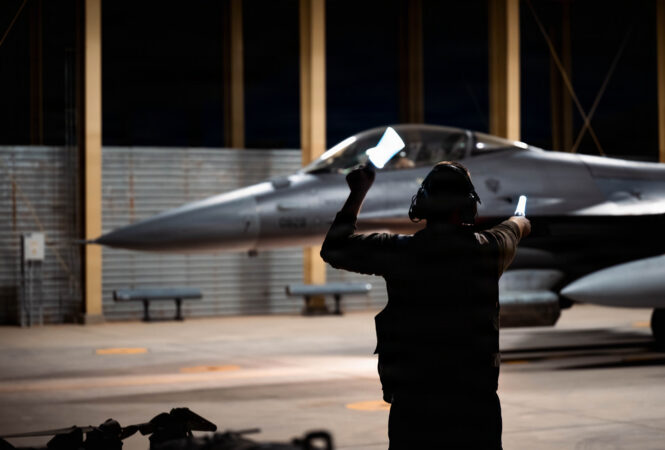
General France’s command of AFCENT began on April 18, 2024, an entry marked by immediate operational challenges. His commercial flight to Doha, Qatar, was canceled on April 13 after Iran launched a significant barrage of ballistic and cruise missiles against Israel. American F-16s, F-15Es, and coalition fighters were instrumental in defending U.S. and regional allies, intercepting numerous Iranian drones. Subsequently, Israel launched its counter-attack, requiring the U.S. to rapidly reposition assets across the region. “After doing the change of command that [first] morning, I got to bed at 7 a.m. the next morning,” France recounted, illustrating the immediate intensity of his new role.
Prior to Operation Epic Fury, France served as the CFACC for Operation Rough Rider in spring 2025 against Houthi forces and for Operation Midnight Hammer in June 2025, which saw U.S. B-2 bombers strike Iranian nuclear sites. Operation Epic Fury escalated the conflict significantly, beginning February 28 with what became the largest U.S. air offensive in 35 years.
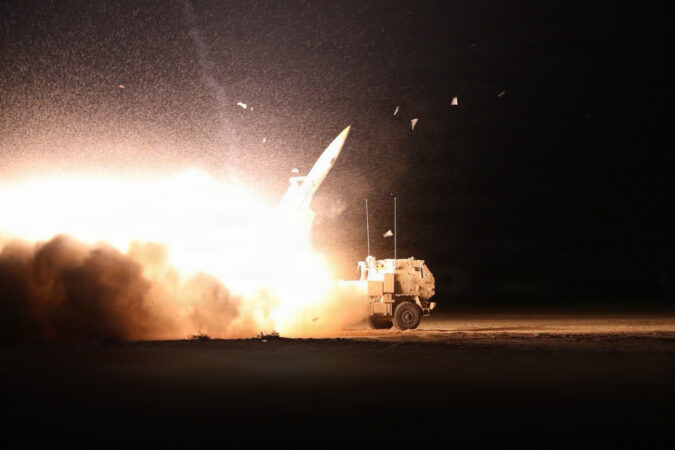
In his capacity as CFACC, General France and the Combined Air Operations Center (CAOC) directed the strikes into Iran. This included integrating fires from various services, such as Navy aircraft, submarine-launched Tomahawk land-attack cruise missiles, and Army ATACMS and PrSM surface-to-surface missiles.
“The scope and scale of this forced a single, what I would term an ‘integrator’ of fires,” France commented. He observed that “I think the CAOC over time got much better at integrating fires,” underscoring the evolution of inter-service coordination during the campaign.
Operating from a secure CAOC at Shaw Air Force Base, S.C., France and his staff were tasked with rapidly generating Air Tasking Orders to keep pace with the demanding tempo of the war.
While punishing waves of airstrikes characterized the initial phase, they have now been largely superseded by an American economic pressure campaign, coinciding with Iran’s efforts to assert greater control over the Strait of Hormuz. Now in its seventh month, the conflict vividly illustrates the significant challenge the U.S. military faces in adapting its operational mindset and capabilities from decades of counter-terrorism operations to major theater warfare against a reasonably sophisticated adversary, particularly one with strategic ties to powers like Russia and China.
The U.S. struck more than 13,000 targets, marking a critical transition in its strategic focus.
Why This Matters
The insights gleaned from Operation Epic Fury are profoundly significant, signaling a pivotal shift in U.S. military strategy and preparedness. For decades, American forces largely focused on counter-insurgency and counter-terrorism operations, which involved distinct logistical, defensive, and command challenges. Operation Epic Fury, a high-intensity, large-scale conflict against a state actor like Iran, represents a return to “major combat operations” and reveals critical gaps and strengths in the U.S. military’s readiness for such engagements.
**Strategic Reorientation:** This conflict underscores the urgent need for the U.S. military to fully reorient its doctrine, training, and procurement toward peer or near-peer adversaries. The lessons from Epic Fury will directly influence future defense budgets, research and development into advanced defensive and offensive systems, and the structure of U.S. forces globally. It emphasizes that future conflicts may not be asymmetrical but rather involve technologically advanced adversaries capable of posing significant threats to U.S. assets.
**Logistical Resilience as a Force Multiplier:** The reported issues with munitions supply highlight a critical vulnerability. In a large-scale conflict, the ability to rapidly and efficiently supply forces with the necessary ordnance is paramount. A fragile or inflexible logistics chain can effectively throttle combat operations, irrespective of the number of available platforms or personnel. Addressing these logistical shortcomings is not merely an administrative task but a strategic imperative that directly impacts combat effectiveness and deterrence.
**Base Survivability in a Contested Environment:** The threat posed by modern missiles and drones to static air bases demands a comprehensive re-evaluation of base defense strategies. The U.S. military must invest in advanced long-range air domain awareness systems, integrated air and missile defense capabilities, and hardened infrastructure to protect critical command and control nodes and personnel. The survivability of forward operating bases is foundational to projecting power and maintaining air superiority in a highly contested region.
**Interoperability and Joint Integration:** General France’s positive assessment of joint partnership and the CAOC’s improved ability to integrate fires from multiple services (Air Force, Navy, Army) is a crucial takeaway. This successful interoperability is vital for maximizing combat power and achieving synergistic effects across the battlefield. Continued emphasis on joint training, communication, and command structures will be essential for future multi-domain operations.
**Regional Stability and Global Geopolitics:** The ongoing conflict with Iran, now shifting towards economic pressure and a contest over key maritime chokepoints like the Strait of Hormuz, has profound implications for Middle Eastern stability and global energy security. The lessons learned by the U.S. military in this conflict will not only shape its posture in the region but also inform its approach to potential confrontations with other sophisticated state actors, particularly those with similar defensive capabilities or external support from powers like Russia and China. This conflict serves as a real-world crucible for testing U.S. capabilities and doctrines against a complex, evolving threat landscape.
U.S. Air Forces Central Adapts to Evolving Middle East Threat Landscape
The commander of U.S. Air Forces Central (AFCENT), Lt. Gen. Derek France, has detailed the significant operational and strategic shifts required to transition from two decades of counter-terrorism operations to preparing for potential large-scale conflict, particularly against a sophisticated adversary like Iran. This transition, described as a fundamental change in military approach, has been a central focus for AFCENT, especially since late February of the current year (2026, based on photo caption details).
In discussions, General France highlighted the stark contrast between the “intelligence aspect and logistics requirements” of the Global War on Terror (GWOT) and the demands of “executing major combat operations” involving large numbers of forces. While the U.S. military has spent years refining its capabilities to locate, track, and engage “high-value targets” like terrorist leaders across Iraq, Afghanistan, Syria, and Yemen – often operating with minimal risk of airborne attack – confronting Iran presents a challenge of an entirely different magnitude. Iran has demonstrated a capacity to launch successive waves of attacks, significantly escalating the scale of potential engagement.
U.S. officials have reported that Iran has fired more than 1,500 ballistic missiles and 6,000 drones since late February to early April, with these numbers continuing to rise as Tehran persists in targeting commercial and military vessels in the critical Strait of Hormuz. This aggressive posture underscores the necessity for AFCENT to adapt its operational doctrine and capabilities.
General France drew a vivid analogy to illustrate this strategic pivot, comparing the GWOT approach to “using a sniper rifle” and the potential engagement with Iran to “a belt-fed machine gun.” He elaborated that being a sniper involves a “very patient game of finding a pattern of life against something that has a high payoff.” However, facing Iran necessitates a different strategy, requiring U.S. airpower to operate at a “scope and scale to make sure we’re taking care of the ballistic missile threat.” This includes addressing coastal defense cruise missiles, radars, and other components of Iran’s industrial base that support its military capabilities.
One of the primary challenges identified by General France was the intricate task of balancing centralized control with tactical flexibility for air wings. He explained that the objective for the air component commander and the Combined Air Operations Center (CAOC) is to provide guidance that is “specific enough it gives the wings something to hang their hat on, but isn’t so specific that it ties their hands.” This delicate equilibrium, General France noted, was an ongoing process of adjustment as operational conditions evolved.
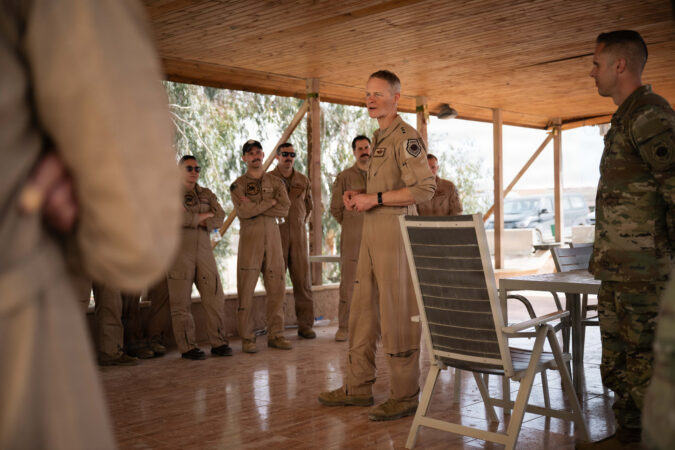
General France further challenged the CAOC to develop plans that offered flexibility for mission commanders without burdening them with the entirety of the planning process. He articulated the “pretty tight gap” involved: insufficient flexibility leaves a mission commander without a viable plan or adequate time for preparation, while excessive pre-planning can “paint him into a box,” preventing necessary adjustments to routes or timing. He acknowledged receiving feedback from both extremes of this planning spectrum.
The Middle East, marked by frequent confrontations with Iran and its proxy militias, remains the most “kinetic” – meaning active with military operations – of all U.S. military theaters. In this dynamic environment, fostering strong personal relationships with partner forces is crucial for effective coordination. However, the U.S. military’s continuous and rapid rotation of staff and leaders through these assignments poses a significant hurdle. Commanders of U.S. Central Command’s Air Forces (CFACC) typically serve two-year rotations, with most staff rotating in and out of roles every six to twelve months.
General France argued that this rapid turnover should be re-evaluated. While the intention is often to bring “fresh eyes on the problem and new blood,” he contended that it often has the “opposite effect.” Personnel arriving in the theater often observe established procedures and, within their limited tenure, may be reluctant to initiate changes, fearing disruption or a lack of time to fully understand and implement new approaches. He described his unsuccessful efforts to secure “permanent party manpower” to address this issue, indicating a systemic challenge within the staffing model.
Despite these institutional challenges, General France lauded the performance of the Airmen serving under his command. He emphasized the “tenacity, innovation, and courage of Airmen serving in the arena,” asserting that “warfare is a human endeavor, and AFCENT Airmen rose to the occasion—and were the secret weapon needed to win.” Their dedication and adaptability, he concluded, were instrumental in meeting the evolving demands of the operational environment.
Why This Matters
The strategic shift articulated by Lt. Gen. Derek France holds significant implications for global security and U.S. military posture. Firstly, it highlights the escalating tensions in the Middle East, particularly concerning Iran’s growing military capabilities and willingness to employ them, as evidenced by the thousands of missiles and drones launched. The Strait of Hormuz, a vital chokepoint for global oil transit, is directly impacted by these actions, threatening international trade and potentially sparking broader regional conflict. This situation demands constant vigilance and adaptation from international forces operating in the area.
Secondly, this report underscores a fundamental evolution in U.S. military doctrine. For two decades, U.S. forces primarily focused on asymmetrical warfare against non-state terrorist organizations. The pivot towards preparing for large-scale, conventional or hybrid conflict with a state actor like Iran necessitates a re-evaluation of training, equipment, intelligence gathering, and command structures. This shift impacts defense budgets, procurement strategies, and the skills prioritized for military personnel, potentially influencing U.S. defense policy globally.
Thirdly, the challenges of personnel rotation and maintaining institutional knowledge within critical command structures like AFCENT reveal a systemic issue that could affect military effectiveness in highly kinetic environments. Rapid turnover can hinder the development of long-term strategies, weaken established relationships with partner nations, and slow the adoption of innovative solutions. Addressing this requires a deeper look into human resource policies within the military, aiming for a balance between fresh perspectives and sustained expertise. Ultimately, understanding these operational adjustments and challenges is crucial for comprehending the complex geopolitical landscape and the future direction of military preparedness.