
Key Takeaways:
- Energy Market Volatility Persists: While the ceasefire provides temporary relief, the ongoing dispute over the Strait of Hormuz and potential Iranian tolling fees means underlying supply disruption risks remain high, keeping a geopolitical premium baked into crude prices.
- Fragile Geopolitical Risk Premium: Initial market sentiment may see a slight unwinding of safe-haven flows and a modest uplift in equities, but deep-seated distrust and regional skirmishes signal that long-term investment in the Middle East will continue to factor in significant geopolitical uncertainty.
- Sanctions Relief Talks: Discussions around sanctions relief and the recovery of enriched uranium signal a potential path for Iranian oil to re-enter global markets. This prospect could influence crude price ceilings, though the protracted nature of such negotiations suggests sustained market uncertainty.
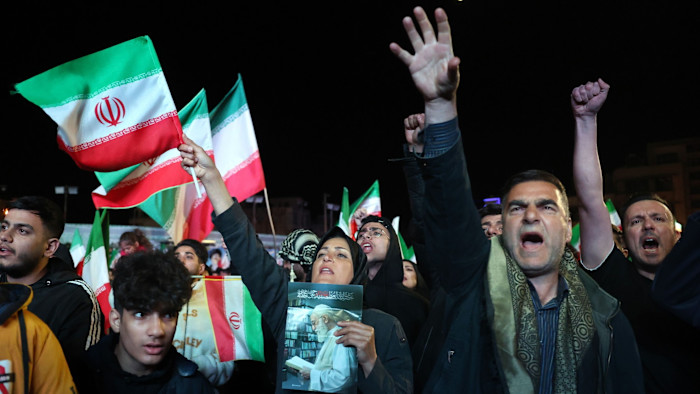
With a single Truth Social post, US President Donald Trump announced a halt to his war against Iran just as it was on the brink of a perilous escalation, sending ripples of cautious optimism through global financial markets. The Islamic regime, predictably, claimed the US had “surrendered to the Iranian nation’s determination,” but also agreed to a two-week ceasefire. This pause, however fragile, offers a critical window for market recalibration after weeks of intense volatility.
Trump’s war of choice was a reckless gamble from the start, lacking coherent goals or a day-after plan, and its economic ramifications were immediate and severe. After more than five weeks of conflict, which spread across the Middle East, cost thousands of — mostly Iranian — lives, global energy markets had been violently roiled. Brent crude prices surged by over 20% in the initial weeks, breaching the $90 per barrel mark, while West Texas Intermediate (WTI) followed suit, pushing US petrol prices past $4 a gallon. The threat of a full-blown global economic crisis, fueled by inflation from soaring energy costs and disrupted supply chains, hung heavy over boardrooms and central banks alike. The truce, therefore, brought a much-needed, albeit temporary, reprieve for millions of people and countless businesses.
From an economic standpoint, there were no clear winners in this conflict. The US declared military victory, and the war certainly hit hard Iran’s military and industrial infrastructure, causing substantial damage to its oil production and refining capabilities. Estimates of the direct economic cost to Iran ran into billions of dollars, exacerbating its already strained fiscal situation under existing sanctions. However, Iran also emerged with the Islamic regime still in place — perhaps even more radical — and with new, albeit contested, leverage in its control over the strategic Strait of Hormuz, a choke point for roughly one-fifth of the world’s daily oil consumption. Trump may muse about a change of regime, but Iran’s new leader is the son of Ali Khamenei, the supreme leader assassinated on the first day of the war, suggesting continuity rather than capitulation.
The easing of anxieties in the Middle East must be tempered with caution, as financial analysts universally agree: this is a fragile ceasefire between two foes deeply distrustful of each other after decades of hostility. There is a long way to go between a ceasefire and a permanent end to the war, meaning the geopolitical risk premium in oil and other commodities is unlikely to dissipate entirely. Indeed, Iranian attacks were reported across the Gulf on Wednesday, potentially targeting commercial shipping or energy infrastructure, while Israel launched massive air strikes across Lebanon and the Iran-backed Hizbollah. Israel insisted Lebanon was not included in the ceasefire, a stance that immediately complicated the negotiation landscape. Pakistan, the mediator, disagreed, and Iran warned that agreeing to reopen the Strait of Hormuz, crucial for global energy flows, was contingent on Lebanon’s inclusion. This immediate divergence highlights the precariousness of the current pause and the enduring threat of regional contagion that could send oil prices soaring once more.
One crucial test for market stability will be whether all parties can agree on Lebanon’s status, and more importantly, whether Iran allows the free movement of shipping through the Strait of Hormuz as the ceasefire deal stipulates. As US petrol prices soared past $4 a gallon, reopening this vital waterway became Trump’s main objective after the massive US-Israeli military onslaught failed to dislodge the regime or force it to capitulate. However, Iran has signalled it will continue seeking a tolling fee for passage – a red line for most of the US’s Gulf allies, including Saudi Arabia and the UAE, who depend heavily on the waterway for their oil exports and imports, and for global shipping companies whose profit margins would be directly impacted. Any sustained imposition of such a fee would be passed onto consumers globally, reigniting inflationary pressures and potentially prompting alternative, more costly, shipping routes or further strategic reserve releases.
Talks on a negotiated settlement will also be fraught, with market participants closely monitoring any signs of progress or breakdown. Trump described a 10-point plan presented by Iran as a “workable basis” for negotiations. He also stated he was “talking” sanctions relief with Iran and discussing how his administration would work with the regime to recover highly enriched uranium, buried beneath the rubble of nuclear facilities the US bombed last June. The prospect of sanctions relief, even partial, could significantly impact global oil markets by potentially reintroducing Iranian crude supply, which has been largely constrained for years. Analysts suggest a full return of Iranian barrels could add 1-1.5 million barrels per day to global supply, a factor that could cap future oil price increases.
But it is one thing to talk up the prospect of an agreement and another to secure one that both sides accept and that provides lasting market stability. For a start, it is still unclear whether he and Iran are talking about the same 10-point plan. Trump also likes quick wins, a characteristic that often clashes with the slow, meticulous pace of international diplomacy. If negotiations are to include what remains of Iran’s nuclear programme, the Iranians have far more experience and expertise in such protracted discussions and are known to haggle for years, ensuring market uncertainty persists. This extended timeline would likely maintain a baseline level of geopolitical risk premium in energy prices and deter significant long-term foreign direct investment into the region.
Trump’s hubris and his underestimation of his enemy help explain why he launched the war in the first place, disregarding warnings from Washington’s Arab allies. These allies had accurately predicted that an Iranian regime facing an existential battle would hit out at energy facilities in the Gulf to raise the costs for its foes, and would hold shipping hostage through the Strait of Hormuz – tactics that directly impact global commerce and energy security. The risk for them now, and for global markets, is that the ceasefire will not lead to a comprehensive US-Iran deal but will be indefinitely prolonged, punctuated by periodic flare-ups. While preferable to all-out war, such a scenario would not be peace so much as a permanent state of instability, making long-term planning and investment in the region exceptionally challenging and maintaining a floor under energy prices due to persistent supply concerns.
Market Impact:
The immediate market reaction to the ceasefire announcement saw a modest dip in crude oil prices, as the most acute fear of a broader regional conflict momentarily subsided. Equities, particularly those sensitive to energy costs and geopolitical stability, experienced a slight uptick, while safe-haven assets like gold and US Treasuries saw some unwinding of their recent gains. However, this relief is likely to be fleeting and conditional. The fundamental issues – the Strait of Hormuz’s status, the potential for Iranian tolling fees, and the unresolved nuclear question – ensure that the geopolitical risk premium will remain embedded in energy prices. Shipping insurance rates for vessels operating in the Gulf may see a slight reduction but will remain elevated compared to pre-conflict levels. Furthermore, the protracted nature of sanctions relief talks, coupled with the ongoing regional skirmishes (e.g., in Lebanon), means that foreign direct investment into the Middle East will continue to face significant headwinds, favoring short-term, opportunistic plays over long-term strategic commitments. Global inflation forecasts will continue to factor in the potential for energy price spikes, keeping central banks on alert regarding monetary policy adjustments.