

California AG Rob Bonta leads a push to block a potential merger between Paramount and Warner Bros. Discovery. Charlie Gasparino analyzes the regulatory battle, while actor Mark Ruffalo urges officials to stop the deal.
**Key Takeaways:**
1. **Mounting Costs & Regulatory Burden:** The entertainment industry, including major studios like Paramount Global, is increasingly scrutinizing the high operational costs and stringent regulatory environment in California, prompting considerations of relocation to states offering more favorable tax incentives and business policies.
2. **Strategic Merger & Antitrust Scrutiny:** The proposed merger between Paramount and Warner Bros. Discovery faces significant antitrust pushback, forcing both entities to explore alternative strategies, including geographic diversification, to enhance operational efficiency and unlock shareholder value amidst a challenging M&A landscape.
3. **Shifting Production Economics:** Technological advancements (e.g., virtual production stages) and the growing allure of competitive state incentives are fundamentally altering the traditional geographic model of Hollywood, ushering in a new era where production hubs are chosen based on financial viability rather than historical precedent.
Start spreadin’ the news … they’re leavin’ today. Wait, that’s about New York.
And maybe they’re not leaving. Paramount Global, one of Hollywood’s iconic “Big Five” studios, has been reportedly threatening to leave Los Angeles and California for a few months now. This isn’t just a symbolic move; it’s a strategic calculation with significant market implications. Discussions appear to be ongoing within the studio,FOX Business recently reported, as executives weigh the financial benefits against the historical ties.
The backdrop to this potential exodus is a complex corporate dance. Paramount Global and Warner Bros. Discovery (WBD) have been exploring a potential merger, a move that would reshape the media landscape but has faced considerable pushback from state and local authorities, most notably California’s Attorney General Rob Bonta, on antitrust grounds. This regulatory scrutiny adds another layer of complexity and cost to an already challenging M&A environment.
In the midst of this merger saga and regulatory pressure, Paramount is reportedly looking at other options, playing the field, flirting with Austin, Texas, and looking for office space in Nashville, Tennessee. These explorations aren’t mere posturing; they reflect a sober assessment of cost-benefit analyses and the pursuit of operational efficiencies that could bolster shareholder value.
PARAMOUNT MUM, BUT LA OFFICIALS ON NOTICE AS RUMORS OF MOVE FROM CALIFORNIA TO NASHVILLE SWIRL
Paramount and Warner Bros. have been trying to merge their operations, and they have faced pushback from state and local authorities in California.(Mario Tama/Getty Images)
It’s not an idle threat. The entertainment industry has already seen a steady trickle of productions and talent leaving the Golden State. Long-running talent show “American Idol” has already made the move. The ABC revival announced recently that it’s ditching Tinsel Town for Atlanta. This isn’t just about changing its most iconic line, “You’re going to Hollywood!” It’s fundamentally about changing the tax situation and production incentives for everyone involved, from the network to the crew members.
“You’re going to Atlanta!” doesn’t have the ring that the former line had, but give it time. The financial gains often outweigh the nostalgic resonance.
PARAMOUNT’S CALIFORNIA FUTURE IN DOUBT AMID ESCALATING LEGAL FIGHT
Star after star has left Hollywood over the past few years, signaling a broader trend of individual wealth management aligning with more fiscally conservative states. This is by no means an exhaustive list, but “American Idol” alum and first winner Kelly Clarkson left Hollywood and took her daytime talk show with her. Jason Eisenberg left for Indiana.
Glenn Powell (Texas), Harrison Ford (Montana), Matthew McConaughey (Texas), Ty Burrell (Utah), Jessica Biel and Justin Timberlake (Tennessee and Montana) andDean Cain (Nevada)are just a sample of the stars who’ve decided California taxes and policies aren’t worth the hassle. Their personal balance sheets are clearly benefiting from lower state income taxes and a reduced cost of living, which for high-net-worth individuals, can translate to millions in savings annually.
TV’s Superman, Dean Cain, fired powerful parting shots at what he called the “land of ridiculousness” on his way out, articulating the sentiment shared by many departing residents and businesses.
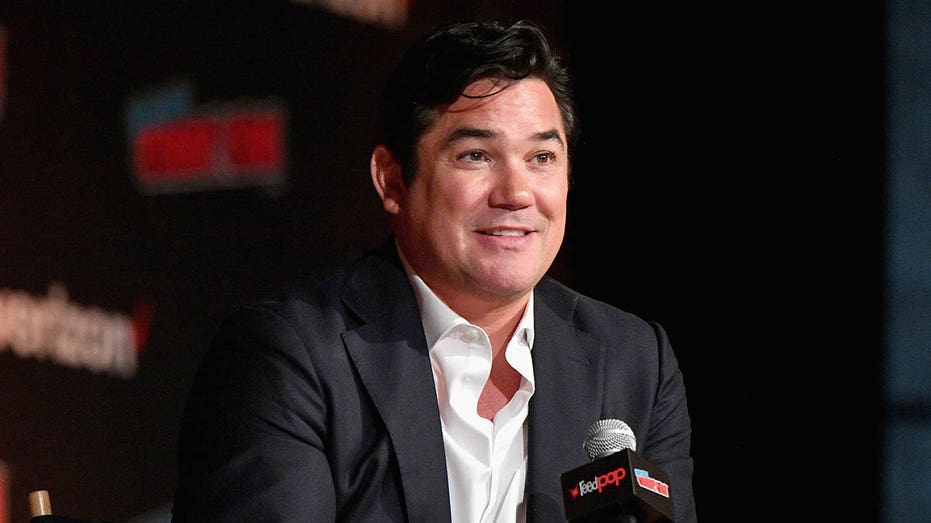
Dean Cain left California for neighboring Nevada.(Dia Dipasupil/Getty Images for New York Comic Con)
“The policies are just terrible. The fiscal policies, the soft-on-crime policies, the homelessness policies,” Cain said in June 2023. “The things that our leaders in California have been doing have driven out anybody who can really afford to get out. People are flocking out of there in droves.” These sentiments, while politically charged, directly impact the economic viability and appeal of a state for both individuals and corporations.
Up to now, it’s mostly been individual stars and specific productions leaving Hollywood. Paramount Global leaving would change the story entirely, sending a seismic shock through the industry. Double that if the Warner Bros. Discovery merger goes through, potentially creating a formidable competitor that has geographically diversified its operations. Hollywood’s Big Five — Disney, Universal, Warner, Sony, and Paramount — would be reduced to either four or three depending on how things shake out. Either way, it’s a significant blow to what is ostensibly the world’s entertainment production capital. For now.
There is a clear pattern in most of the stars’ moves that would be replicated if Paramount moves to either of its most rumored destinations — Tennessee or Texas. They’re red states, characterized by lower taxation and lighter regulatory burdens. These states proactively offer robust tax incentives and production rebates designed to attract high-profile industries and the associated job creation and economic activity. This competition among states for film and TV production is a high-stakes game, and California, despite its legacy, appears to be losing ground.

The Nashville skyline with Broadway at sunset(iStock)
I SAW THE MOVIE THAT WARNER TRIED TO DELETE: ‘COYOTE VS. ACME’
Texas already has a burgeoning tech sector (“Silicon Prairie”) and a growing financial presence (“Y’all Street”), and has been actively chopping away at its high property taxes. Florida boasts attractive beaches, sunshine, and a sound taxation policy with no state income tax. Georgia and Tennessee have willing workforces, lower operating costs, and leadership hungry to bring in high-profile industries with substantial economic multipliers. While Georgia has politically gone purple, its competitive production incentives continue to make California green with envy, drawing billions in production spending annually.
“Go West young man!” drove the ambitious toward California in the Gold Rush days, but that mantra means far less in the century of Zoom, AI, and easy mobility. The Volume, the revolutionary digital stage used to shoot “The Mandalorian” TV series, means California’s weather and physical locations matter a whole lot less. If studios and talent can’t get their legislatures to lower taxes and ease regulatory burdens, they’ll simply find a state that will. This technological shift, combined with economic incentives, empowers companies to decouple production from traditional geographic constraints, optimizing their balance sheets.
CLICK HERE TO GET FOX BUSINESS ON THE GO
California’s current tax collectors would just confiscate most of the gold anyway, as the saying goes. The cumulative effect of high corporate taxes, personal income taxes for talent, property taxes, stringent labor laws, and the soaring cost of living for employees makes California an increasingly expensive place to do business. For publicly traded companies like Paramount Global, these cost considerations directly impact profitability and, consequently, shareholder returns.
Paramount reportedly has yet to decide whether it’s moving. It may be able to wrangle some concessions out of the state and city and give them a reprieve. But the proverbial writing is on the wall, and it’s increasingly being written hundreds of miles away from Hollywood, in states actively courting the entertainment industry with more favorable economic terms. This isn’t just about a studio; it’s about the broader market adapting to new economic realities.
**Market Impact:**
A potential relocation by Paramount Global, especially if coupled with a successful merger with Warner Bros. Discovery, would send a strong signal to investors about the evolving economics of content production. For Paramount (and potentially WBD), such a move could be perceived positively by the market as a strategic cost-cutting measure, potentially boosting operational margins and shareholder value over the long term, despite initial relocation costs. Conversely, it would represent a significant economic blow to California, diminishing its tax base, impacting local real estate, and reducing employment in ancillary industries supporting film and TV production. This trend also intensifies the competitive landscape among states vying for entertainment industry investment, likely driving further development of incentive programs. For the broader entertainment sector, it signifies a continued decentralization of production, forcing studios to re-evaluate their geographic footprints and investment strategies in pursuit of greater efficiency and profitability in a highly competitive global market.