
This piece represents an online rendition of our Inside Politics bulletin. Those subscribed are able to registerherefor the bulletin to be sent on every weekday. Should you not be a subscriber, you may still obtain the bulletin without charge for a month
A pleasant morning to you. Rachel Reeves has unveiled the general framework of what the administration intends to do to assist households as energy expenses escalate. My reflections on this matter, and on the limitations confronting the government, are shared in today’s dispatch.
Inside Politics is compiled by Georgina Quach. Connect withStephen on BlueskyandGeorgina on Bluesky. Access the prior issue of the newsletter through this link. Your confidential insights, thoughts, and feedback can be forwarded to[email protected]
With Reluctance
The Labour administration will not enact a universal aid package for electricity bills, Rachel Reeves has declared. This is a positive development: as I observed on Monday, the global energy supply has indeed diminished owing to the conflict in Iran, and this situation will become more severe and arduous as the hostilities persist.
The government’s objective should be to avert extreme poverty and, whenever feasible, to safeguard enterprises from insolvency. However, what it must avoid is any action resembling that taken by the Liz Truss government. Her “energy price guarantee” stood among the priciest energy support schemes in Europe. Yet, it achieved absolutely nothing to foster or promote our resilience against future energy crises.
Furthermore, it must be unequivocally stated that, consequent to the third Gulf war, the entire world possesses less energy. Essentially, two out of every ten power outlets on Earth no longer have the capacity to function. And for each cent of assistance that affluent nations expend to shield their own households and businesses from perceiving the consequent price surges, a light extinguishes somewhere beyond the affluent world.
I do not anticipate the government articulating that particular argument. Nevertheless, it is correct to refrain from introducing a measure that, in exchange for my feeling utterly no compulsion to conserve energy, leads to the discontinuance of vital provisions in developing nations due to an insufficiency of power.
It is also beneficial that the government has disclosed the fundamental principle of its forthcoming actions promptly, as this diminishes the likelihood of strong momentum gathering within the Labour party in favour of an all-encompassing initiative.
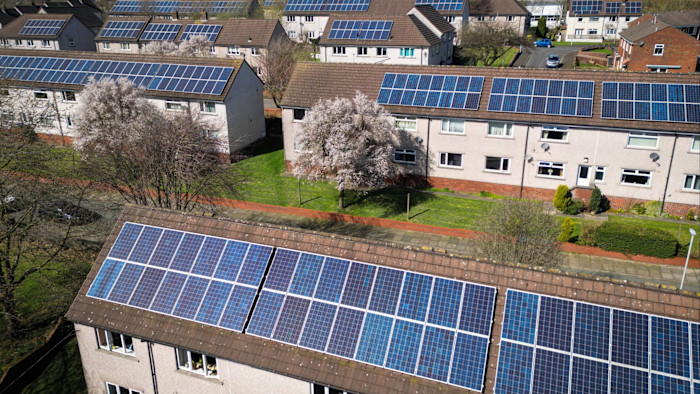
I find it regrettable that Reeves implied yesterday that the primary justification for this course of action was her “unyielding fiscal regulations”. Implementing a comprehensive subsidy would have been ill-advised even if Labour had inherited less debt, or if the UK were not incurring higher debt interest than any of its counterparts. While I acknowledge repeating this, it bears reiterating: every measure the government undertakes to safeguard businesses and homes ought to align with its strategies to facilitate our collective ability to acquire plug-in solar solutions and to expedite the construction of renewable energy infrastructure.

However, where Britain’s financial constraints genuinely impact, is in determining the character of the government’s ultimate aid package. In an ideal scenario, where the UK commanded the lowest borrowing expenses globally, what would be our approach? We would employ generous monetary transfers to bolster households and permit utility costs to increase. We would institute a particular form of incentive program to encourage more individuals to install solar panels and storage units. We would recognize the correctness of our policy blend if it prompted people to erect sheds in their gardens exclusively and entirely to provide an additional surface for greater solar energy, which they could then channel into batteries or vend to the grid.
This course of action is unattainable because it would contribute to inflation, and the UK’s precarious public finances are highly susceptible to inflationary pressures. Consequently, a form of supplier-level subvention represents the sole viable mechanism, despite being an approach that does not confer all the advantages of providing cash directly to households, thereby empowering them to more effectively curb their energy expenditures and contribute to bolstering the UK’s energy security.
Now Attempt This
I am midway throughThe Emperor and the Elephant, a captivating historical account of the interactions between Christians and Muslims during the era of Charlemagne. I cannot commend it sufficiently, and predictably, it stands as another robust work of non-fiction from Princeton University Press, which consistently remains by far the most intriguing of the academic publishers currently.
Foremost News Today
Two individuals apprehended over incendiary attacks| Law enforcement officers have detained two men on suspicion of arson with intent to endanger lives after four ambulances belonging to a Jewish charitable organization were torched in north London.
‘Grasp the errors of the past’| Businesses are urging Rachel Reeves to reform inflation-fuelling energy policies, in a coordinated resistance to her decision to transfer responsibility for energy costs to the private sector.
Reform retracts| Nigel Farage has abandoned his party’s commitment to partially nationalize water and power companies. As recently as last summer, Farage had asserted his resolve to bring half of the struggling UK water sector into public ownership.
Preparatory year one| The population of students enrolled in foundation year programs in the UK has almost quadrupled within a decade. However, FT analysis raises queries regarding the merit of some foundation courses, as specialists advocate for universities to be more transparent about the outcomes for those who undertake them.
Signs of resurgence| Public contentment with the NHS hasincreased for the first time since 2019, yet individuals remain profoundly discontented with persistently lengthy waitsfor GP, A&E, or hospital medical attention, as reported by the Guardian. The percentage of voters in Britain expressing satisfaction with the operation of the NHS has climbed from the record low of 21 per cent observed last year to 26 per cent, according to the British Social Attitudes survey.