
Receive complimentary news and remain current
Access the Russian politics myFT Digest straight to your inbox by simply subscribing.
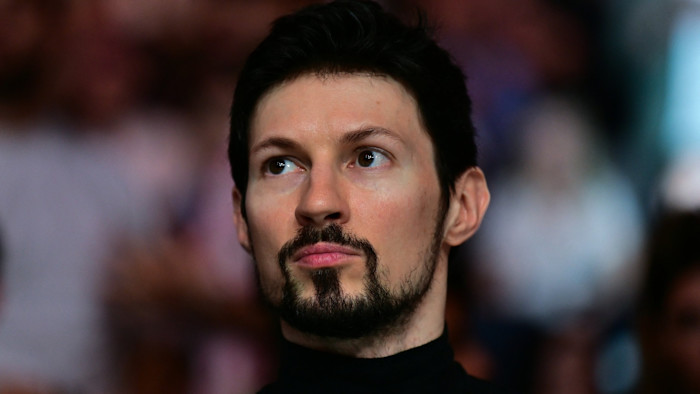
Moscow has initiated a formal inquiry into Pavel Durov, the originator of Telegram, on accusations of “facilitating terrorist operations,” a recent indicator that his challenging association with the Kremlin has dissolved.
On Tuesday, two Russian periodicals, namely the state-controlled Rossiiskaya Gazeta and the Kremlin-aligned tabloid Komsomolskaya Pravda, asserted that the messaging application had become an instrument for intelligence services in the West and Ukraine.
These reports, attributed to materials supplied by Russia’s FSB security agency, charged Telegram with enabling assaults within Russia and stated that Durov’s “actions . . . are currently undergoing a criminal examination.” Russian authorities did not immediately comment on these disclosures.
Russia has placed restrictions on Telegram’s functions, alleging its non-compliance with legal mandates and aiming to direct users towards Max, a state-managed competing messenger. These measures intensify pressure on a platform that holds significant importance in Russian public discourse.
Durov departed Russia in 2014, citing Kremlin coercion to divest his stake in VK, the nation’s largest social network, and has since presented Telegram as a privacy-focused alternative to governmental oversight. He subsequently acquired French and Emirati citizenship.
While Moscow attempted and failed to block the application in 2018, it later reached an understanding.
Durov has also encountered scrutiny in Western nations. French authorities formally placed him under investigation in 2024 concerning Telegram’s alleged failure to address criminal conduct, accusations he refutes.
The articles published on Tuesday alleged that Telegram complied with directives from Western governments while disregarding Russian demands, and claimed Ukraine had utilized the data for offensive actions against Russia.
They contended that Telegram had been employed in 13 Ukrainian attempts to assassinate high-ranking Russian military personnel, alongside an additional 33,000 “bombings, incendiary attacks on recruitment centers, and homicides” since the conflict commenced.
“Telegram has transformed into the primary instrument of NATO countries’ covert services and the ‘Kyiv regime.’ The platform has refrained from nothing — intercepting location details, vending confidential intelligence, and intimidating soldiers and their kin,” Rossiiskaya Gazeta articulated.
“Digital platforms are no longer neutral spaces. In the context of comprehensive hybrid warfare, they are evolving into strategic armaments,” it further asserted.
Neither Telegram nor Durov immediately responded to inquiries for comment.
Moscow’s actions against Telegram and its chief executive could herald substantial transformations in Russia, where the Dubai-based application serves over 105 million users monthly.
Even after Russia prohibited most Western social media platforms during the war in Ukraine, government ministries disseminate official announcements on Telegram, soldiers utilize it to coordinate operations on the front lines, and President Vladimir Putin’s spokesperson communicates with the media via the application.
Earlier this month, Russia commenced throttling Telegram’s network traffic, citing its purported refusal to store user data domestically and to censor content upon demand.
Internet censors also blocked WhatsApp and diminished access to YouTube. Last year, Russia began restricting voice and video calls on both Telegram and WhatsApp.
Following these most recent actions, Durov accused Russia of “curtailing access to Telegram to compel its populace onto a state-controlled application designed for monitoring and political censorship.”
The assaults on Telegram have already drawn critique from the Kremlin’s own adherents, including governors of Ukrainian-bordering regions who rely on it to issue warnings about incoming drone and missile attacks.
FSB director Alexander Bortnikov stated last week that Russia had previously engaged in discussions with Durov regarding Telegram and abandoned those efforts after they “yielded no positive outcome.”
Bortnikov did not specify the subject or timing of the negotiations, but accused Durov of “pursuing his own self-serving interests” and facilitating “numerous infringements of the law.”