
Key Takeaways:
- Sam’s Club is strategically redefining “value” for its members by integrating convenience – through delivery, curbside pickup, and ready-to-cook meals – as a core component alongside traditional quality and price.
- The warehouse retailer’s digital fresh food business has doubled in recent years, signaling a significant shift in consumer shopping habits and validating substantial investments in e-commerce and last-mile logistics.
- This omnichannel acceleration aligns Sam’s Club with Walmart’s broader strategy to dominate the competitive grocery market, positioning it for long-term growth and increased member loyalty amidst evolving retail landscapes.
Sam’s Club Chief Merchandising Officer Myron Frazier told FOX Business that members still want value, but increasingly want fresh food delivered, available for curbside pickup or designed to make mealtime easier.
In an increasingly competitive and dynamic retail environment, warehouse club giant Sam’s Club is recalibrating its core value proposition to meet the evolving demands of the modern consumer. Myron Frazier, Executive Vice President and Chief Merchandising Officer for Sam’s Club, emphasized to FOX Business that while the foundational pillars of “high-quality” fresh food and “great value” remain paramount, convenience has rapidly ascended to become an indispensable element of that equation. This strategic pivot reflects a broader industry trend, where retailers are forced to innovate beyond price points to capture and retain market share in the fiercely contested grocery sector, particularly amidst persistent inflationary pressures on household budgets.
Frazier articulated that Sam’s Club members, while still prioritizing quality and value, are increasingly seeking fresh food delivered directly to their homes, readily available for curbside pickup, or otherwise accessible “on their own terms.” This profound shift underscores a fundamental change in consumer behavior, accelerated by the pandemic but now firmly entrenched: time-saving solutions are no longer a luxury but a fundamental expectation. “What has changed is convenience is becoming increasingly important to the value equation,” Frazier noted, highlighting how the concept of ‘value’ itself is expanding to encompass not just monetary savings but also the intrinsic value of time saved and effort reduced for the busy shopper. In an economy where consumers are scrutinizing every dollar, the added convenience can be the decisive factor.
The imperative for grocers and warehouse retailers to invest heavily in robust delivery infrastructure, seamless curbside pickup services, and intuitive digital shopping platforms has never been clearer. This is not merely about optional enhancements; it’s about survival and growth in a landscape dominated by consumer expectations for instant gratification and frictionless transactions. The rapid expansion of e-commerce capabilities is a direct response to these demands, transforming traditional brick-and-mortar models into sophisticated omnichannel operations. This strategic evolution is critical for Sam’s Club to stay competitive against rivals like Costco, BJ’s Wholesale Club, and even traditional grocers who have significantly ramped up their digital and delivery services.
CHICK-FIL-A RULES OUT AI DRIVE-THRU ORDERING AS FAST-FOOD RIVALS EMBRACE TECHNOLOGY
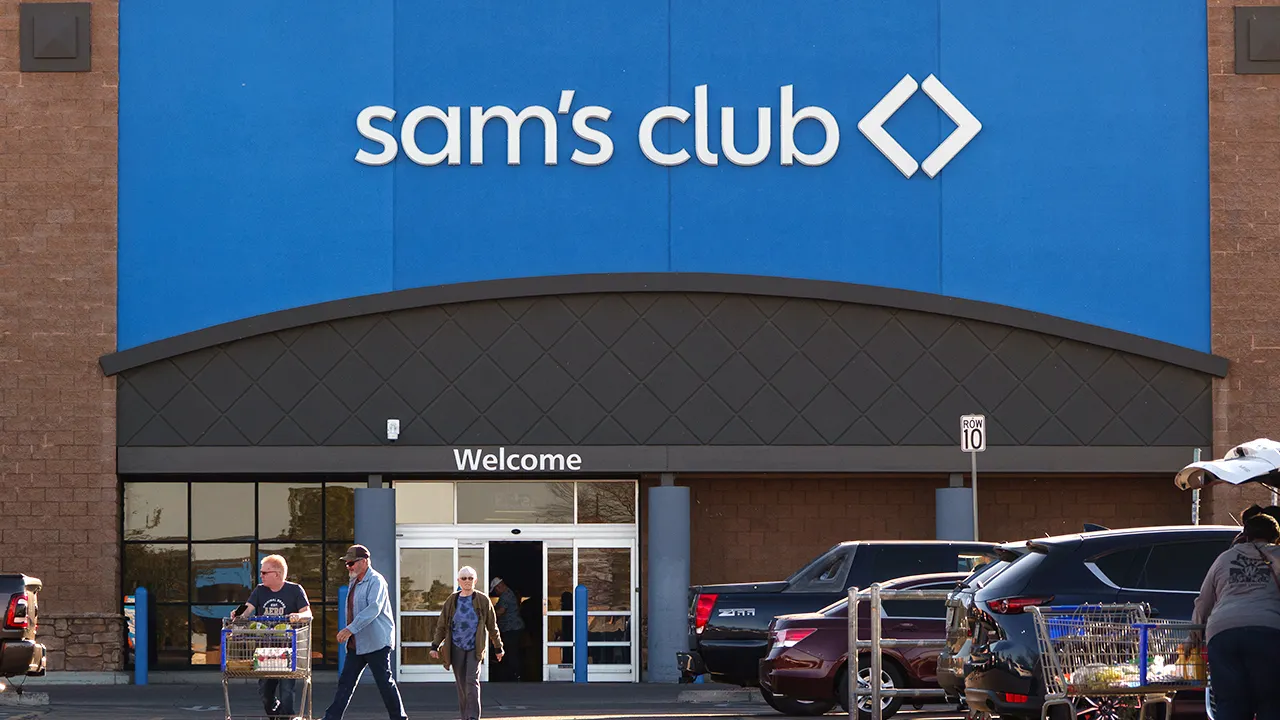
Grocery shoppers still want “high-quality” fresh food at a “great value,” but convenience is becoming an increasingly important part of that equation, Sam’s Club Chief Merchandising Officer Myron Frazier told FOX Business.(FOX Business)
Insights from McKinsey & Company’s “The State of Grocery North America 2026” report corroborate this trend, revealing that approximately 70% of consumers favor home delivery for online grocery orders, with an overwhelming majority expecting same-day or within-a-few-hours arrival. This sets an incredibly high bar for logistical efficiency and supply chain resilience, particularly for fresh perishables, where the “cold chain” must be meticulously managed to prevent spoilage. For warehouse clubs like Sam’s Club, which traditionally relied on members physically visiting massive stores for bulk purchases, this represents a significant operational overhaul. It demands substantial capital investments not only in technology platforms and delivery fleets but also in rethinking store layouts for efficient picking and packing, and sophisticated inventory management systems to maintain stringent freshness standards while minimizing waste.
In response to these evolving shopping habits and stringent consumer expectations, Sam’s Club is proactively expanding its array of ready-to-cook meals and diversifying the modalities through which members can acquire fresh food. “We’re really leaning in on this idea of offering high-quality, fresh foods in a way that’s convenient from the club to your home, and then from the stove or from the oven to the table,” Frazier explained. This strategy directly targets the modern household’s perennial challenge of meal preparation, offering solutions that bridge the gap between scratch cooking and takeout, providing speed without compromising quality or perceived value. Products like Sam’s Club’s fresh panko chicken breast, designed for quick meal assembly, and its “Marry Me Chicken” – a ready-to-cook option feeding a family of four in just about 12 minutes – exemplify this commitment to convenience-driven innovation. These offerings directly compete not just with other grocers but also with popular meal kit services like HelloFresh or Blue Apron and even fast-casual restaurants, aiming to capture a larger share of the consumer’s food budget by simplifying mealtime decisions.
POPULAR COOKIE CHAIN ABRUPTLY CLOSES ALL LOCATIONS AFTER YEARS OF RAPID EXPANSION

Sam’s Club is expanding its lineup of ready-to-cook meals while giving members more ways to shop for fresh food.(Kevin Carter/Getty Images)
Frazier elaborated on the holistic nature of this approach: “For us, it’s this combination of the Sam’s Club experience — everything from developing the item they want, curating it down so that choice is easy, and then giving them the option to get it however they want.” This encompasses traditional in-club shopping, expedited curbside pickup, and even rapid home delivery within an hour via Sam’s Club Express Delivery service, notably without price markups on fresh food products. This “no markup” policy is a crucial competitive differentiator, as many third-party delivery services or even direct grocery delivery models often embed higher prices or service fees, eroding the perceived value. By absorbing these costs, Sam’s Club aims to solidify its value proposition and encourage greater adoption of its digital services, fostering deeper loyalty and increasing the lifetime value of its members in a highly fragmented market.
The strategic emphasis on convenience extends into Sam’s Club’s future outlook for its fresh business, with digital shopping poised to play an increasingly central role. “Our digital business in fresh and [our] penetration of digital — it’s doubled in the last couple of years,” Frazier revealed, underscoring the rapid adoption and success of these initiatives. This impressive growth trajectory is not only a testament to effective strategy but also a strong signal to investors about the company’s adaptability and potential for continued expansion in a high-growth segment. Doubling digital penetration in fresh food, a notoriously complex category for e-commerce due to its perishability and quality control challenges, signifies robust operational capabilities and strong consumer trust, differentiating Sam’s Club in a crowded market.
CHILI PEPPER RECALLED AFTER VIDEO CAPTURES WOMAN’S HORRIFYING DISCOVERY INSIDE JAR

Frazier said Sam’s Club will continue leaning into convenience as it expands its fresh business, with digital shopping playing an increasingly important role.(FOX Business)
This strategy is deeply integrated with Walmart’s overarching corporate vision, as outlined in its recent earnings reports. Walmart, the parent company, has consistently prioritized making shopping faster and more convenient across its entire ecosystem, notably through initiatives like Walmart+. In its second-quarter earnings report released August 20, Walmart highlighted that Sam’s Club U.S. e-commerce sales surged by 26%, primarily fueled by sustained growth in club-fulfilled pickup and delivery services. This synergy ensures that Sam’s Club benefits from Walmart’s vast logistical network, technological investments, and strategic insights, reinforcing its position against formidable competitors such as Costco and BJ’s Wholesale Club, which are also aggressively pursuing omnichannel strategies. The battle for the grocery dollar is increasingly fought on the digital front, and Sam’s Club’s proactive investments indicate a clear intent to lead rather than follow in this critical, high-margin segment.
CLICK HERE TO GET FOX BUSINESS ON THE GO
Market Impact:
Sam’s Club’s accelerated focus on convenience, particularly in fresh food e-commerce and ready-to-cook offerings, carries significant implications for the broader retail and investment landscape. For parent company Walmart (WMT), this strategy enhances its competitive moat in the highly defensive and resilient grocery sector, a crucial segment during economic uncertainties. Increased digital penetration and member engagement in Sam’s Club are likely to bolster member retention rates, attract new, younger demographics, and potentially increase average transaction values by simplifying the shopping process. While initial investments in technology, last-mile logistics, and robust digital platforms may impact short-term margins, the long-term benefits of expanded market share, enhanced brand loyalty, and a more diversified, digitally-driven revenue stream are substantial. Competitors, from other warehouse clubs like Costco and BJ’s to traditional grocers (Kroger, Albertsons) and online-only players (Amazon Fresh, Instacart), will face intensified pressure to match or exceed Sam’s Club’s convenience offerings, potentially leading to a renewed wave of industry-wide investment in logistics, AI-driven inventory management, and personalized digital experiences. Investors will be closely watching metrics such as e-commerce sales growth, delivery fulfillment efficiency, and the impact of these convenience initiatives on overall profitability and return on investment, as these trends will dictate future valuations and market leadership in the evolving retail paradigm.