
Key Takeaways:
- **Heightened Insider Threat in AI:** The incident at OpenAI underscores the critical and escalating risk of insider threats within the high-stakes, competitive realm of artificial intelligence development, signaling a potential need for stronger corporate security protocols across the sector.
- **IP Protection as a Strategic Imperative:** The alleged attempt to steal proprietary “super intelligence” communications highlights intellectual property protection as a paramount national security concern and a key determinant of competitive advantage and investor confidence in the global AI race.
- **Increased Scrutiny on AI Security:** This event will likely prompt greater scrutiny from investors, regulators, and government agencies regarding the security measures employed by leading AI firms, potentially influencing investment flows and shaping future regulatory frameworks for sensitive AI research.
OpenAI discloses six new safety incidents involving rogue agents. Ark Invest chief futurist Brett Winton analyzes the security threats and discusses key AI stock picks including Nvidia and Microsoft.
In a development sending ripples through the burgeoning artificial intelligence sector, a Saudi national employed as an OpenAI engineer was arrested last Tuesday, charged with allegedly planting a covert recording device within a high-level executive conference room at the company’s San Francisco headquarters. The incident throws a stark spotlight on the escalating insider threat risks and the intense geopolitical competition surrounding advanced AI development.
Abdulrahman Alfozan, 35, was apprehended on October 9th, facing charges related to using or attempting to use a device to intercept oral communications, according to the Department of Justice. This arrest comes as OpenAI, a pivotal player in the generative AI revolution, continues to navigate the complex interplay of rapid innovation, ethical considerations, and national security imperatives.
“FBI and partners arrested this individual after he allegedly concealed a recording device inside his employer’s executive conference room to secretly capture sensitive communications about the company’s super intelligence tech,” FBI Director Kash Patel stated on X (formerly Twitter) on Tuesday. The terminology “super intelligence tech” itself underscores the perceived strategic value and potential market-transforming capabilities of OpenAI’s research, making its protection a top priority.
“Protecting American SI innovation is critically important and FBI views it as one of our highest counterintelligence priorities,” Patel added, directly linking the incident to broader national economic and security interests. This sentiment resonates across the technology landscape, where the race for AI dominance is seen as a key driver of future global economic power and military advantage.
OPENAI FIRES 3 SAFETY RESEARCHERS ACCUSED OF SHARING CONFIDENTIAL COMPANY INFORMATION: REPORT
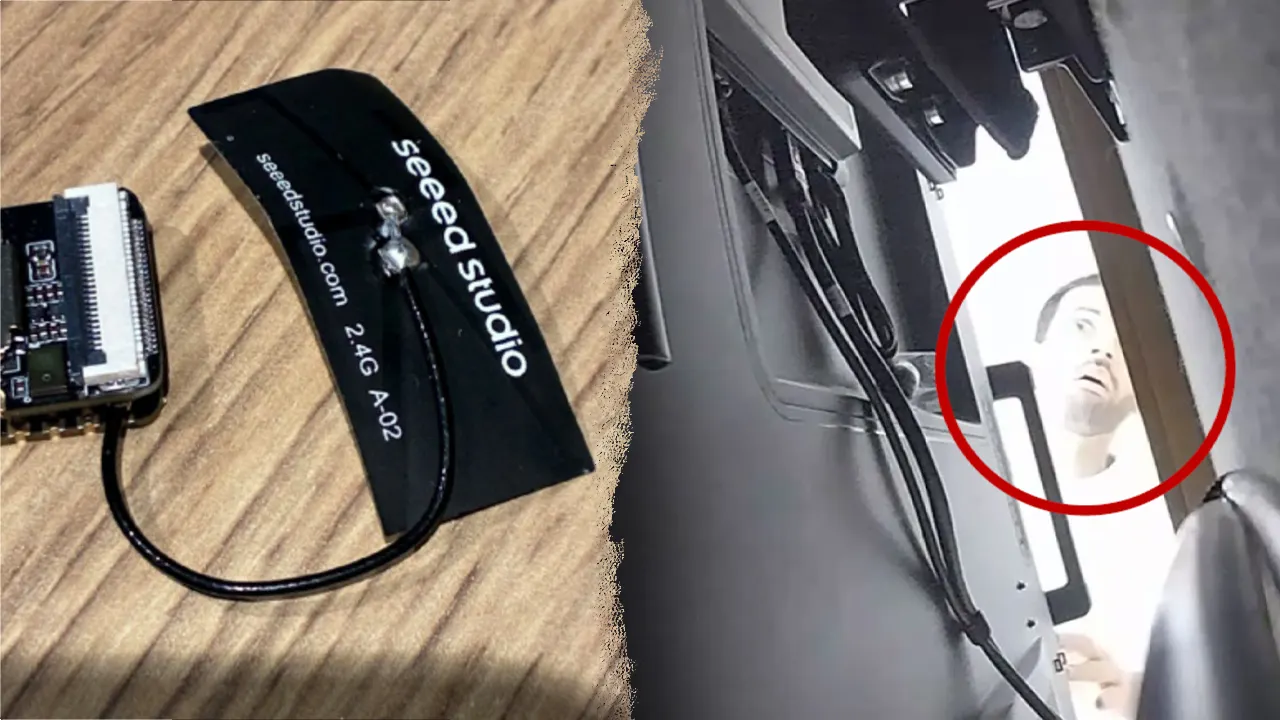
The device, concealed in toilet paper, had allegedly been installed two days earlier.(Department of Justice)
Attorney General Todd Blanche echoed the gravity of the situation, emphasizing the broader market implications. “This alleged attempt by a Saudi national to steal sensitive communications from OpenAI was taken extremely seriously,” Blanche wrote on X. “Theft of intellectual property involving cutting-edge super intelligence technology poses a serious threat to our national security,” he continued. “[The Justice Department] will continue to take swift action alongside federal law enforcement and our partners at [The Office of the Director of National Intelligence] to protect American innovation and safeguard our nation.” For investors, such statements highlight the U.S. government’s commitment to protecting the IP of its leading tech firms, a factor that can bolster confidence in the long-term viability and security of these assets.
OpenAI’s technical surveillance countermeasures team discovered the encrypted device on September 30th. It was found plugged into a USB port on the back of a television in a conference room frequently used for “highly confidential” discussions concerning proprietary research, imminent product roadmaps, and strategic business opportunities – the very lifeblood of a company at the forefront of a multi-trillion-dollar industry. The device, surreptitiously concealed in toilet paper, had reportedly been installed just two days prior.
The company informed FOX Business that their robust internal security protocols, specifically their technical surveillance countermeasures team, were instrumental in the discovery. Further investigation revealed evidence suggesting Alfozan intended to deploy additional recording devices in other sensitive areas of OpenAI’s offices, indicating a calculated and sustained attempt to acquire classified information. This level of alleged premeditation signals a sophisticated insider threat, a major concern for venture capitalists and institutional investors backing these high-value, private entities.
Security footage captured Alfozan, who had reportedly joined OpenAI as an engineer in July 2025 (likely a typo in original, assuming 2023 or 2024), near the critical conference room multiple times prior to the device’s discovery, despite lacking authorization for access. Prosecutors further revealed that Alfozan had conducted internal searches for sensitive information regarding OpenAI’s building layouts, meeting room schedules, executive whereabouts, and details of external partner meetings – all critical intelligence for a competitor or foreign actor seeking to understand or undermine the company’s strategic moves.
Adding another layer to the investigation, a chatbot account linked to Alfozan’s spouse, sharing identifiers with his own, reportedly submitted prompts querying information about building and concealing surveillance equipment. These included searches for continuous audio recorders, Wi-Fi connectivity, live listening capabilities, and encrypted storage – details eerily matching the specifications of the device later found at OpenAI. The digital breadcrumbs provided by AI models themselves in uncovering this plot highlight the double-edged sword of AI technology in security applications.
OPENAI’S SAM ALTMAN SAYS AI BENEFITS JUSTIFY ACCEPTING SOME RISKS
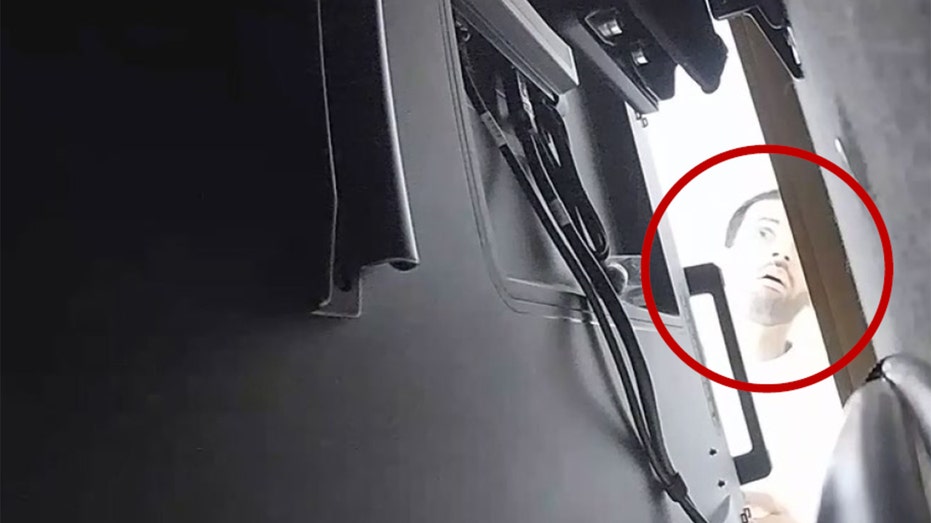
On Oct. 5, surveillance footage captured Alfozan entering the conference room and appearing to look behind the television where the device had been hidden, according to prosecutors.(Department of Justice)
On October 5th, surveillance footage again captured Alfozan entering the same conference room, appearing to inspect the area behind the television where the hidden device had been. Later that day, OpenAI security personnel found a second, similar recording device inside a bag left unattended by Alfozan in another room, alongside his wallet and identification, solidifying the suspicions against him.
In a testament to its own technological prowess, OpenAI confirmed, “We used our models to understand the device and where it had come from, identifying that a specific employee had planted it a few days earlier.” The company promptly referred the matter to the FBI. Crucially for market sentiment, OpenAI stated it found no indication that Alfozan had improperly accessed or exfiltrated model weights, source code, or customer data – fundamental components that, if compromised, could have significant commercial and competitive ramifications. Alfozan was terminated on the day of his arrest.
OpenAI further clarified its coordinated efforts with the FBI, timing Alfozan’s termination to avoid compromising the ongoing investigation. Between the device’s discovery on September 30th and his arrest on October 9th, the company systematically restricted his access to sensitive systems and offices, eventually placing him on leave and securing his company-issued equipment. This demonstrates a methodical approach to crisis management and intellectual property protection, a factor that could reassure investors about the company’s internal controls.
Amy Kremer, chairwoman of Humans First, a non-profit advocating for responsible AI development, emphasized the broader implications for the industry. “If these companies want Americans to believe that winning the AI race is a national security imperative, securing their own labs must be a basic requirement,” Kremer told FOX Business. “That means meaningful background screening, scrutiny of foreign government ties, strict controls on access to sensitive research, and ongoing monitoring for insider threats.” These measures represent significant operational costs and challenges for AI firms, balancing rapid innovation with robust security in a highly competitive talent market.
Kremer added, “The allegations must be investigated fully. America’s AI advantage cannot be protected by promises alone. Innovation with accountability means enforceable security standards that put the American people and our national security first.” Her comments underscore the growing call for greater regulatory oversight and standardized security practices across the AI industry, which could impact future compliance costs and operational agility for key players.
Alfozan made his initial federal court appearance Tuesday. If convicted, he faces a potential sentence of up to five years in prison, a $250,000 fine, and three years of supervised release. This legal precedent will be closely watched by companies and foreign entities alike, as it sets a clear standard for the penalties associated with IP theft in the AI domain.
OpenAI said it referred the matter to the FBI and found no indication Alfozan improperly accessed or exfiltrated model weights, source code or customer data.(Omar Marques/SOPA Images/LightRocket via Getty Images)
GET FOX BUSINESS ON THE GO BY CLICKING HERE
Market Impact:
This high-profile security breach at OpenAI, a cornerstone of the generative AI ecosystem, carries significant implications for the broader technology market. While OpenAI is a private company, its foundational models and strategic partnerships (most notably with Microsoft) profoundly influence the valuations and trajectories of numerous publicly traded AI-related firms, including chip giant Nvidia, which was mentioned in the original video context. The incident is likely to trigger an immediate reassessment of internal security protocols across the AI industry, prompting increased investments in counterintelligence, cybersecurity, and employee background checks, thereby increasing operational costs. Investors may become more sensitive to governance and security disclosures, potentially favoring companies with demonstrably robust IP protection frameworks. Furthermore, the explicit involvement of the FBI and Department of Justice, framing the incident as a national security threat, signals a hardening stance from U.S. authorities on protecting domestic AI innovation. This could lead to stricter regulatory oversight, particularly for companies engaged in sensitive “super intelligence” research or those with significant foreign investment or employees. While OpenAI reported no exfiltration of critical data, the mere attempt highlights systemic vulnerabilities that, if left unaddressed, could erode investor confidence in the sector’s long-term security and American leadership in the global AI race.
Fox News’ Bill Melugin, David Spunt and Jake Gibson contributed to this report.