

Chicago’s $13.5 million grocery investment is under scrutiny as struggling stores raise new questions about whether taxpayer-funded initiatives can provide sustainable food access.
Key Takeaways for Investors:
- Strategic Repositioning:WK Kellogg’s accelerated move to natural colors is a pivotal strategy to align with evolving consumer demand for “clean label” products, essential for competitive edge and future market share in the mature breakfast cereal segment.
- Operational & Financial Investment:This transition necessitates significant investment in R&D, reformulation, and supply chain adjustments for potentially costlier natural ingredients, with the expectation of enhanced brand equity, premiumization opportunities, and stronger consumer loyalty.
- Competitive Differentiator & Risk Mitigation:By proactively addressing consumer preferences for simplified ingredients, WK Kellogg aims to fortify its brand against challenger brands and mitigate long-term market risks, provided the reformulated products successfully maintain taste integrity and visual appeal.
In a significant strategic maneuver reflecting the broader shifts within the consumer packaged goods (CPG) industry, WK Kellogg (NYSE: KLG) is accelerating its commitment to “clean label” ingredients. The breakfast cereal giant announced plans this week to eliminate all artificial colors from its entire cereal portfolio by the end of 2026, a full year ahead of its previously stated target. This ambitious overhaul, impacting iconic brands such as Froot Loops and Apple Jacks, underscores the growing imperative for food manufacturers to adapt to evolving consumer preferences for natural, transparent ingredient lists, particularly in categories targeting families and children.
This initiative by WK Kellogg, a standalone company since its spin-off from Kellogg Co. in late 2023, is more than just a product tweak; it’s a direct response to a powerful market trend. Consumers, increasingly health-conscious and scrutinizing ingredient labels, are driving a premiumization trend towards products perceived as healthier or more “natural.” This demographic shift, particularly among millennial parents and Gen Z consumers, places immense pressure on legacy brands to innovate or risk losing market share to agile disruptors or private-label alternatives that have often led the charge in ingredient simplification.
Kellogg’s Froot Loops and Apple Jacks will soon be made without artificial colors as the company moves to eliminate the additives from its entire cereal portfolio by the end of the year.
WK Kellogg announced this week that it is accelerating its transition to naturally sourced colors by a full year, with production of the reformulated cereals expected to begin later this year and products reaching retailers before the end of 2026.
Kellogg said consumers can expect the same taste and familiar colors, which will instead come from natural sources including fruit and vegetable juices and other plant-based ingredients.
But one question may be top of mind for Froot Loops fans: Will the cereal’s iconic rainbow look the same?
STARBUCKS ANNOUNCES PUMPKIN SPICE LATTE RETURN DATE
Kellogg’s Froot Loops will be made without artificial colors by the end of 2026 as WK Kellogg transitions its cereal portfolio to naturally sourced colors.(Daniel Acker/Bloomberg via Getty Images / Getty Images)
Kellogg says it will.
The company intends to maintain the familiar red, orange, yellow, green, purple and blue colors using naturally sourced alternatives. This assurance is critical for investor confidence, as any compromise on the sensory experience—taste or visual appeal—could jeopardize consumer acceptance and nullify the strategic benefits. The success of this transition hinges on WK Kellogg’s R&D capabilities to replicate the vivid, appealing colors consumers associate with Froot Loops, a key differentiator in a crowded category.
“More and more consumers are looking for foods made with simple, recognizable ingredients and we are proud to meet those expectations, even sooner than planned,” WK Kellogg Chief Growth Officer Doug VanDeVelde said in a statement. VanDeVelde’s emphasis on speed reflects the urgency in the market to capture and retain the health-conscious consumer segment. The acceleration of this timeline suggests either highly successful initial R&D efforts or intensified competitive pressures pushing the company to move faster. This proactive stance could provide WK Kellogg a valuable marketing advantage, allowing it to highlight its commitment to ingredient transparency ahead of some competitors.
VanDeVelde said the company conducted extensive consumer testing to ensure the new recipes maintained the taste and colorful appearance consumers expect.
CHIPOTLE CEO SAYS CHAIN IS MAKING ‘MEANINGFUL PROGRESS’ ON A MAJOR CUSTOMER CONCERN

WK Kellogg is accelerating plans to eliminate artificial colors from its entire cereal portfolio by the end of 2026.(Brandon Bell/Getty Images)
“It wasn’t easy but we identified natural solutions for every color and we’re confident families will love the updated recipes and simplified ingredients without compromising on quality or taste,” he said. This statement highlights the significant operational and financial investment required for such a reformulation. Sourcing natural colorants, often derived from fruits, vegetables, and other botanicals, can be more complex and costly than synthetic alternatives. This could impact gross margins in the short term, but the expectation is that improved brand perception and potential for premium pricing will offset these costs over time. Furthermore, managing the supply chain for these natural ingredients, ensuring consistency and availability at scale, presents its own set of logistical challenges.
WK Kellogg also said it is ahead of schedule in removing the preservative BHT from the small amount of cereal packaging that still contains it, although the company did not provide a specific timeline. The concurrent removal of BHT further reinforces WK Kellogg’s “clean label” strategy, addressing another common consumer concern regarding food additives. This dual-pronged approach signals a holistic commitment to ingredient transparency across its product lines, enhancing the company’s environmental, social, and governance (ESG) profile, which is increasingly important for institutional investors.
The transition away from artificial colors is already underway. The company said it has reformulated foods served in schools to eliminate artificial colors and stopped launching new products containing artificial colors beginning in January. This phased approach allows WK Kellogg to refine its processes and gather early feedback, minimizing disruption to its core retail business. It also demonstrates a consistent, long-term vision for product innovation anchored in consumer wellness trends.
GET FOX BUSINESS ON THE GO BY CLICKING HERE
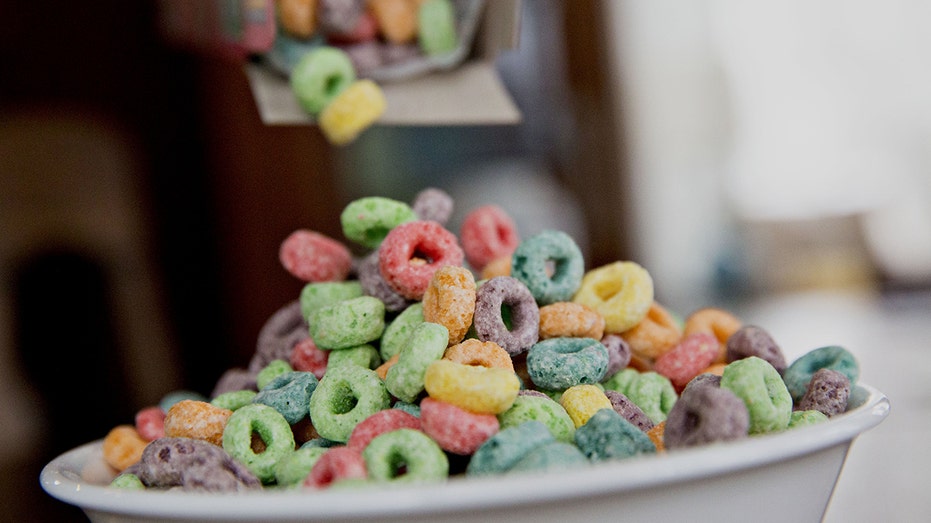
WK Kellogg says Froot Loops will maintain their familiar rainbow of colors after the company removes artificial colors from the cereal.(Daniel Acker/Bloomberg via Getty Images / Getty Images)
The accelerated timeline comes after WK Kellogg announced last August that it planned to eliminate artificial colors from its cereals by the end of 2027.
The transition is also part of the company’s “Make Eating Well Easy” initiative and its new SPOONS on-pack nutrition guide. These complementary marketing efforts are designed to clearly communicate the brand’s health and wellness focus to consumers, reinforcing the benefits of the reformulated products. For investors, these initiatives demonstrate a cohesive strategy to revitalize and grow the breakfast cereal category, which has faced headwinds from alternative breakfast options and changing dietary habits.
Market Impact:
WK Kellogg’s aggressive push into natural ingredients is likely to have multi-faceted market implications. For the company itself, a successful transition could lead to increased market share, improved brand loyalty, and potentially allow for premium pricing, bolstering revenue streams in a category often characterized by price sensitivity. The enhanced ESG credentials could also attract a broader base of sustainability-focused investors. Competitors in the breakfast cereal space, such as General Mills (NYSE: GIS) and Post Holdings (NYSE: POST), which have also made strides in clean label initiatives, will likely feel renewed pressure to accelerate their own reformulations or risk falling behind in the race for health-conscious consumers. This move could spark a broader industry trend, pushing smaller players and private labels to follow suit, driving up the demand and potentially the cost for natural colorants across the food manufacturing sector. Ultimately, the success of WK Kellogg’s strategy will serve as a bellwether for how legacy CPG brands can adapt and thrive in an increasingly health-driven and transparent consumer landscape.