
Unlock the Editor’s Digest for free
Roula Khalaf, Editor of the FT, selects her favourite stories in this weekly newsletter.
Key Takeaways:
- **Escalating Trade Tensions & Global Uncertainty:** The Trump administration’s latest broad-based tariff threats mark a significant escalation in global trade conflicts, particularly with China and key Asian manufacturing hubs, creating profound uncertainty for multinational corporations and global supply chains.
- **Broad-Based Economic Impact:** New tariffs target a wide array of economies, from major manufacturing exporters like China, Vietnam, and South Korea, to regional trade partners and even the EU, signaling a protectionist stance that risks disrupting established trade flows and potentially slowing global economic growth.
- **Market Volatility & Sector-Specific Risks:** Investors should brace for increased volatility across equity, currency, and commodity markets. Key sectors such as technology, manufacturing, agriculture, and logistics face direct impacts from disrupted supply chains, higher input costs, and shifts in consumer demand.
Global markets braced for renewed volatility on Thursday as China issued a stern warning, affirming its “reserved right” to retaliate against President Donald Trump’s latest threat of steeper tariffs. This declaration comes as the US administration doubles down on its confrontational economic policy, a move poised to intensify the global trade war and reverberate through interconnected supply chains and financial instruments.
Beijing’s response was swift after Washington announced sweeping new tariffs on Wednesday, targeting a broad swathe of goods imported from numerous trade partners. The immediate ripple effect was felt across Asian bourses, with futures markets indicating a likely downturn as investors digested the implications of another round of protectionist measures.
China and Vietnam were singled out as the hardest hit, facing significant proposed levies. However, the scope of the tariffs extended far beyond, ensnaring Japan, South Korea, India, Indonesia, Malaysia, Singapore, Taiwan, Thailand, Bangladesh, and Cambodia. Even traditional allies like the European Union and Switzerland were not spared, underscoring the indiscriminate nature of the US trade offensive.
“China urges the US to correct its wrong practices and return to the right track of resolving issues through dialogue and consultation,” a Ministry of Commerce spokesperson stated, reflecting Beijing’s official stance while also issuing a thinly veiled threat: China “reserves the right to take necessary measures and will resolutely safeguard its legitimate rights and interests.” This statement immediately put currency traders on alert, anticipating potential devaluations of the renminbi or other policy responses that could impact commodities and US bond yields as a flight to safety accelerates.
The tariffs stem from an investigation led by Jamieson Greer, Trump’s top trade negotiator, into whether the targeted countries provide unfair subsidies to their domestic companies. This rationale, often cited in previous trade disputes, is viewed by many international observers as a pretext for unilateral action that sidesteps established multilateral trade dispute resolution mechanisms like the World Trade Organization (WTO).
Many of the proposed levies mirror rates agreed in previous trade deals or existing retaliatory measures. China, for instance, had previously agreed to a 10 percent reciprocal tariff rate with the US, alongside an additional 10 percent levy related to fentanyl. The new proposal for a 20 percent rate could be further doubled if US officials perceive Beijing has deviated from the terms of its previous trade truce. Such an escalation would not only jeopardize the fragile trade détente struck between Trump and Chinese President Xi Jinping in South Korea last year but also inject fresh uncertainty into the earnings outlooks of major multinational corporations reliant on cross-border trade.
The commerce ministry spokesperson vehemently criticized Greer’s “investigation” as “a typical act of unilateralism that severely disrupts the international economic order and seriously violates WTO rules.” This challenge highlights the diminishing role of the WTO in arbitrating disputes, a trend that could lead to a more fragmented and less predictable global trading environment.
Further exacerbating tensions, Washington last week moved to close a loophole that allowed Chinese companies to remotely access restricted advanced semiconductors in overseas data centers. Analysts widely believe this technology-focused restriction could provoke a strong response from China, possibly involving its own export controls on critical materials or an expansion of its “unreliable entity list,” impacting US tech giants like Apple, Qualcomm, and Nvidia.
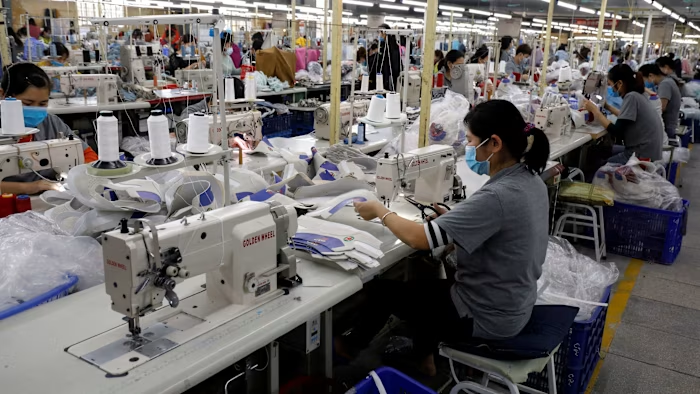
Beyond China, Vietnam has been threatened with a 20 percent levy, with an additional 15 percent if it fails to strike a new trade agreement with the US. Vietnam’s Ministry of Industry and Trade swiftly disputed Greer’s findings, announcing it would submit “counter-arguments to the preliminary conclusions and inaccurate opinions and allegations from relevant parties.” As a key manufacturing hub, particularly for electronics and textiles, tariffs on Vietnam could force a re-evaluation of supply chain diversification strategies for companies seeking alternatives to China, potentially leading to increased costs or delayed production.
Singapore’s trade ministry also voiced strong disagreement with Washington’s rationale for introducing a 20 percent tariff on goods from the city-state, which could be adjusted to 10 percent if a reciprocal trade agreement is reached. Singapore argued that the decision, based on its global trade surplus, failed to consider the unique nature of its outward-facing, market-driven economy and its role as a global transhipment hub. The ministry pointed out that the US has actually enjoyed a trade surplus with Singapore for the past two decades, reaching $33 billion last year, suggesting the US rationale is flawed and politically motivated.
Malaysia’s deputy finance minister Liew Chin Tong characterized the 18 percent tariff on his country as a consequence of global economies’ heavy reliance on the US as the “consumer of last resort.” This perspective underscores the vulnerability of export-oriented economies to shifts in US trade policy and the potential for a broader slowdown in global consumption if trade barriers proliferate.
South Korea, hit with 15 percent tariffs, also disputed parts of Greer’s report, particularly regarding its role as a manufacturing hub for high-end chips. This directly impacts global technology supply chains, with major players like Samsung and SK Hynix potentially facing higher export costs, which could then be passed on to global consumers or erode profit margins.
India faces a potential 25 percent tariff unless a long-delayed trade deal is struck, which would cap the levy at 17 percent. Negotiations between New Delhi and Washington have been mired in disagreements, exacerbated by Trump’s earlier imposition of extra oil-related duties on India’s purchases of Russian crude. While a framework was agreed upon in February, the new tariff threat adds pressure. Indian officials have consistently maintained that “India does not have structural excess capacity in any sector,” refuting the US’s subsidy claims and highlighting the agricultural and pharmaceutical sectors as particularly sensitive to new trade barriers.
The EU and Switzerland, though not specified in terms of individual tariff rates in the initial reporting, also being affected highlights the expansive reach of the US’s unilateral trade actions. This broad targeting signals a deep-seated protectionist agenda that threatens the stability of established global trade alliances and could invite retaliatory measures from European capitals, further complicating the global trade landscape.
Market Impact
The immediate market reaction to these escalating trade tensions is likely to be a classic “risk-off” scenario. Equity markets, particularly those with significant exposure to international trade and manufacturing (e.g., industrials, technology, consumer discretionary), are expected to experience selling pressure. Bond yields, especially US Treasuries, could fall as investors seek safe havens, while the US dollar might see initial strength against emerging market currencies due to its reserve currency status, though prolonged trade wars could eventually undermine its value. Commodity markets, particularly industrial metals and energy, face headwinds from reduced global growth forecasts and supply chain disruptions. Agricultural commodities could also see price volatility as retaliatory tariffs from affected nations target US farm exports. Companies with global manufacturing footprints will be forced to re-evaluate their supply chains, potentially leading to costly reconfigurations and inflationary pressures as businesses absorb higher input costs or pass them on to consumers. Investor sentiment will remain highly sensitive to further diplomatic exchanges and any concrete retaliatory actions, with the specter of a prolonged global trade war dimming prospects for a robust economic recovery.