
Key Takeaways:
- Technological Divergence and Geopolitical Risk:Ukraine’s rapid advancements in drone warfare are creating a significant technological gap with Russia, impacting military effectiveness and intensifying the geopolitical risk premium across energy, commodity, and defense sectors.
- Economic Strain on Russia:Sanctions, a shrinking labor pool for skilled tech roles, and an overstretched industrial base are severely limiting Russia’s capacity to innovate and scale modern defense solutions, leading to structural economic weaknesses and misallocation of capital.
- Shifting Defense Investment Paradigms:The changing face of modern warfare – prioritizing drone operators and AI over traditional manpower – signals a global shift in defense spending and R&D towards robotics, AI, and advanced connectivity, with significant implications for defense tech valuations and national economic strategies.
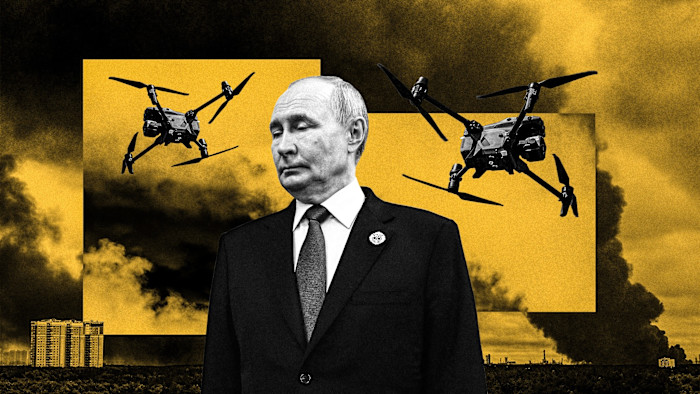
The billowing clouds of smoke over Moscow after Ukraine’s drones hit the Russian capital’s largest oil refinery this week could not have made it clearer: Kyiv’s technological advances have left Vladimir Putin’s forces playing catch-up, signaling a profound shift in military doctrine with equally profound market implications.
Since Russia’s president ordered the full-scale invasion in 2022, Moscow’s forces have relied on outmanning and outgunning Ukraine on the battlefield while using air strikes to hit cities and energy infrastructure far beyond the front line. This strategy, predicated on a ‘gunpowder empire’ model of brute force and attrition, is increasingly proving economically unsustainable and militarily inefficient against a technologically agile adversary. The repeated hits on critical infrastructure, particularly oil refineries, inject a continuous risk premium into global energy markets, forcing traders to price in supply disruptions and geopolitical instability.
But Ukrainian innovations in mid- and long-range drones have destroyed air bases, army convoys, and oil refineries hundreds of kilometres into Russian territory. These targeted strikes not only degrade Russia’s military capabilities but also impose significant economic costs, forcing the Kremlin to divert resources towards repair and enhanced defense at a time when its budget is already stretched. The economic opportunity cost for Russia is substantial, as capital and labor are channeled into war efforts rather than productive civilian sectors. Meanwhile, Moscow’s troops captured just 164 sq km of territory between February and May, against 1,151 sq km in the same period last year, according to Black Bird Group, a Finnish war monitoring group. This declining return on military investment underscores the inefficiency of Russia’s current strategy, a metric closely watched by those assessing the long-term solvency and stability of the Russian state.
“The problem for Russia is that the current tactics do not provide the tools to enable larger successes, and the Russians haven’t been able to find new tools,” said Black Bird’s co-founder Emil Kastehelmi. This technological and strategic stagnation has direct implications for Russia’s long-term economic prospects, signaling an inability to adapt to modern challenges and maintain a competitive edge, not just militarily but industrially.
Russia’s offensive usually experiences a lull in the late winter and early spring before picking up in May. But its advances have shown no sign of resuming across the frontline in June. This operational inertia, in the face of sustained Ukrainian pressure, suggests a deepening structural problem within the Russian military-industrial complex, exacerbated by Western sanctions limiting access to critical components and advanced manufacturing capabilities. This sustained pressure keeps commodity prices, particularly for oil and gas, volatile due to supply chain uncertainty and geopolitical risk.
Russian commanders still order small groups of soldiers to assault a battlefield saturated with drones, in often deadly attempts to find gaps in Ukrainian lines. This reliance on human wave tactics, while a testament to soldier sacrifice, highlights a severe deficit in technological solutions and a disregard for manpower costs, which will eventually manifest in demographic and social welfare challenges for Russia.
But Kyiv’s advances in drone warfare have turned the tables on Moscow. The rapid evolution of drone technology, from surveillance to precision strike capabilities, represents a paradigm shift in military effectiveness and capital deployment in defense. This innovation creates a compelling investment thesis for companies at the forefront of defense technology, robotics, and AI.
“Robotification has made troop numbers much less important, which has changed the fortunes for the Kyiv regime,” said a person involved in the war effort. “You need 10 or 20 thousand drone operators, not hundreds of thousands of men sitting in trenches. So the face of the war is changing.” This shift reduces the human capital requirements for warfare, potentially lowering the long-term societal and economic costs of conflict for nations that embrace technological superiority. For Russia, facing a demographic crunch and struggling to recruit, this trend exacerbates its manpower disadvantage, turning a quantitative problem into a qualitative one that its economy is ill-equipped to solve.
The drone war has also cut significantly into the Kremlin’s manpower advantage. According to Ukrainian officials, Russia has lost more men on the battlefield than it can recruit to replace them for nearly half a year. Russian budget data indicates it recruited 71,216 men in the first quarter of 2026, compared with 89,601 over the same period last year, according to Janis Kluge, a Russia expert at the German Institute for International and Security Affairs. This declining recruitment rate is a leading indicator of Russia’s deepening demographic crisis and the increasing difficulty of sustaining its military campaign without further draining its productive workforce, impacting future economic growth and social stability.
“The Russian state is either struggling to find belated answers to the enemy’s innovative new solutions or not finding them at all,” a person involved in back-channel talks said. This innovation deficit, largely a consequence of sanctions-induced isolation and a centralized, inflexible command economy, undermines Russia’s ability to compete in the high-stakes global technology race, affecting its long-term industrial competitiveness and strategic autonomy.
Where Ukraine has expanded its drone and missile strikes, isolating the Kremlin’s forces on the front lines and cutting off supply chains, Russia’s elite Rubikon drone unit has failed to master the same capabilities, the person added. This technological asymmetry directly impacts military logistics, driving up operational costs for Russia, increasing delivery times for vital supplies, and ultimately degrading combat effectiveness. The ripple effects include higher internal inflation as military spending competes with civilian needs for limited resources.
“They’re technically backward, can’t scale it up and don’t have [connectivity],” the person said. “It’s very telling. You can’t get by using the ‘gunpowder empire’ methods [of artillery and gunfire] anymore.” This assessment points to a fundamental flaw in Russia’s industrial strategy: an inability to mass-produce advanced technology efficiently, a critical hurdle for any modern economy. It also highlights the strategic importance of reliable, secure, and scalable communication networks, such as satellite internet, for modern warfare and, by extension, for commercial applications in contested zones.
Ukraine’s new, relentless drone campaign is built around strikes at a so-called “middle-range” depth of about 150km beyond the frontline. This strategy of sustained, deep strikes aims to systematically degrade Russia’s logistical and command-and-control capabilities, effectively creating a zone of economic denial that forces Russia to rethink its entire operational supply chain, with significant cost implications.
Since May, hundreds of drones of all types have flown towards the land corridor to Crimea, a crucial highway Russia’s forces use to resupply the Ukrainian peninsula Moscow annexed in 2014, as well as the troops deployed on the southern front. The targeting of this critical logistical artery aims to choke off supplies, impacting everything from fuel and ammunition to troop movements. The economic consequence is a forced increase in transportation costs, longer transit times, and heightened risk for Russian supply convoys, putting further strain on an already stretched military budget.
“At this point, we’re hitting trucks every day,” said Artem Bielienkov, a former executive in the agriculture business now serving as chief of staff in Ukraine’s 412th ‘Nemesis’ drone brigade. Russian troops wait longer for resupplies of fuel or ammunition and logistics units are resorting to smaller, less visible trucks or are travelling through rougher village paths rather than the smooth R-280 highway. “It’s not critical, but it is painful” for the Russian military, Bielienkov said. This “painful” disruption translates into reduced operational tempo, increased maintenance demands, and an overall degradation of combat readiness, further eroding Russia’s strategic advantage and increasing the risk premium associated with its military ventures.

Moscow is attempting to respond to the new challenges by launching a major campaign to attract recruits to drone units such as Rubikon. However, the efficacy of such recruitment drives is questionable given the underlying structural issues. The shift has come with its own growing pains. Russia’s defence sector is operating at close to capacity, with record-low unemployment making it more difficult to attract more skilled workers to cutting-edge technologies including drone production, according to three western intelligence officials. This tight labor market, particularly for high-tech skills, underscores the limitations of Russia’s economic model in adapting to modern industrial demands and highlights the impact of brain drain and demographic challenges.
Production has largely stagnated outside unmanned systems and long-range weapons, the areas where Russia is devoting the most resources, the officials said. While output has increased in these specific areas, “the military industry has plateaued”, one of the officials said. “They maxed out all their capacity. There’s no way to step it up without investment and that takes years.” This plateau effect is a critical macroeconomic indicator, suggesting that Russia’s war economy is operating at its theoretical maximum, with little room for further expansion without significant, long-term capital investment and technological transfer, both severely hampered by sanctions. This implies a cap on Russia’s ability to wage a prolonged, technologically sophisticated war, and a growing structural disadvantage over time.

Putin and his top officials have been reduced to insisting Russia still has the upper hand in the war while playing down the increasingly damaging effects of Ukraine’s strike campaign. This divergence between official narrative and ground reality introduces significant risk for investors attempting to gauge geopolitical stability and the future trajectory of the Russian economy. A leader making decisions based on flawed or filtered information is prone to miscalculation, amplifying uncertainty.
The Russian president spends most of his time micromanaging the war effort and receives briefings from Valery Gerasimov, his top commander, sometimes as much as twice a day, said two former senior Kremlin officials. “He thinks it’s a question of time. It might be faster or slower but he’ll get it,” one of the former senior Kremlin officials said. “Putin’s very much under the influence of the military, who are really good at stringing him along. He understands that, but he really believes them and lets them do it. If I were listening to Gerasimov’s reports three times a day from dawn until dusk, I’d perceive reality differently too.” This insular decision-making process, detached from objective economic and military realities, suggests a high risk of policy inertia and an inability to pivot strategically, further entrenching Russia’s economic and technological disadvantages. For investors, this translates into a higher uncertainty premium for Russian assets and a reduced appetite for long-term engagement.
During a national holiday earlier this month, Putin met a group of servicemen in the Kremlin who repeatedly asked him when Russia’s forces would develop an answer to Elon Musk’s Starlink satellite network, which Ukraine uses to guide attack drones on the frontline. One of the servicemen said: “The adversary is introducing swarms of strike drones controlled by AI systems. We need to surpass the adversary in this competition, not lag behind.” This desperate plea from the frontline highlights the critical technological gap and the perceived urgency for advanced solutions. Putin — to the servicemen’s apparent bewilderment — insisted Russia had already achieved technological parity, a claim that starkly contrasts with battlefield realities and the concerns of his own military. This disconnect between leadership perception and operational needs points to a systemic failure in innovation adoption and strategic planning within Russia, with profound implications for its long-term economic and geopolitical standing.
Market Impact:
The escalating drone warfare and Russia’s technological lag have several significant market implications. Firstly, persistent strikes on Russian energy infrastructure will continue to inject volatility into global oil and gas prices, maintaining a geopolitical risk premium and potentially contributing to inflationary pressures in energy-dependent economies. This could compel central banks to maintain a hawkish stance for longer. Secondly, the clear demonstration of advanced drone and AI capabilities will drive increased defense spending globally, particularly in NATO countries and allied nations, shifting investment towards defense tech, robotics, satellite communications (like Starlink), and AI firms. Valuations in these sectors could see sustained upward pressure. Conversely, Russia’s industrial and technological stagnation, exacerbated by sanctions and talent drain, signals a long-term erosion of its economic competitiveness and a heightened risk profile for any remaining foreign investment. The inability to pivot to modern warfare techniques means Russia’s military-industrial complex will continue to struggle, impacting its long-term growth potential and increasing sovereign risk. Finally, the emphasis on efficient, tech-driven warfare could influence national budgets, potentially freeing up resources from traditional manpower costs for nations that embrace this paradigm, leading to a reallocation of capital across government spending categories.
Key Takeaways:
- Russia’s persistent struggle with indigenous technological development, exemplified by the limited rollout of its Starlink alternative, highlights fundamental industrial and R&D deficiencies that could constrain long-term economic diversification and competitiveness.
- The intensified use of Soviet-era gliding bombs by Russia and Ukraine’s critical shortage of advanced anti-air systems underscores a surging global demand for sophisticated defense technologies, driving expenditure growth for defense contractors and potentially exacerbating fiscal pressures on Western allies.
- The prospect of deeper economic mobilization within Russia, coupled with Putin’s rhetoric of facing a collective NATO, signals a prolonged, high-intensity conflict, sustaining geopolitical risk premiums across energy and commodity markets, and impacting investment decisions in vulnerable regions.
The protracted conflict in Eastern Europe continues to be a crucible for geopolitical and technological shifts, with recent developments painting a complex picture of Russia’s industrial capacity, strategic intent, and the enduring economic reverberations for global markets. Despite Moscow’s efforts to project strength and self-sufficiency, cracks in its technological and industrial base are becoming increasingly apparent, raising questions about its long-term economic resilience and military-industrial complex capabilities.
President Vladimir Putin’s recent frustrations over the slow rollout of Russia’s indigenous answer to Starlink – a critical satellite internet system vital for modern battlefield communications – underscore a significant technological chasm. With only 16 units launched, a figure deemed “absolutely insufficient” by Defence Minister Andrei Belousov, Russia’s ambitious plans for strategic technological autonomy appear hampered by execution challenges, resource constraints, or a lack of advanced manufacturing expertise. From a market perspective, this highlights Russia’s continued vulnerability to Western technological sanctions and its struggle to nurture a competitive high-tech sector outside of state-directed military applications. This reliance on imported components or a delayed domestic alternative can translate into higher operational costs, reduced efficiency, and strategic disadvantages, influencing long-term investment flows into Russian tech and aerospace sectors, which remain heavily state-controlled and insulated from competitive pressures.
Putin’s broader complaint about facing the “collective might of Nato countries” and his historical analogies, while politically charged, also serve as a stark reminder of the escalating geopolitical risk premium embedded in global markets. This rhetoric signals Moscow’s readiness for a prolonged confrontation, suggesting that any quick resolution remains elusive. For investors, this translates into sustained volatility, particularly in energy markets where Russia remains a key supplier, and in commodity markets for metals and agricultural products. NATO member states, in turn, are expected to continue increasing defense spending, a trend already visible in national budgets across Europe and North America, creating a robust demand environment for defense contractors and aerospace companies. This sustained demand offers a compelling investment thesis for firms specializing in advanced weaponry, intelligence systems, and cybersecurity, as nations prioritize bolstering their defense capabilities in an increasingly unstable world.

Despite these technological hurdles, Russia retains a formidable capacity to inflict damage, a factor that continues to weigh heavily on market sentiment regarding regional stability. The relentless pounding of Ukrainian positions by Soviet-era gliding bombs (KABs), launched from Russian jets with frightening accuracy due to Ukraine’s critical shortage of anti-air systems, illustrates a shift towards high-volume, attrition-based warfare. Projections of over 75,000 guided bombs this year, reducing slightly to 60,000 in 2025, indicate a sustained, high-intensity conflict requiring immense logistical and industrial output from Russia. This also highlights a significant gap in Ukraine’s defense infrastructure and, by extension, the urgent need for advanced air defense solutions from its Western allies. Companies specializing in anti-missile systems, counter-drone technology, and precision munitions are likely to see continued robust order books. The financial implications for Ukraine are dire, as reconstruction costs mount with every destroyed building and infrastructure piece, creating a multi-decade investment challenge potentially funded by international aid and private sector participation.
The tactical advances of Russian units in areas like Kostyantynivka, grinding forward through sheer destructive force, demonstrate the efficacy of this strategy in localized sectors. While Russian advances are largely confined to Donbas, the destruction of critical infrastructure and residential areas raises concerns about future humanitarian crises and the long-term viability of these regions. Conversely, Ukraine’s ability to mount localized counter-attacks outside Donbas offers a glimmer of resilience, but also signals a prolonged grind, where neither side can deliver a decisive blow without significant external intervention or internal shifts. The ongoing large-scale drone and missile attacks on Kyiv, particularly the struggle against ballistic and hypersonic missiles, further underscores the urgent demand for sophisticated, multi-layered air defense systems. This creates a lucrative, albeit ethically complex, market for defense technology providers capable of delivering cutting-edge solutions.
According to Konrad Muzyka of Rochan Consulting, this escalated pace of attacks “could be a response” to Russia’s broader battlefield problems. His assessment that Russia is unlikely to significantly alter the conflict’s course without a new partial mobilization, short of nuclear options, holds critical implications for economic forecasting. Further mobilization in Russia would likely exacerbate existing labor shortages, particularly in critical industrial sectors, and could lead to increased state control over private enterprises, impacting profitability and investor confidence in Russia’s domestic market. The “stagnant war effort” appears to be pushing Moscow towards “raising the level of mobilising human, industrial and economic resources,” a move that could transform Russia’s economy into a more centralized, war-oriented apparatus, further alienating it from global financial systems and long-term foreign investment.
Market Impact
The confluence of these factors paints a clear picture for financial markets: sustained geopolitical uncertainty and elevated risk premiums are the new normal. Defense stocks, particularly those involved in air defense, drone technology, and precision munitions, are set to benefit from increased global military spending. Conversely, sectors heavily reliant on stable supply chains or sensitive to energy price volatility, such as manufacturing and transportation, face ongoing headwinds. Russia’s increasing economic isolation and reliance on state-directed industrial mobilization will likely accelerate capital flight and deter long-term foreign direct investment, solidifying its status as an uninvestable market for many. For global investors, the conflict necessitates a continued focus on diversification, hedging strategies against commodity price shocks, and a keen eye on defense sector opportunities, all while navigating the broader macro-economic impact of inflation driven by sustained fiscal outlays on defense across NATO allies. The long-term reconstruction needs of Ukraine, while distant, represent a future market opportunity for infrastructure, construction, and technology firms, contingent on a stable peace agreement and robust international funding mechanisms.