
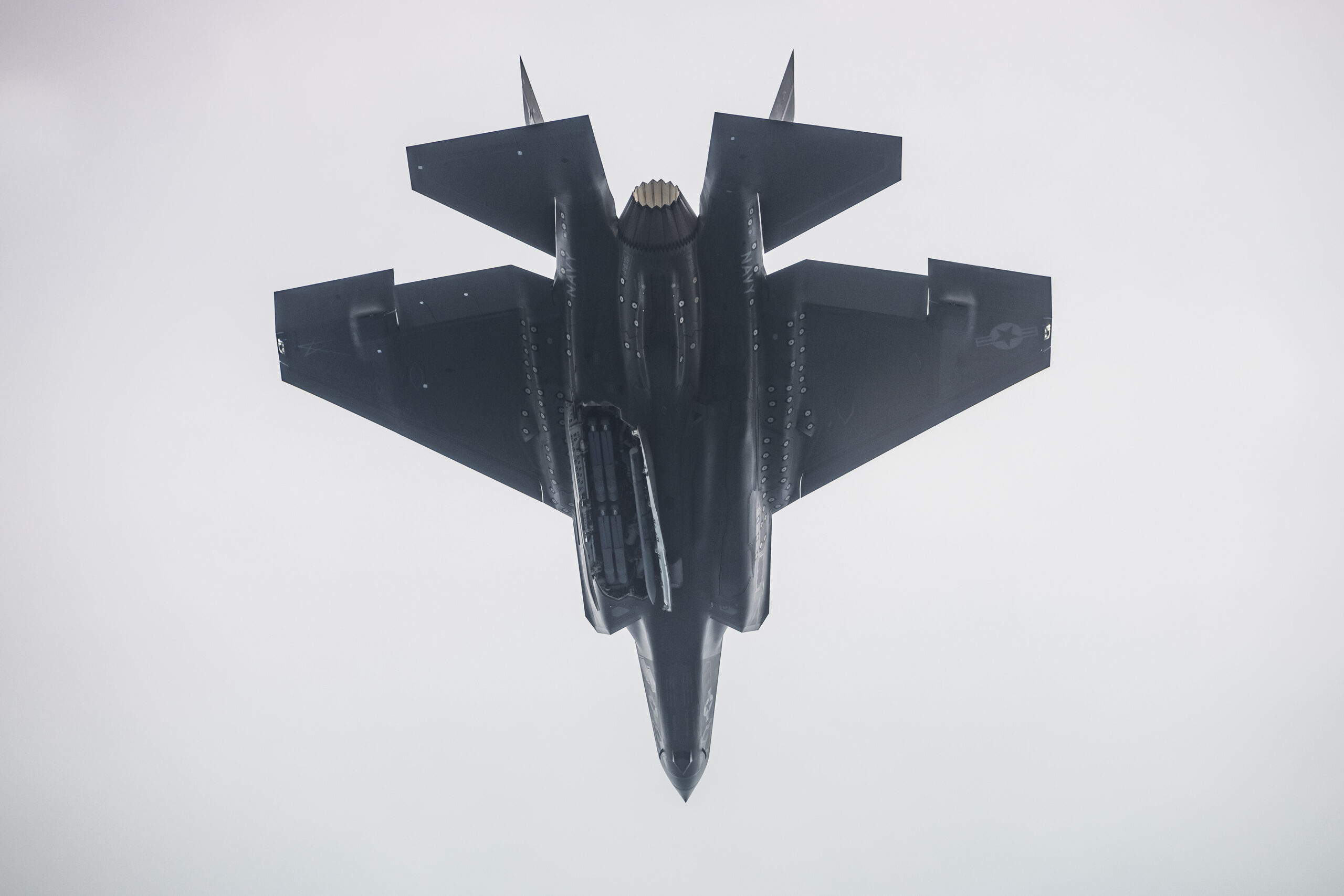
The United States Marine Corps recently conducted a significant aviation test, successfully executing its first-ever “ripple release” of eight Small Diameter Bomb IIs (SDB IIs) from an F-35B Lightning II stealth fighter. This event marks an early yet crucial step in validating a new combat capability for all variants of the F-35 aircraft.
A “ripple release” in military aviation terminology refers to the simultaneous or near-simultaneous deployment of multiple munitions from an aircraft during a single pass. This contrasts with previous methods that often required multiple passes or individual weapon releases. Marine aviators from Marine Operational Test and Evaluation Squadron 1 (VMX-1) carried out this test on September 15 at Yuma Proving Ground, Arizona, as confirmed by retired Air Force Maj. Gen. Jon Norman, who now serves as Raytheon’s vice president for air and space systems.
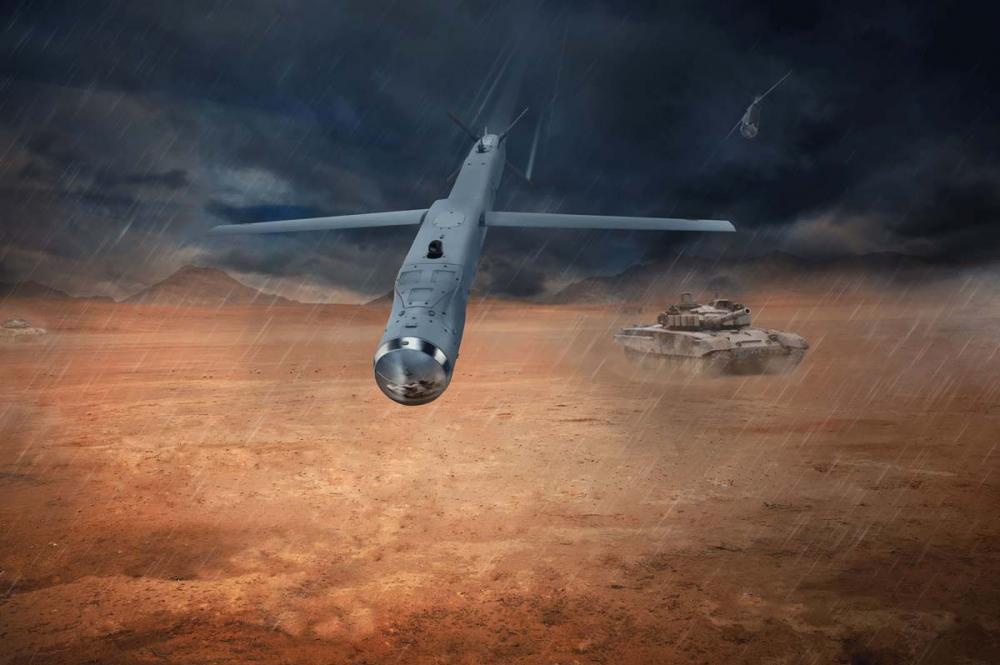
The SDB II, officially designated GBU-53/B and commonly known as “StormBreaker,” is a 250-pound, low-yield, precision-guided munition. It is designed to strike moving targets in all weather conditions, day or night, at ranges exceeding 46 miles. StormBreaker represents a collaborative development effort between the U.S. Air Force and the Department of the Navy, and it is manufactured by RTX’s Raytheon division.
While the full integration of StormBreaker onto the F-35 platform has faced delays due to software and other technical issues, the successful demonstration of the “ripple release” capability is considered vital for the Lockheed Martin-produced stealth fighter’s future operational effectiveness. Norman emphasized the practical advantages of this capability from a pilot’s perspective, stating, “From a pilot perspective, it’s nice because you’re not sitting there exposing yourself when you have eight targets to address.”
Beyond reducing exposure to potential threats, the ripple release capability streamlines the targeting process by eliminating the need for pilots to manually “weaponeer” or program each individual bomb. “You address the entire target set, so it’s less workload in the cockpit, and you’re able to achieve an effect that I think the pilots are really going to appreciate,” Norman explained.
Another significant feature of the networked StormBreaker missiles is their ability to operate within defined “kill boxes.” This geo-fencing capability allows military planners to set specific boundaries, ensuring that munitions only engage targets within a designated area, thereby minimizing the risk of collateral damage to non-combatants or unintended targets. “We’re able to set boundaries,” Norman noted. “So, you give it a kill box, and it’ll exclude everything outside of that and only hit within that kill box.”
This precision capability marks a substantial improvement over the older cluster munitions that StormBreaker was developed to replace. Following a 2008 Department of Defense policy directive, the U.S. military aimed to cease using area-saturation cluster weapons by 2019 due to their high failure rates and tendency to leave large quantities of unexploded ordnance on battlefields, posing long-term hazards. The SDB II offers a highly precise alternative, fulfilling the directive’s intent.
For example, a pilot could encounter a swarm of enemy boats, quickly define the target parameters, and then launch eight 250-pound StormBreaker missiles in a single pass to neutralize the threat. The munitions incorporate automated target recognition software, allowing them to prioritize threats and reorder engagement if one missile fails or is intercepted. “Through automated target recognition software that’s built into it, we can hit prioritized threats,” Norman confirmed. “So, if one fails or one gets shot down, then they just reorder the prioritization.”
F-35 Tests and Integration Challenges
The StormBreaker program initiated low-rate initial production in 2015. The Air Force officially cleared the bomb for use on its “objective” aircraft, the F-15E Strike Eagle, in 2020. More recently, in February, the Navy approved SDB II integration on its F/A-18E/F Super Hornet. However, the ultimate goal for both services remains full integration onto the F-35 variants, specifically the F-35A for the Air Force and the F-35B and C for the Navy and Marine Corps.
A key distinction for the F-35, compared to the F-15 and F/A-18 which carry StormBreaker externally, is its use of internal weapons bays to maintain its stealth profile. This internal carriage presents unique engineering and software challenges for the ripple release process. The F-35B, specifically, has the most constrained internal capacity among the variants due to the lift fan mechanism required for its short takeoff and vertical landing (STOVL) capabilities.
The next planned ripple release test is scheduled for the current quarter at a smaller range in Texas. Norman indicated that the results of these tests would then be presented to the Air Force, Navy, and Marine Corps to assess their interest in further developing and fielding this specific capability. Future testing may also involve scenarios such as engaging moving targets at sea with multiple munitions simultaneously. This capability is particularly relevant given recent reports of potential swarming boat attacks, such as those involving the Iranian military in strategic waterways like the Strait of Hormuz.
Despite these successful hardware tests, the F-35 fleet continues to await necessary software patches to fully incorporate StormBreaker into its operational arsenal. A July report from the Government Accountability Office (GAO) highlighted these delays, noting that “SDB II initial capability on the F-35 is delayed 2 years, and program officials said that it might be delayed 2 more years due to F-35 software development issues.”
The F-35 fleet is currently undergoing its third technology refresh (TR-3), a comprehensive upgrade that includes a new L3Harris core processor, an updated memory storage unit, and the installation of multicore processors. While a “truncated” version of TR-3 was reportedly completed in 2025, the fleet is still receiving ongoing software patches to facilitate continuous upgrades. Lockheed Martin spokesperson Mireya Villarreal commented on these developments via email, stating, “Development on TR-3 was completed in 2025. We continue to build on this baseline through the Block 4 modernization program, which implements upgrades including additional weapons, electronic warfare capabilities and improved sensor technology to ensure the warfighter can defeat any threat.”
StormBreaker’s Future Development and Production
In addition to validating the ripple release capability, Raytheon is actively pursuing enhancements for the StormBreaker. Norman indicated that efforts are underway to extend the munition’s current 46-mile range through advancements in engine efficiency and aerodynamic design. “We don’t want to constrain pilots,” Norman stated. “We want to give them their full operating envelope to be able to release this.”
The Pentagon’s acquisition plans for StormBreaker have also seen an increase. Initially, the program intended to procure 21,160 munitions; however, the GAO report indicates that this figure has now risen to 31,800. Raytheon is scaling up its production to meet this demand. “Last year we produced and delivered 1,500 StormBreakers. This year we’re increasing that,” Norman said, though he did not provide specific production numbers for the current year. He affirmed, however, that “it’s a significant increase, and we have capacity in the factory to increase more.”
Why This Matters
The successful “ripple release” of StormBreaker bombs from an F-35B represents a critical step forward in modernizing the strike capabilities of the U.S. military. This development is significant for several reasons:
- Enhanced Combat Effectiveness:The ability to deploy multiple precision-guided munitions simultaneously from a stealth aircraft drastically increases the F-35’s capacity to engage numerous targets in a single pass. This is particularly crucial in contested environments or against swarming threats, where target saturation and rapid engagement are key to success.
- Increased Pilot Safety and Efficiency:By reducing the number of passes required and automating aspects of weapon targeting, pilots can operate more efficiently and spend less time exposed to enemy air defenses. This lowers pilot workload, allowing them to focus on broader tactical objectives.
- Precision Warfare and Reduced Collateral Damage:StormBreaker’s advanced guidance and “kill box” capabilities signify a continued move away from less precise munitions, like older cluster bombs. This focus on precision reduces the risk of unintended damage to civilian infrastructure or non-combatant populations, aligning with ethical considerations and international norms of armed conflict.
- Strategic Relevance:The F-35’s ability to engage moving targets with high precision at stand-off ranges is vital in various geopolitical scenarios, including naval defense against asymmetric threats (e.g., fast attack craft swarms) or targeting mobile missile launchers in a peer-to-peer conflict.
- F-35 Modernization and Future Capabilities:This test is a tangible demonstration of the F-35’s ongoing Block 4 modernization program, which seeks to integrate new weapons and advanced capabilities. While software integration challenges persist, the successful hardware test validates the aircraft’s potential as a highly adaptable multi-role platform. The resolution of these software delays will be critical for unlocking the full operational potential of these advanced munitions.
- Defense Industrial Base:The increased production targets for StormBreaker indicate growing confidence in its capabilities and a commitment to equipping U.S. and allied forces with this advanced weapon, reflecting ongoing investment in defense technology and manufacturing.