
Unlock the White House Watch newsletter for free
Your guide to what Trump’s second term means for Washington, business and the world
Key Takeaways
- Geopolitical Instability & Energy Markets:The Trump administration’s “Fafo” doctrine in the Middle East has directly threatened critical global energy supply routes, significantly raising oil and shipping costs, and introducing substantial inflation risks for the global economy.
- Erosion of US Credibility & Financial Assets:Erratic foreign policy and a perceived decline in institutional stability are challenging the dollar’s reserve status and global demand for US assets, potentially increasing borrowing costs and deterring long-term foreign direct investment.
- Fiscal Reckoning Ahead:Unchecked budget deficits and a rapidly escalating national debt signal a critical threat to long-term US economic stability, risking a loss of fiscal exceptionalism and a heightened perception of sovereign risk in global financial markets.
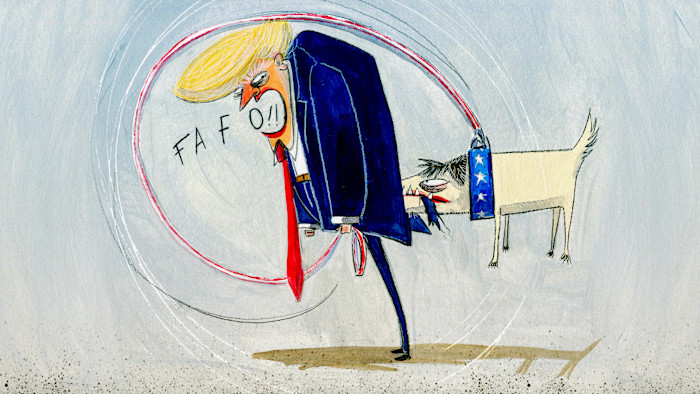
Donald Trump likes a four-letter acronym. The most famous is Maga. He and his team are also fond of Fafo. Shortly after the US capture of former Venezuelan president Nicolás Maduro, the White House posted an image of a stern-looking Trump — with the Fafo acronym emblazoned beneath it.
When Pete Hegseth assembled senior American military commanders last September, he told them: “Should our enemies choose foolishly to challenge us, they will be crushed by the violence, precision and ferocity of the War Department. In other words, to our enemies, Fafo. If necessary, our troops can translate that for you.” For those FT readers who do not have an American soldier nearby, Fafo stands for “Fuck around and find out”.
Just a few months after Hegseth’s speech, the world witnessed a perfect expression of the Fafo doctrine. Fed up with inconclusive diplomacy with Iran, Trump lost patience. The result was the joint US-Israeli attack on Iran on February 28. The supreme leader of the Islamic republic and many of his aides and family were killed or wounded.
But, some months later, the Fafo slogan has rebounded on the Trump administration, with significant repercussions rippling through global markets. Despite frequent claims of total victory from the president, the reality is that his war has gone badly wrong. Iran now controls the Strait of Hormuz and is determined to impose tolls on shipping passing through it. This development alone sends shivers through energy markets, given that roughly one-fifth of the world’s daily oil consumption and a substantial portion of liquefied natural gas (LNG) transits this narrow waterway. The imposition of tolls or any disruption would immediately translate into higher crude prices, increased shipping insurance premiums, and elevated costs for global trade, feeding inflationary pressures across economies already grappling with supply chain fragilities.
Senior Iranian leaders are now making new and even more ambitious demands — including the payment of reparations by the US and the withdrawal of American troops from the vicinity of Iran. The Iranians may calculate that, while those demands seem far-fetched, the US could eventually make far-reaching concessions to get out of Trump’s war. For investors, this creates a deeply unsettling environment. The prospect of prolonged instability in the world’s most critical oil-producing region demands a higher risk premium on assets ranging from Gulf state sovereign debt to global energy futures, while diverting capital away from long-term regional development projects.
These malign developments flow directly from the amateurish and hubristic way in which Trump made the decision to go to war. The US president allowed himself to be convinced by Benjamin Netanyahu, Israel’s leader, that regime change in Iran was within reach. Trump waved away warnings from his own staff that the Iranians might close the Strait of Hormuz — a critical economic chokepoint. He failed to carry out what should have been routine consultations with regional and European allies. This unilateral approach not only alienates traditional partners but also undermines the collective security framework that has historically underpinned global trade and investment flows. The market abhors uncertainty, and a foreign policy driven by personal conviction rather than strategic foresight is a potent source of it.
And here we are. Fafo indeed.
The only real surprise is that it has taken so long for Trump’s flaws to catch up with him. The president’s critics used to be accused of suffering from Trump derangement syndrome when they suggested that a decision-making style based on vanity, vengeance, vibes and self-dealing would end in disaster. But the reckoning seems to have finally arrived, manifesting not just in geopolitical setbacks but in tangible economic risks.
However the current crisis is resolved, there are likely to be long-term consequences for US foreign and security policy, with profound implications for the global financial architecture. Previous administrations guarded American “credibility” jealously. They insisted that when a president spoke, the world must take his words seriously. But Trump shreds American credibility on a daily basis. He is stuck in a loop in which he threatens to devastate Iran one day, before announcing shortly afterwards that peace is at hand and that Iran is “begging” for a deal. This erratic rhetoric undermines the reliability of US commitments, impacting everything from bilateral trade agreements to the perceived stability of the dollar as the world’s primary reserve currency. International investors require predictability; a lack thereof introduces a significant discount on US assets.
The credibility problem is not just about the erratic rhetoric of the president. It is an open secret that the US has badly depleted key munitions — such as cruise missiles and Patriot missile interceptors. Even if the Trump administration were to decide to follow through on the president’s threats, it might have difficulty sustaining high-intensity military operations against Iran. Gaps in missile defence also mean that the US has no real way of protecting the key infrastructure of its Gulf allies from Iranian attacks. This military vulnerability translates into heightened regional risk for foreign direct investment and critical infrastructure projects. Some American allies are thinking about new ways to secure themselves. Saudi Arabia, Turkey and Pakistan have just announced a new defence pact – a move that could signal a broader geopolitical realignment, potentially impacting existing trade blocs, commodity supply chains, and even the future dominance of the dollar in regional transactions.
The effect of Trump’s rhetoric and erratic decision-making extends beyond security into economics. I was startled recently to hear an Asian money manager say that she increasingly thought of Trump’s America as an emerging market. When I challenged her, she pointed to sudden and arbitrary changes in policy, a fear that foreign investors may be discriminated against and the deep involvement of the president’s family and friends in business. All of this, she suggested, might make foreign investors warier of holding US assets. This perception is deeply troubling. The hallmarks of an emerging market — political risk, policy uncertainty, weak institutions, and cronyism — are antithetical to the stability that has historically attracted trillions in capital to the US. Should this sentiment gain traction, it could lead to higher risk premiums on US equities and bonds, and ultimately, a re-evaluation of the country’s economic exceptionalism.
In response to that kind of critique, the Trump administration can point to the fact that — in the roughly 18 months since he returned to the White House — foreign investors have continued to pour money into US equities and assets. The depth of US financial markets remains unparalleled. And the American economy continues to grow much faster than the Eurozone. While these points hold true, they may mask underlying vulnerabilities that could surface abruptly. The sheer size and liquidity of US markets can absorb significant shocks for a time, but investor confidence, once eroded, can be difficult to rebuild.
But there are warning signs. The dollar is the world’s reserve currency. And yet the US is still running a budget deficit of roughly 6 per cent of GDP a year — and it needs foreigners to buy its debt. Even Greece — which until recently was a byword for fiscal incontinence — now borrows more cheaply than the US. This comparison is stark and deeply concerning. The market’s willingness to lend to the US at historically low rates, despite massive deficits, has long been predicated on its unparalleled stability and the dollar’s global reserve status. If the cost of borrowing for the world’s largest economy surpasses that of a nation recently bailed out by the EU and IMF, it suggests a fundamental reassessment of US fiscal health and sovereign risk by bond markets.
The annual cost of servicing America’s federal debt exceeds the Pentagon’s budget and it is rising fast. But the Trump administration seems to have no serious plan to bring the situation under control. This trajectory is unsustainable. Rising debt servicing costs crowd out essential public investments, stifle economic growth, and pose a severe intergenerational equity challenge. Without a credible fiscal consolidation plan, the market will eventually force one, potentially through higher interest rates, currency depreciation, or even a crisis of confidence in US government debt.
At some point, there will surely be a reckoning here too. Debt and deficits is one subject where Fafo is the right slogan.
Market Impact
The “Fafo” approach to both foreign policy and fiscal management is introducing unprecedented levels of uncertainty into global markets. From volatile energy prices and disrupted supply chains due to regional conflicts, to questions over the dollar’s future and the sustainability of US debt, investors face a complex web of risks. The perceived erosion of US credibility and fiscal discipline could fundamentally alter global capital flows, raise the cost of capital for American enterprises and consumers, and usher in a new era of geopolitical and economic instability. This necessitates a profound re-evaluation of risk premiums across all asset classes linked to the US economy and its global standing, particularly for long-duration assets sensitive to interest rates and currency fluctuations. Expect increased volatility, a potential flight to quality in non-USD assets, and a growing demand for hedging strategies against geopolitical and fiscal surprises.
[email protected]