
Unlock the Editor’s Digest for free
Roula Khalaf, Editor of the FT, selects her favourite stories in this weekly newsletter.
**Key Takeaways**
* **Sovereignty at Risk:** Europe faces a critical shortage of indigenous rocket launchers by 2030, threatening its strategic autonomy and vital satellite networks like Galileo and Copernicus, increasing reliance on foreign launch providers.
* **Market Disruption & Investment Gap:** The global space launch market has been transformed by agile, cost-effective players like SpaceX, exposing Europe’s slower, public-procurement model and highlighting the urgent need for substantial public and private investment to scale production and foster innovation.
* **Geopolitical Imperative:** Maintaining independent access to space is a national security and economic imperative, as delayed investment risks capital outflow, hinders high-tech job growth, and could diminish Europe’s competitiveness in the rapidly expanding global space economy.
Europe stands at a critical juncture in its pursuit of strategic autonomy, facing an alarming projected shortage of homegrown rocket launchers by the end of the decade. This warning from Josef Aschbacher, director-general of the European Space Agency (ESA), underscores a profound challenge that extends far beyond technical capability, touching upon economic competitiveness, geopolitical influence, and the very definition of European sovereignty in an increasingly contested domain.
Aschbacher’s frank assessment reveals that the burgeoning demand for launching new satellites into orbit, driven by both commercial constellations and vital public services, is rapidly outstripping the region’s independent capabilities. The ESA anticipates a significant “peak of launch requirements around 2029, 2030, 2031,” a period when Europe’s capacity could be severely constrained. This deficit is not merely an operational inconvenience; it represents a strategic vulnerability and a potential economic drain as Europe would be forced to outsource crucial launch services to foreign competitors.
The Widening Gap: A Tale of Two Space Economies
The global space launch market has undergone a radical transformation, largely spearheaded by US and Chinese innovation. Elon Musk’s SpaceX has redefined the industry with its reusable rocket technology, dramatically cutting costs and increasing launch cadence. In the past year alone, SpaceX executed an astonishing 170 launches, while Europe managed a mere eight. This stark contrast highlights the agility and scale of the new space economy, where private capital and rapid iteration drive innovation. China, too, has heavily invested in its state-backed space program, launching hundreds of satellites and developing robust defense and space capabilities, pursuing long-term strategic objectives that blend economic and military power.
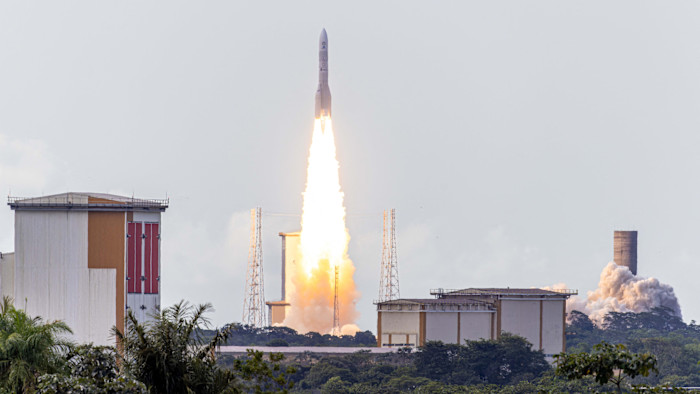
Europe’s traditional public procurement model, while ensuring high standards and complex engineering feats, has struggled to adapt to this dynamic, fast-paced environment. The delays in bringing the Ariane 6, Europe’s flagship heavy-lift rocket, to market resulted in a year-long gap where Europe was entirely reliant on non-European providers, most notably SpaceX, for its launch needs. This period served as a potent, albeit uncomfortable, reminder of the fragility of Europe’s “sovereign access to space” – the ability to independently launch its own payloads without external reliance.
Economic Imperatives and Strategic Vulnerabilities
The impending shortage carries significant economic and strategic ramifications for Europe. The region plans an ambitious array of satellite deployments, including the Iris² multi-orbit constellation, critical for secure connectivity; the Galileo navigation system, Europe’s independent answer to GPS; and Copernicus, the world’s largest Earth observation network, essential for climate monitoring and disaster management. Additionally, several member states, such as Germany, Greece, Spain, and Poland, are developing their own national satellite constellations for defense and intelligence purposes, further intensifying demand.
Without sufficient indigenous launch capacity, Europe faces several compounding issues. Economically, reliance on foreign launchers translates into significant capital outflow, diverting funds that could otherwise be reinvested into European aerospace and technology sectors. It also risks compromising Europe’s industrial base, impacting high-tech manufacturing, research, and development, and potentially slowing job creation in a sector critical for future economic growth. Strategically, the inability to launch its own satellites poses a direct threat to Europe’s national security and data sovereignty. Dependence on external powers for deploying critical defense, intelligence, or civilian infrastructure satellites creates vulnerabilities in times of geopolitical tension, undermining the EU’s stated goal of strategic autonomy.
Charting a Course for Recovery and Investment
Despite the challenges, Aschbacher remains optimistic that Europe can bridge this impending gap. The recent return to flight for Ariane 6 in July 2024, followed by the smaller, Italian Vega-C rocket in December of the same year, marks a crucial step in regaining independent access. However, these successes are merely the beginning of a much larger effort. ESA is actively engaging with European launchers, seeking estimates on the cost and feasibility of significantly expanding their production capacities – from the current build-up rate of nine to ten Ariane 6 rockets per year to approximately fifteen, with similar discussions ongoing for Vega-C.
These discussions will inform critical investment decisions over the coming months, determining where ESA might allocate additional funds to accelerate production and bridge the anticipated shortages. The “time horizon is 2035,” Aschbacher noted, underscoring that the policy and investment choices made today will shape Europe’s space capabilities for the next decade and beyond. This calls for not just increased funding, but also structural reforms to Europe’s procurement models, encouraging greater agility, fostering private-public partnerships, and nurturing a vibrant ecosystem of innovative space startups to complement the established players. Without a more competitive and responsive industrial base, Europe risks continuously playing catch-up in a global space race that demands foresight, sustained investment, and a willingness to embrace new paradigms.
Market Impact
The projected European rocket launcher shortage signals significant market implications. Aerospace and defence contractors in Europe face a dual pressure: the need for substantial capital expenditure to scale production and innovate, balanced against the risk of continued reliance on cheaper foreign alternatives if reforms are insufficient. This scenario presents investment opportunities for companies capable of developing competitive launch solutions or critical components within the European supply chain. Conversely, it poses a risk to the valuation of European satellite operators and downstream service providers, who could face higher launch costs or delays, impacting their profitability and project timelines. For the broader market, diminished European space capabilities could undermine the continent’s strategic autonomy, potentially affecting investor confidence in sectors reliant on secure, independent satellite infrastructure and signaling a broader weakening of Europe’s technological sovereignty. Capital markets will closely watch how Europe’s public and private sectors respond to this imperative, as decisive action is needed to secure its position in the rapidly expanding global space economy.