

FOX Business host Charles Payne discusses the market shift driven by artificial intelligence on Making Money.
Key Takeaways
- Narrative Economics in Action:Nobel laureate Robert Shiller warns that widespread fear over AI’s impact on jobs could become a self-fulfilling prophecy, emphasizing the power of collective belief and “narrative economics” to shape real economic outcomes.
- Tech Sector’s Double-Edged Sword:While AI drives unprecedented innovation and investor enthusiasm in the tech sector, the rhetoric from some industry leaders predicting massive job displacement risks undermining broader economic confidence and potentially triggering a recession.
- Sentiment Drives Market & Labor:Consumer and business sentiment, influenced by these AI narratives, is a critical factor for both the job market and overall economic stability, with implications for everything from hiring decisions to consumer spending and investment.
A Nobel Prize-winning economist has warned that persistent predictions of artificial intelligence destroying the job market could become a self-fulfilling prophecy, a caution with significant implications for investor sentiment, corporate strategy, and the broader economic outlook.
Robert Shiller, who shared the 2013 Nobel Prize in economics for his work on asset prices, penned a recent guest essay in The New York Times, arguing that the pervasive panic over AI is not merely a technological challenge but a sociological phenomenon deeply rooted in human history. His insights, often centered on “narrative economics,” suggest that the stories we tell ourselves and each other about the future can materially impact economic realities, shaping everything from stock valuations to employment rates.
In fact, he wrote, humans have been worried that new technology could replace them since the days of Aristotle, who envisioned a self-powered loom and a lyre that could play music without someone plucking the strings. This historical context is crucial for investors, as it reminds us that technological revolutions, while disruptive, often create new forms of value and employment, even as they render old ones obsolete. The 19th-century Luddites, English textile workers who destroyed machines fearing job loss, serve as a stark historical parallel, yet ultimately, industrialization led to unprecedented economic growth and new categories of labor.
ROBERT SHILLER: PEOPLE AREN’T AS IMPRESSED BY HOMES ANYMORE
Professor Robert J. Shiller wins Nobel Prize in economic sciences during an awards ceremony on Dec. 10, 2013, in Stockholm, Sweden.(Pascal Le Segretain / Getty Images)
Shiller fears that similar anxieties, deeply ingrained within our collective psyche, are rearing their head once again, potentially driving market and economic decisions in unforeseen ways. The current AI boom, characterized by surging valuations for tech giants and startups alike, is occurring amidst a backdrop of profound public apprehension. This dichotomy—investor exuberance on one hand, widespread job anxiety on the other—presents a unique challenge for policymakers and corporate leaders.
He cited a Quinnipiac poll from March, which found that 70% of people believe AI will reduce the number of jobs. Additionally, only 16% of Americans believe AI will have a positive impact on society over the next two decades, according to a Pew Research survey conducted in June. These sentiment indicators are not merely academic; they directly influence consumer spending, business investment, and hiring confidence. A consumer fearful for their job security is less likely to make discretionary purchases, impacting retail sales and GDP growth. Similarly, businesses facing an uncertain labor market might delay expansion plans or freeze hiring, further dampening economic activity.
“Like many others, I believe AI could lower employment. But unlike most, I don’t necessarily blame the technology itself. Instead, I worry about the potency of the fear it is generating,” Shiller wrote. This distinction is critical: the technology itself might create more jobs than it destroys in the long run, or shift the nature of work, but the immediate societal reaction and perceived threat can trigger a negative feedback loop.
“Our brains are wired to respond to stories. Narratives floating in a population can affect individuals’ economic decisions,” he continued. “When millions of people make millions and millions of decisions based upon negative expectations, there is a risk that fear can actually help birth the reality.” This ‘narrative economics’ framework suggests that even if the fundamental economics of AI are positive for productivity and long-term growth, a prevailing negative narrative can lead to a self-induced recessionary environment, impacting corporate earnings and stock market performance.
THE AI REVOLUTION THREATENS OFFICE JOBS, BUT REVIVES DEMAND FOR SKILLED TRADES
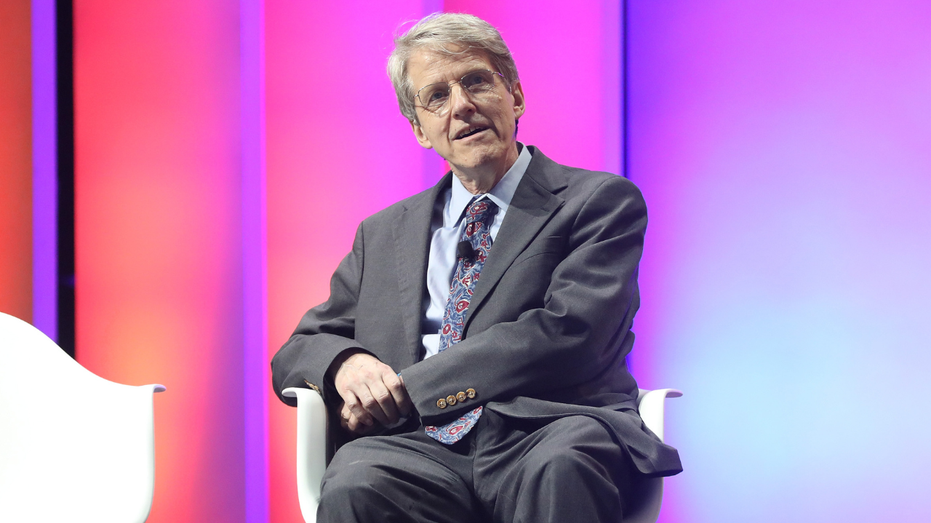
Robert Shiller attends the 2019 Forbes 30 Under 30 Summit at Detroit Masonic Temple on Oct. 29, 2019, in Detroit, Michigan.(Taylor Hill / Getty Images)
Much of the negative media coverage around AI centers on speculation over how much it will impact jobs and the economy. This speculation is often fueled by statements from leading figures within the AI industry itself, creating a peculiar dynamic where the very innovators driving the technology also amplify fears about its disruptive potential.
In late May, Anthropic CEO Dario Amodei told Axios that in the next one to five years, AI could eliminate half of all entry-level white-collar jobs and spike unemployment to as much as 20%. While he later expressed uncertainty over the exact timeline, such pronouncements from prominent industry leaders carry significant weight, influencing both public perception and investor confidence. The idea of 20% unemployment, a level seen only during severe depressions, would be catastrophic for global markets, triggering massive sell-offs and widespread economic contraction.
The original article notes a hypothetical future scenario where the current unemployment rate is 4.3%, up from 4% at the beginning of President Donald Trump’s term in January 2025. While specific dates and figures can shift, the underlying concern is that even modest upticks in unemployment, when combined with intense AI-driven fear, could be perceived as the beginning of a larger, more destructive trend. This perception alone can exacerbate economic slowdowns, leading to reduced corporate profits, tightened credit conditions, and a general flight to safety in financial markets.
AI IS TOP REASON FOR US JOB CUTS FOR THIRD STRAIGHT MONTH
“While the job market has slowed for a host of reasons, there are reports that fear of an AI apocalypse is worsening the freeze and contributing to record lows in consumer sentiment,” Shiller argued. This suggests a direct link between the prevailing AI narrative and tangible economic indicators. Lower consumer sentiment, as measured by indices like the University of Michigan’s Consumer Sentiment Index, often correlates with reduced spending, which can negatively impact corporate revenues, particularly in consumer-facing sectors. For investors, this translates into potential earnings misses and downward revisions to growth forecasts.

A CloudHQ data center in Ashburn, Virginia, on May 31, 2026.(Lexi Critchett/Bloomberg / Getty Images)
Shiller implied that tech leaders like Amodei, who promote doom-and-gloom scenarios their own companies could help realize, are being somewhat short-sighted and should be reined in to prevent an economic recession. Their statements, while potentially boosting their own company’s perceived importance or market share in the short term, risk collectively damaging the very economic environment in which they operate. The balance between promoting innovation and responsibly managing public expectations is a delicate one, particularly in an era of rapid technological change.
CLICK HERE TO DOWNLOAD THE FOX NEWS APP
“Perhaps the best we can do is to appeal directly to the leaders of Silicon Valley who have been promoting these negative narratives with such vigor,” Shiller wrote. His call to action highlights a critical juncture for the tech industry: embracing corporate social responsibility beyond product development. Industry leaders have a powerful platform, and their rhetoric can move markets and shape public psyche. Tempering hyperbole and focusing on the positive, transformative aspects of AI, alongside realistic discussions of challenges, could be crucial in preventing a self-inflicted economic wound.
He continued: “Surely the resulting media attention highlighting how dangerously powerful your AI model is may help you sell more wares, but it may be far harder to do so in a period of recession. Try not to forget the critical lessons taught by our past.” This serves as a powerful reminder that even the most innovative companies operate within a broader economic framework. A severe downturn, fueled by fear, would ultimately constrain their own growth prospects, regardless of how advanced their technology might be.
Market Impact
Robert Shiller’s warning underscores the profound influence of narrative and sentiment on financial markets. For investors, this translates into increased volatility and the potential for a disconnect between underlying corporate fundamentals and market valuations. A pervasive fear of AI-driven job destruction could trigger broad market sell-offs, particularly impacting consumer discretionary sectors, real estate, and financial services, even as AI-enabling tech stocks might initially appear resilient. Companies that effectively communicate their AI strategies, focusing on productivity gains and new job creation rather than solely on displacement, could see a premium in investor confidence. Conversely, firms perceived as contributing to job fears might face reputational damage and investor skepticism. Policymakers, including central banks, will closely watch consumer and business sentiment indicators, as widespread fear could necessitate intervention through fiscal stimulus or altered monetary policy to prevent a self-fulfilling economic contraction. The long-term market trajectory for AI will depend not just on technological advancement, but critically, on the collective story we choose to believe and propagate about its economic future.