
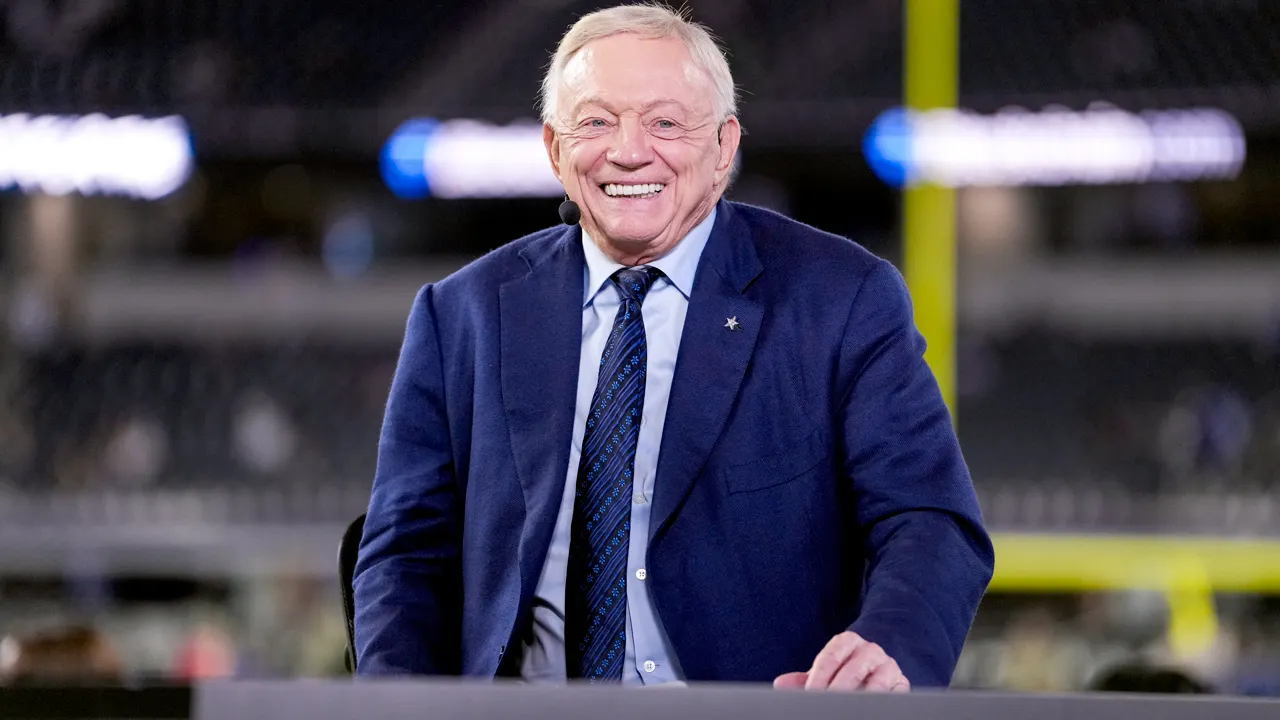
Steve Doocy visits Dallas Cowboys owner Jerry Jones at his home in Dallas to discuss his legacy. Jones shares stories from his nearly four decades with the NFL franchise and showcases his three Super Bowl trophies.
Key Takeaways:
- Enterprise Value Over Championships:Jerry Jones’ unique owner-GM model prioritizes maximizing the Dallas Cowboys’ brand equity and financial valuation, rather than solely focusing on Super Bowl victories.
- “Relevance” as a Strategic Asset:Maintaining the team’s high-profile, often dramatic narrative, irrespective of on-field results, acts as a continuous marketing campaign, driving fan engagement, merchandise sales, and media rights value.
- Decoupling Performance from Profit:The Cowboys’ sustained position as the world’s most valuable sports franchise demonstrates a successful business strategy where consistent winning is not a prerequisite for financial dominance and asset appreciation.
After the Dallas Cowboys fell to 2-3, losing at home to the then-winless Tampa Bay Buccaneers, a fan wearing a team jersey went viral on social media for taking the TV he watched the game on, tossing it under the wheels of his massive truck and running over it.
If Jerry Jones saw that video – and knowing his awareness of what fans say about his team, he probably did – he would grin. Maybe chuckle. From a purely financial and brand-management perspective, that fan’s visceral reaction is not a sign of failure, but rather a testament to the unparalleled market engagement the Dallas Cowboys command.
Who’s actually winning here?
Owner Jerry Jones of the Dallas Cowboys at SoFi Stadium on Sept. 19, 2021, in Inglewood, California.(Ronald Martinez/Getty Images)
Every year, the NFL has one storyline threaded through all the others: Is this the year the Dallas Cowboys finally get back to winning Super Bowls? This perennial narrative, a cyclical promise of potential glory, keeps fans like the TV man coming back every year, investing emotionally and financially in the star-studded Cowboys merch as soon as it’s available, watching the games, and in turn, keeping Jerry Jones’ enterprise “relevant.”
For the last 30 years, the question of Super Bowls has been answered in the negative. The Cowboys haven’t lifted that prize in that long.
NFL HAS ‘BIG AFFORDABILITY ISSUE’ AS ACTIVATE CEO PUTS LEAGUE ON NOTICE AMID EXORBITANT STREAMING COSTS
For most of the decades from the team’s founding in 1960 to the mid-1990s, such a drought was unthinkable. The Cowboys rose from nothing on the mind of Tex Schramm and the brilliance and character of Tom Landry to become not just any football team, but “America’s Team.” They were built to win, with a sizzling offense and the flex defense, and up to their last Super Bowl win in 1996, were one of just two teams that owned five world titles.
After the Bucs humiliated them at home last week, the Cowboys are facing the likely prospect of missing the playoffs again. Some market observers might seem surprised by this, especially after a quiet offseason and a seemingly successful preseason suggested a more optimized roster.
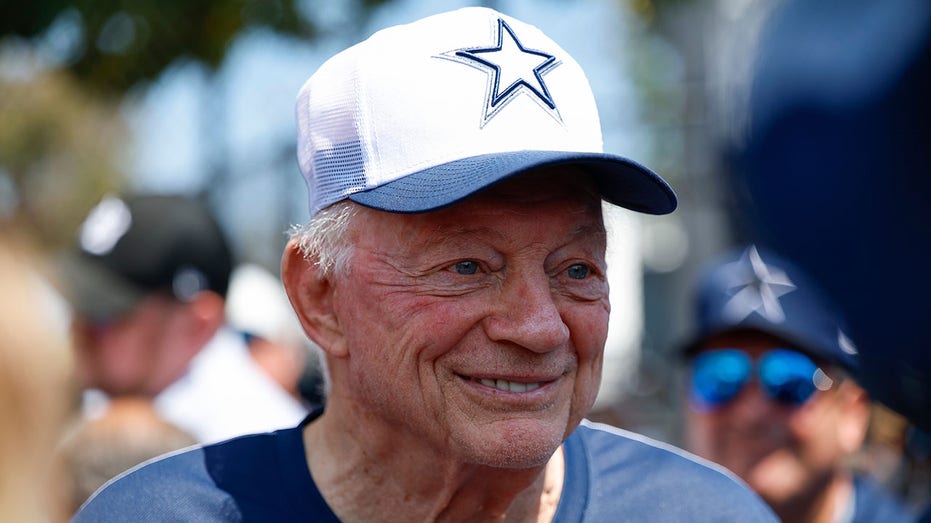
Dallas Cowboys owner Jerry Jones speaks to reporters during the team’s training camp at River Ridge Playing Fields on July 25, 2024, in Oxnard, California.(Brandon Sloter/Icon Sportswire via Getty Images)
Yet, while their on-field performance often hovers around mediocrity, off the field, the Cowboys are walking on sunshine, a financial juggernaut. Despite two whole American generations having never seen them lift the Lombardi Trophy, the Cowboys have become the most valuable sports franchise in the world. The latest numbers put their enterprise value at an astonishing $17 billion, according to Forbes.
How does a team consistently described as “firmly run-of-the-mill” on the field achieve such stratospheric market valuation? As GM, Jones consistently creates a roster that can score a lot but often struggles defensively. This imbalance, while frustrating for fans, rarely translates into a decline in brand equity or revenue streams.
Are we all missing the intrinsic value proposition of the Dallas Cowboys? Jerry Jones has clearly not engineered a team solely to challenge for and win titles year after year. They are demonstrably not doing that. Instead, he has strategically positioned the franchise on its “relevance,” successfully cultivating one of the most enduringly profitable and high-value businesses in the global sports economy.
COWBOYS OWNER JERRY JONES SHARES HIS RETIREMENT PLANS WITH A FORMER PRESIDENT
Jones subtly unveiled this “relevance” strategy in 2014 when Johnny Manziel entered the draft. “If we had picked Manziel, he’d guarantee our relevance for 10 years,” Jones reportedly said, weighing the PR and media buzz against pure football utility. And, “If we pick the other guy – any other guy – it would be a ticket to parity, more 8-8 seasons.” His son, Stephen, had to talk him out of it, according to Jim Dent.
The “other guy” wasn’t just “any other guy.” It was lineman Zack Martin, a foundational player who helped the Cowboys to genuinely competitive 12-4 seasons. Manziel, true to Jones’s prediction of a “ticket to relevance,” turned out to be relevant for about five minutes – a flash in the pan of media attention, but ultimately a poor long-term asset from a football perspective.
Jones has reiterated this pattern through various personnel decisions, which from a purely football standpoint, seem questionable but from a business perspective, make a certain kind of sense. Consider the decision not to pursue generational edge rusher Micah Parsons for a reported $47 million, opting instead to allocate capital to other players with less productivity. Or the failure to acquire running back Derrick Henry, who was literally training in Dallas and would have easily fit under the salary cap, providing a crucial ground game to alleviate pressure on the passing attack.
Instead, he signed a washed-up Ezekiel Elliott, for less money, but leveraging the nostalgic “feels” from his earlier success – a marketing play as much as a football one. He then paid quarterback Dak Prescott the GDP of a small country to keep a marquee player around, despite Prescott’s lack of a championship-winning playoff record. This investment solidifies a high-profile face for the franchise, ensuring continuous media coverage and jersey sales, even if a defense-first strategy might be more conducive to securing a Lombardi Trophy.
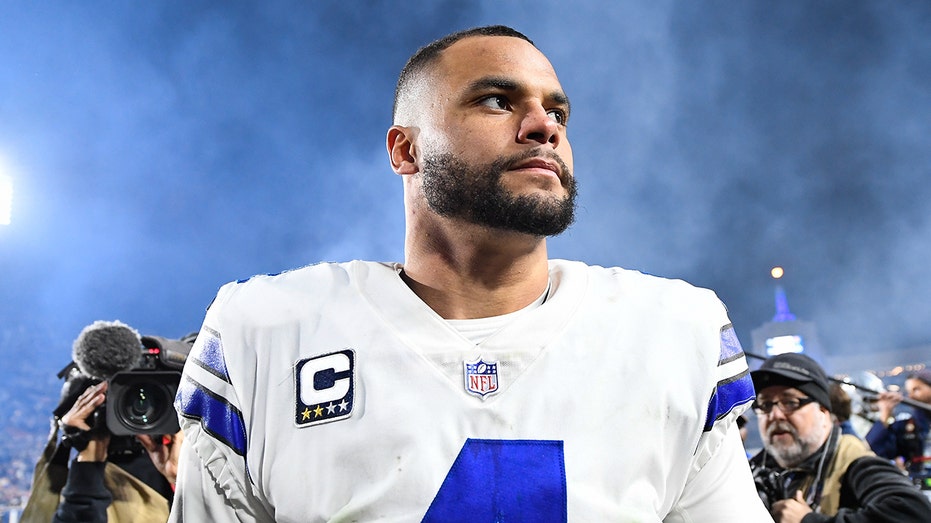
Quarterback Dak Prescott #4 of the Dallas Cowboys.(Kevork Djansezian/Getty Images)
The fact that Jones is in the hot seat for all these calls brings up a singular issue within the NFL: Jerry Jones the owner is also Jerry Jones the general manager. He is the only NFL owner who simultaneously holds that operational role, and he also boasts the longest current GM tenure by more than a decade. Some argue he can’t fire himself, but of course he can if he wants to. It wouldn’t even take a phone call; it would be a strategic decision to delegate. From a corporate governance standpoint, this represents an unusual, almost unchecked power structure.
Any other NFL owner, overseeing a GM with a similar on-field record, would have terminated that executive long ago. Fired him straight into the sun and moved on, seeking a new talent acquisition strategy. But not Jerry Jones.
Yes, Jones saves a few million dollars by not having to pay an additional GM salary. But that financial saving is less significant than the absolute control he maintains. Being GM keeps him in the news cycle, poised to drop quotes, and ensures the Cowboys remain perpetually in the headlines – a constant flow of free publicity.
And that’s the fundamental point. Stay in the headlines, continuously puff up the brand, whether the team is a legitimate contender or not.
To Jones, being perceived as a “flop of a GM” isn’t a bug, it’s a feature. It’s an integral part of the Cowboys’ enduring “Will they win?” storyline. It’s part of the “relevance” Jones covets. It’s a box office draw that even Godzilla can’t stomp – a perpetual cliffhanger ensuring audience return.
COWBOYS HIRE LONGTIME NFL COACH OUT OF RETIREMENT TO ADDRESS TEAM’S BRUTAL DEFENSIVE START
If Jones truly prioritized championship-level winning above all else, Dallas would have had someone else, or a collaborative group, occupying the GM chair long ago. He would have strategically shored up the defense during the offseason, not after five games when market adjustments become costly and reactive.
Yes, ego is undoubtedly a massive part of it. But equally, and perhaps more importantly, is Jones’ strategic calculus of putting the business enterprise ahead of the sporting outcome.
The Dallas Cowboys are a money-printing machine. According to Forbes, they generate about $1.28 billion in annual revenue, the most they’ve ever measured for any sports team, and about $677 million in operating income, which is miles ahead of any other NFL team – even the ones that win. The stadium Jerry built, AT&T Stadium, was a spectacular World Cup host and is as much a concert venue hosting global acts like BTS as it is a home for the Cowboys. It’s a prime revenue-generating asset, decoupled from the weekly win-loss record.
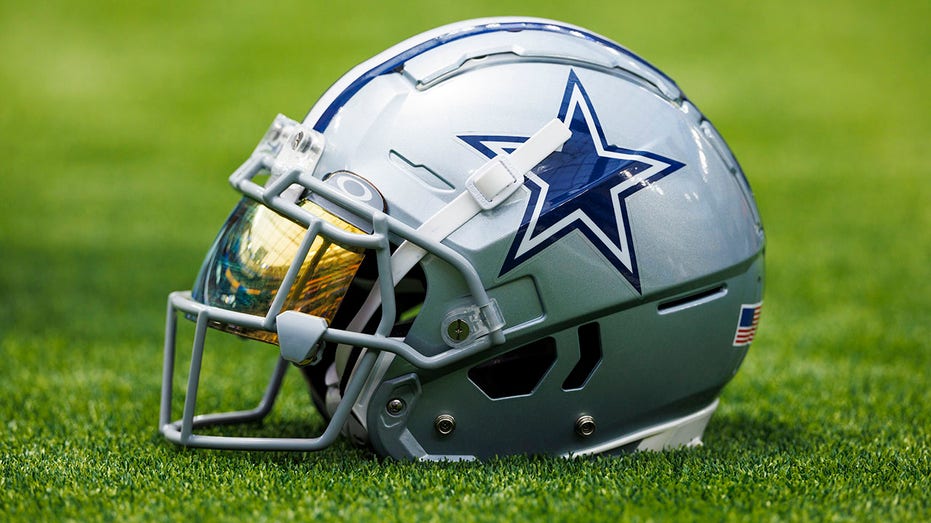
The Dallas Cowboys have become the most valuable sports franchise in the world. The latest numbers put them at $17 billion, according to Forbes.(Ric Tapia/Getty Images)
Has Jones, in effect, hacked the sports franchise business model? Business first, on-the-field success a distant second, and dollars continue to roll in. Wins and losses matter a whole lot less than the enduring value of the brand, and the five-pointed star, the silver helmets, the cheerleaders, and the incredible stadium make for an unassailable brand identity. Being “relevant” means more than wins and losses; Jones has said so himself, translating directly into sustained market capitalization.
CLICK HERE TO DOWNLOAD THE FOX NEWS APP
America’s Team doesn’t even need to win for Jerry Jones to win financially. In fact, it could be argued they’re strategically incentivized to embrace a certain level of competitive unpredictability. A bad season improves their draft position to pick up another high-profile “any other guy,” or at least a player who generates buzz. The “Will they win?” storyline gets another sequel, extending the profitable drama.
And somewhere out there, TV man shops for another TV while Jerry Jones grins, watching his enterprise value soar.
Market Impact:
Jerry Jones’s stewardship of the Dallas Cowboys provides a compelling case study for the evolving economics of professional sports franchises. His model challenges traditional assumptions that on-field championships are the primary drivers of financial success and brand value. Instead, it suggests that robust brand equity, relentless media “relevance,” and diversified revenue streams (stadium, merchandise, broadcast rights) can create an incredibly valuable asset, even in the absence of consistent competitive dominance. This strategy has significant implications for how owners approach team management, potentially shifting focus from purely athletic excellence to maximizing enterprise value through a blend of entertainment, narrative control, and strategic financial planning. Other sports franchises, particularly those with established national brands, might look to the Cowboys’ financial model for lessons in decoupling asset appreciation from competitive performance, indicating a broader market trend where sports teams are increasingly viewed and managed as sophisticated media and entertainment companies rather than mere athletic clubs.