

‘The Big Money Show’ panel discusses President Donald Trump’s pledge of a $5,000 dividend if the GOP wins the midterms. The panel also analyzes rising oil prices and hot inflation data.
Key Takeaways:
- **Inflationary Pressures:** A proposed $5,000 dividend, costing over $1.2 trillion, would inject substantial liquidity into an economy already battling “hot inflation,” potentially undermining the Federal Reserve’s aggressive monetary tightening efforts and leading to further price increases.
- **Fiscal Strain & Bond Market Impact:** The massive cost would significantly inflate the national debt, currently at $40 trillion, raising concerns among bond investors. This could lead to higher U.S. Treasury yields, increasing the government’s borrowing costs and potentially “crowding out” private sector investment.
- **Policy Conflict & Uncertainty:** The proposal creates a direct conflict between potential fiscal stimulus and the current monetary policy aimed at curbing inflation. This fiscal uncertainty, alongside ongoing energy price volatility and broader economic instability, could heighten market apprehension ahead of the midterms.
President Donald Trump on Wednesday ignited a new wave of fiscal debate, proposing a $5,000 “dividend” payment to every adult U.S. citizen should Republicans secure majorities in both chambers of Congress after this November’s midterm elections. While politically charged, the proposal immediately drew scrutiny from economists and market analysts over its potential economic ramifications, particularly concerning the federal deficit, national debt, and the persistent battle against inflation.
Delivering a speech at the RNC’s Midterm Convention in Dallas, Trump tied the dividend directly to perceived economic strength and success, stating, “Because of our tremendous strength and success economically, I will issue a dividend to every adult citizen in the United States of America for $5,000.” He added a stipulation that the dividend would have to be spent within the U.S., a measure presumably intended to stimulate domestic consumption and retain economic benefits within national borders.
This isn’t the first time Trump has floated direct payments to American households; previous discussions included DOGE and tariff dividends, though none were ultimately enacted. The latest proposal, however, arrives at a moment of acute economic sensitivity, with “hot inflation data” and rising oil prices already dominating market conversations and consumer sentiment. Its potential scale has immediately raised red flags regarding its impact on the federal government’s budget deficit and the nation’s burgeoning $40 trillion national debt.
AMERICA’S $40T NATIONAL DEBT IS ‘STEALING FROM OUR NEXT GENERATION,’ ECONOMIST WARNS
President Donald Trump pledged $5,000 “dividend” payments to U.S. adult citizens if Republicans win both chambers of Congress in the midterms.(Alex Wong/Getty Images)
An analysis by the nonpartisan Committee for a Responsible Federal Budget (CRFB) swiftly quantified the fiscal burden, estimating that issuing a $5,000 dividend to every adult citizen in the U.S. in 2027 would cost over $1.2 trillion. To put this in market context, the budget watchdog highlighted that this figure would far exceed the combined cost of all three COVID-era stimulus payments and the projected 2027 cost of the One Big Beautiful Bill Act. The implications for government finances are stark: CRFB found the cost would more than double the federal government’s primary budget deficit for next year, escalating it from $780 billion to an astounding $2 trillion, pushing the total projected deficit to $3.1 trillion. Consequently, the deficit as a share of the economy would surge from 5.8% of GDP this year to a staggering 9.4% in 2027.
This projected fiscal expansion directly clashes with current economic realities, where the Federal Reserve is aggressively raising interest rates to combat inflation. Injecting over a trillion dollars into the economy would act as a massive fiscal stimulus, potentially counteracting the Fed’s monetary tightening efforts and risking an acceleration of consumer price increases. This could force the Fed into even more aggressive rate hikes, increasing the likelihood of a recession.
Maya MacGuineas, President of the CRFB, did not mince words, calling the proposal “fiscally dangerous, economically backwards and fundamentally unserious.” Her market-oriented warning highlighted the broader economic consequences: “While pandering is all too tempting to politicians, the reality is that the more goodies politicians promise, the more ordinary Americans will pay the price at the grocery store, on their mortgage statements or in the burden they leave their children.” This sentiment resonates deeply with households already grappling with elevated food and energy costs, and with businesses facing rising input prices and labor costs.
US NATIONAL DEBT HITS $40 TRILLION MILESTONE FOR FIRST TIME EVER
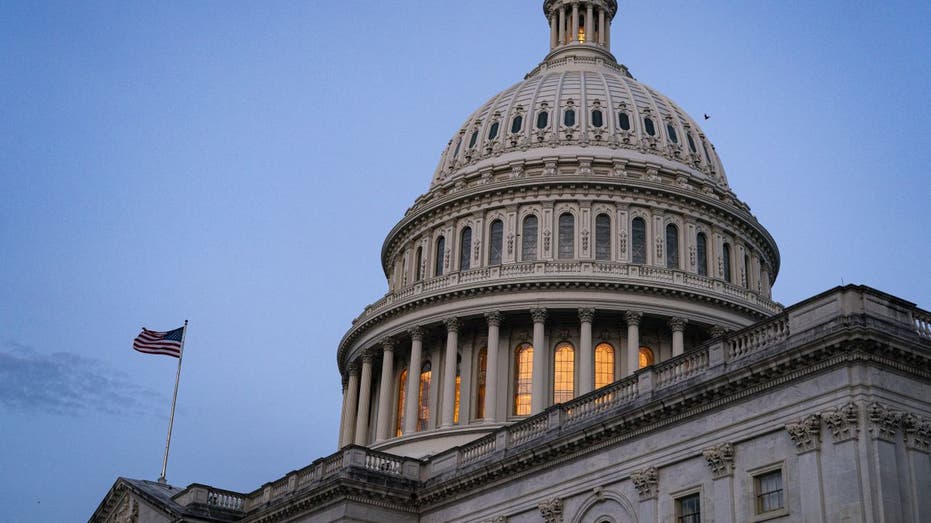
Trump’s proposal for a $5,000 “dividend” payment to adult U.S. citizens would cost an estimated $1.2 trillion, according to CRFB.(Al Drago/Getty Images)
The national debt, which recently hit an unprecedented $40 trillion milestone, is a growing concern for bond markets. Competitive Enterprise Institute Senior Economist Ryan Young underscored this market sensitivity, stating, “President Trump’s $5,000 check proposal is not going to happen, even if Republicans win the midterms.” Young articulated the market’s aversion to further debt accumulation, noting that Americans are acutely aware of the $40 trillion national debt and that the plan would “add more than $1 trillion to that debt in one fell swoop.”
Furthermore, Young directly linked the proposal to interest rate dynamics, a critical factor for investors and borrowers alike. He warned that the “checks conflict with Trump’s desire for lower interest rates. The extra cash in circulation would raise inflation, which the Fed would likely have to counter with higher interest rates.” Beyond the Fed’s actions, Young pointed out a more direct market mechanism: “Over and above anything the Fed does, a trillion dollars in new spending would raise interest rates on government debt by making the government’s financial situation even worse. Reluctant bond buyers would demand higher interest rates for taking on more risk.” This “crowding out” effect could see private sector borrowers facing higher rates as the government competes for capital, stifling investment and economic growth.
HOW MUCH HAS THE NATIONAL DEBT GROWN UNDER PRESIDENT TRUMP?
FOX Business reached out to the White House regarding how the dividends would be paid for. White House spokesman Davis Ingle, responding to potential skepticism, asserted President Trump’s track record: “The doomers and naysayers have consistently doubted President Trump: when he pledged to create the historic Trump Accounts, lowered prescription prices with Most Favored Nations, secured the border with no crossings, cleaned up our streets, ended taxes on tips, grew real wages, renegotiated broken trade deals and reshored key manufacturing back to the United States.” Ingle emphasized a contrast with “Democrats’ record of historic inflation, unfettered illegal immigration, skyrocketing crime and weakness on the world stage,” suggesting that with continued public support, Trump would “keep delivering real results.” However, the specific funding mechanism for a $1.2 trillion dividend remained unaddressed, leaving financial markets to ponder the potential for either massive new borrowing or significant tax increases, both of which carry their own set of market implications.
GET FOX BUSINESS ON THE GO BY CLICKING HERE
Market Impact:
Should a $5,000 dividend proposal gain serious traction, financial markets would likely react with significant volatility and re-pricing. **Equity markets** might see an initial short-term boost in consumer discretionary sectors due to anticipated spending, but this would quickly be overshadowed by concerns over escalating inflation and the increased likelihood of aggressive Federal Reserve rate hikes, potentially leading to a broader market sell-off. **Bond markets** would almost certainly experience a sharp decline in U.S. Treasury prices, driving yields higher across the curve as investors demand greater compensation for increased fiscal risk and inflation erosion. This would raise borrowing costs for the U.S. government and potentially for corporations and consumers. The **U.S. Dollar** could weaken against major currencies, reflecting diminished confidence in fiscal discipline and the purchasing power erosion from inflation. **Commodity prices**, particularly oil and other raw materials, could see renewed upward pressure from heightened demand expectations and general inflationary sentiment. Overall, the proposal introduces a substantial layer of fiscal uncertainty and direct conflict with monetary policy, increasing the risk premium across asset classes and potentially exacerbating existing economic headwinds.